5 Things to Consider When Choosing Art for Healthcare Spaces

When choosing art for a healthcare project, it’s easy to focus on what looks good on the wall.
But in environments where people are stressed, recovering, or working long hours, art does more than decorate. It influences stress levels. It shapes first impressions. And when done thoughtfully, it actively supports healing.
Too often, art decisions are pushed toward the end of a project timeline. By then, budgets are tight, walls are painted, and options feel limited, but whether art is considered early in the design process or brought in at the final hour, it carries more impact than many teams realize.
If you’re selecting art for a healthcare space, here are five standards worth considering.
1. A Clear Foundation in Healing
When it comes to healthcare art, the image itself is only part of the story.
What truly makes a difference is how the art is selected, where it’s placed, and whether the people guiding those decisions understand the unique demands of healthcare environments.
Research consistently shows that nature imagery can:
- Reduce stress and anxiety
- Support focus and recovery
- Improve overall well-being
- Shorten hospital stays
- Reduce the need for pain medications

Healthcare art should be centered around this understanding. A strong partner takes a research-driven approach to biophilic design, ensuring each image supports the specific goals of a space – whether that’s calming a waiting room, encouraging movement in rehabilitation areas, or creating intuitive visual landmarks for wayfinding.
That research-backed foundation guides every project we take on.
Beautiful is important. But beautiful and beneficial is even better.

Kurt on location ahooting fall images for a healthcare project in the area.
2. Meaningful Connection Through Familiar Landscapes
One of the most powerful and often overlooked tools in healthcare art is familiarity.
Patients, visitors, and staff tend to connect more deeply with imagery that reflects landscapes they recognize. Familiar scenes can reduce cognitive strain, reinforce a sense of safety, and provide comfort during stressful moments.
For that reason, location-specific and regional photography can be especially impactful. Whether it’s the landscape outside the hospital doors or imagery that reflects the broader region patients call home, familiarity reinforces connection.
-
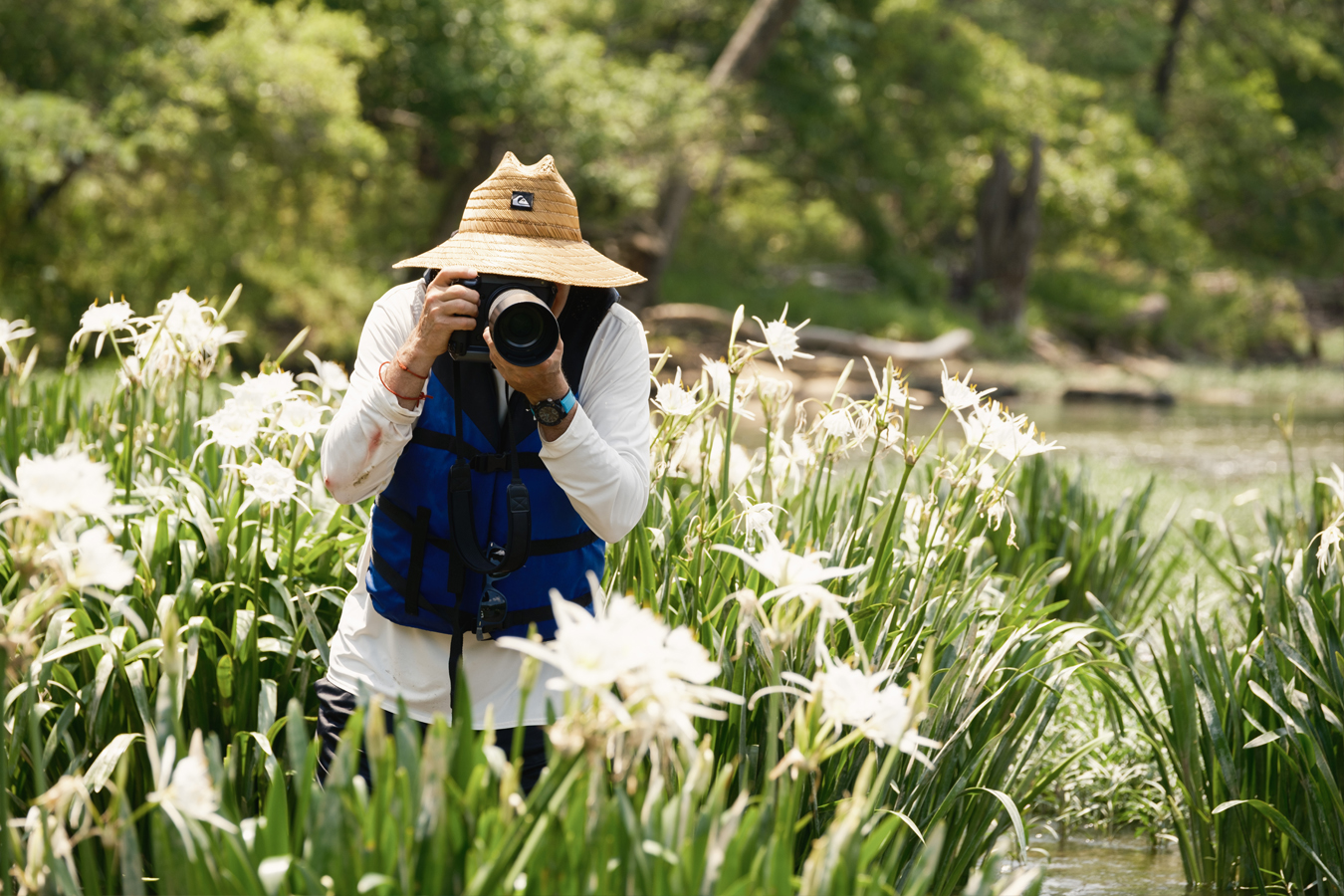
- Kurt photographing iconic Cahaba Lilies.
-

- Kurt’s Cahaba Lily images at UAB Medical West Hospital – Birmingham, AL.
Custom and regional imagery often requires additional planning and coordination, but the emotional return can be significant.
That’s why our photographers travel nationwide to capture imagery tailored to the communities each facility serves, because when art feels like home, healing feels a little closer. And your walls become part of the care team.
 3. A Creative Team That Innovates
Choosing a healthcare art partner isn’t just about access to images. It’s about creative depth and having a team that continually evolves.
Healthcare environments vary widely in architecture, patient population, and location. A dedicated creative team brings flexibility: from impressionistic interpretations of nature to layered compositions, contemporary vector applications, pediatric-focused collections, and custom image combinations.
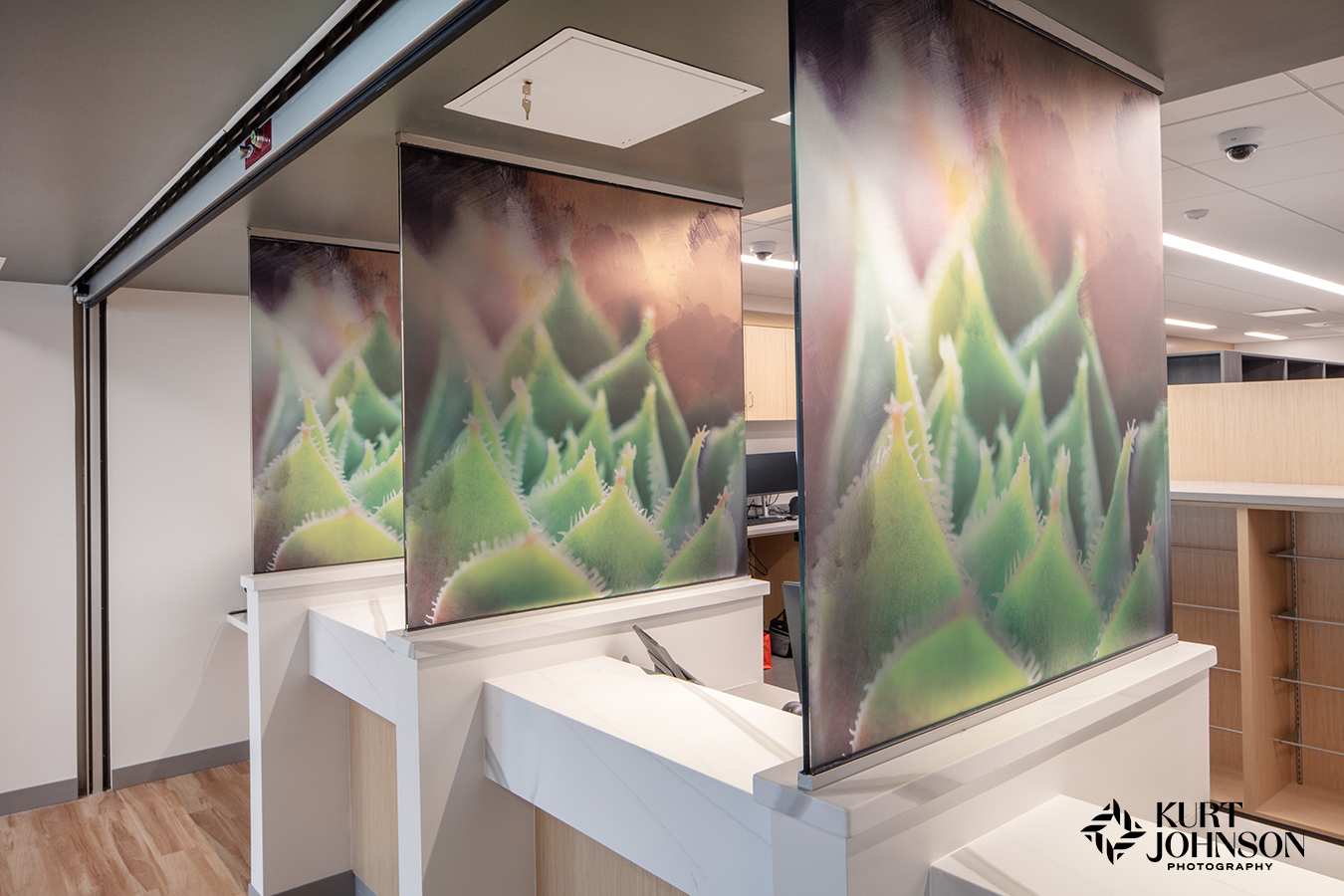
KJP’s Impressionism Collection makes a healing statement while providing privacy at the pharmacy counter of UNMC’s Nebraska Medicine Village Pointe Clinic in Omaha.
Our Innovations collections were developed in response to real design challenges – listening to architects and designers who needed something fresh, adaptable, and aligned with modern healthcare spaces while still honoring the restorative power of nature.
Innovation doesn’t happen by accident. It happens when creative people are curious enough to keep asking, “What if?”
When art aligns seamlessly with architecture and intent, the entire project feels elevated and can do it’s ultimate job – healing.

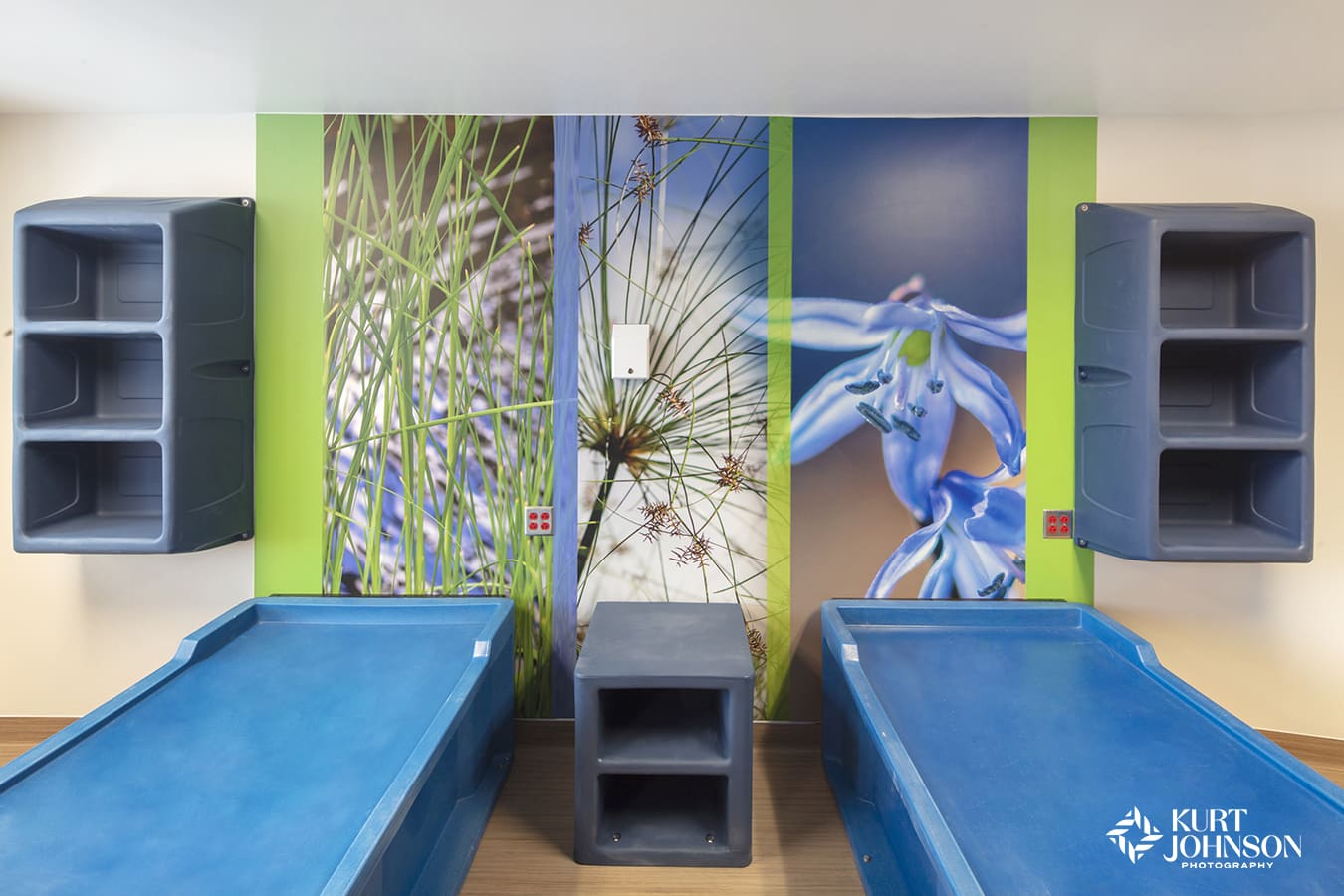
Custom art placement for UNMC’s Munroe-Meyer Institute in Omaha with needs of young patients with intellectual or physical disabilities in mind.
4. Thoughtful Art Placement
Selecting artwork is only half the responsibility. Strategic art placement is what transforms art from decoration into part of the healing environment.
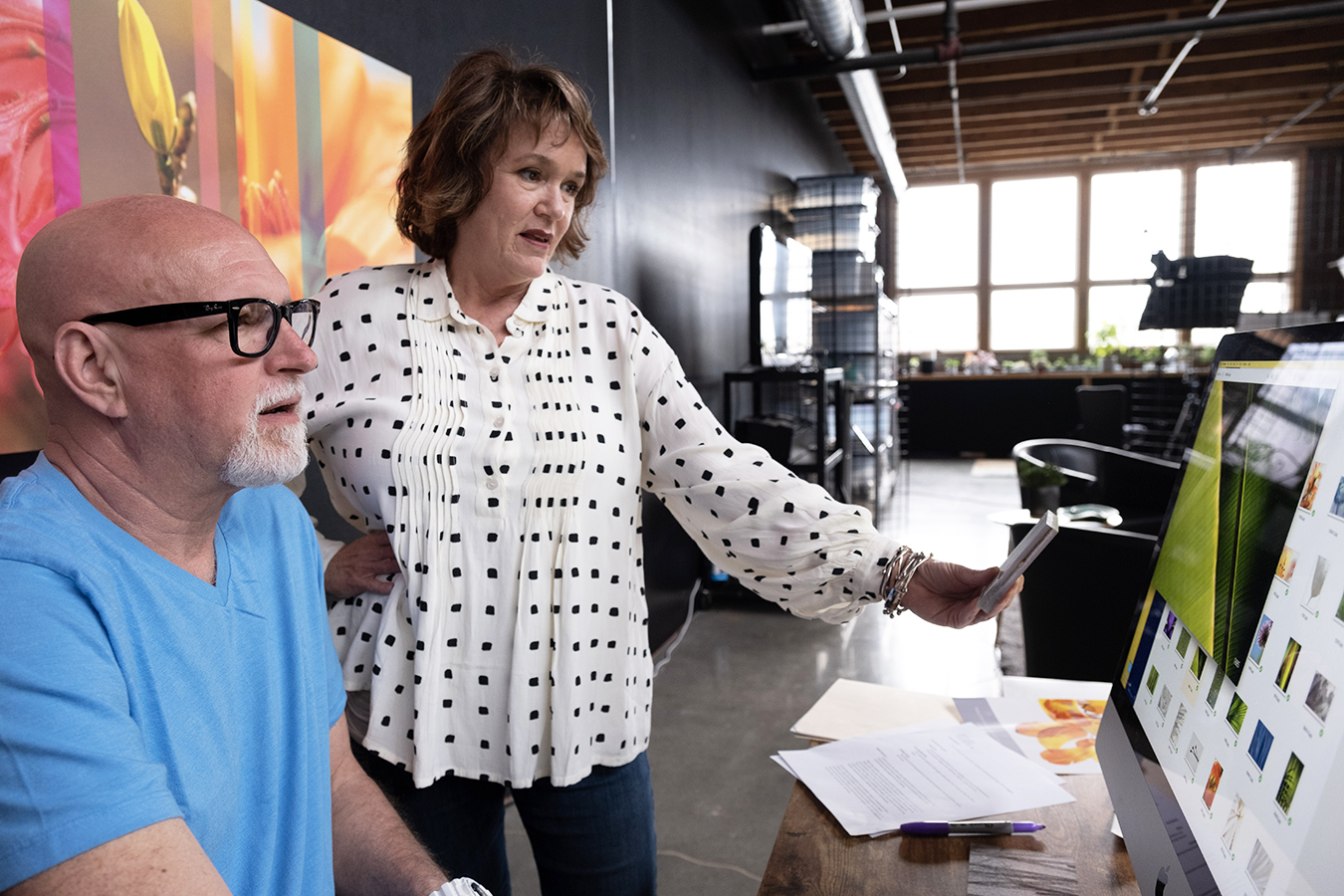
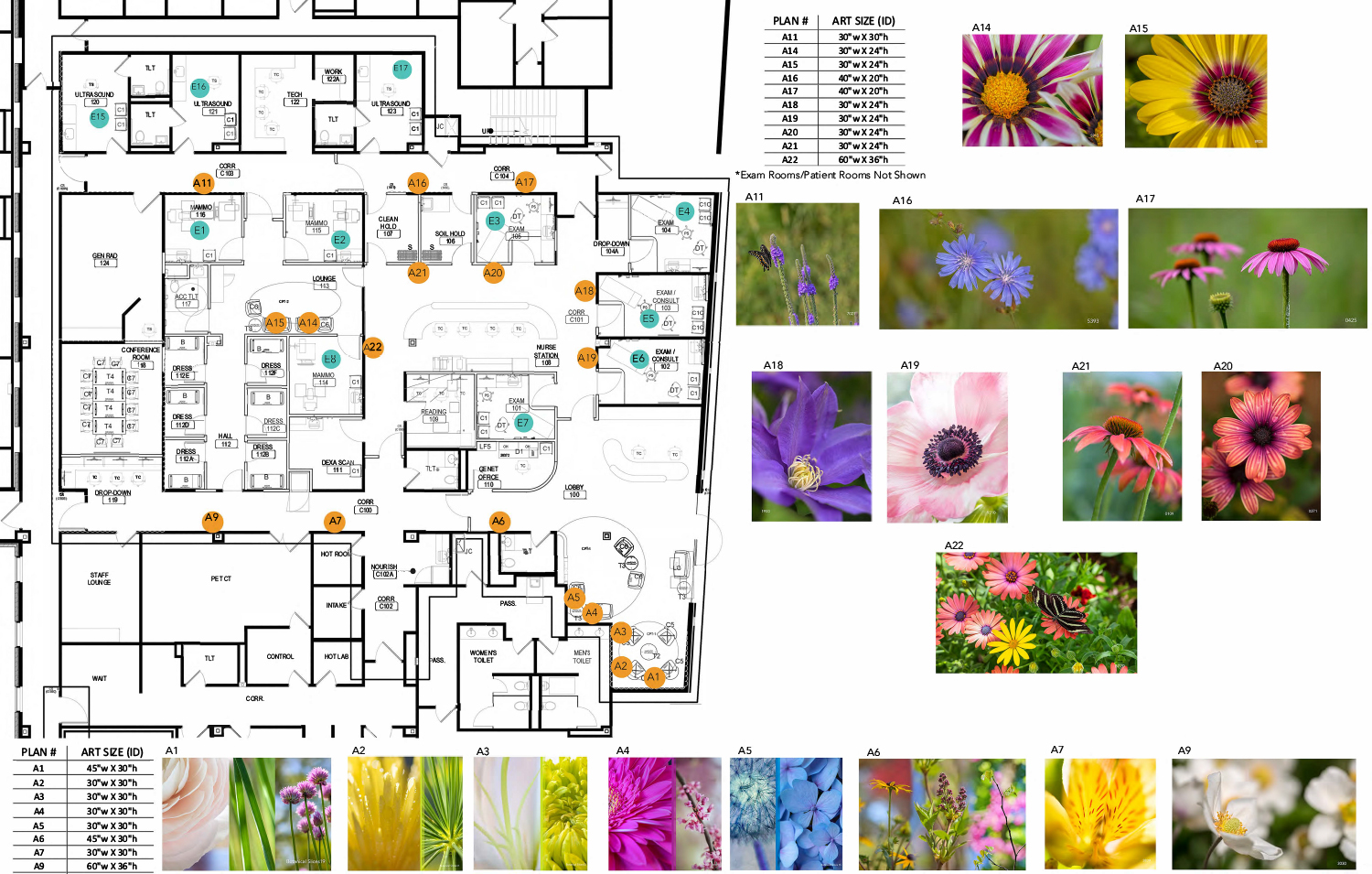
Effective art planning considers:
- Floorplans and sightlines
- Lighting and architectural elements
- Paint colors, materials, and finishes
- The unavoidable realities – outlets, alarms, signage, and safety requirements
When placement is considered early in the design process, the results are more seamless and meaningful. Even the most beautiful image can lose its impact if it’s competing with glare, a hallway turn, or a fire alarm.
That’s why we collaborate closely with project teams to ensure artwork is integrated intentionally, not just added as an afterthought. Because where art lives affects how it heals.
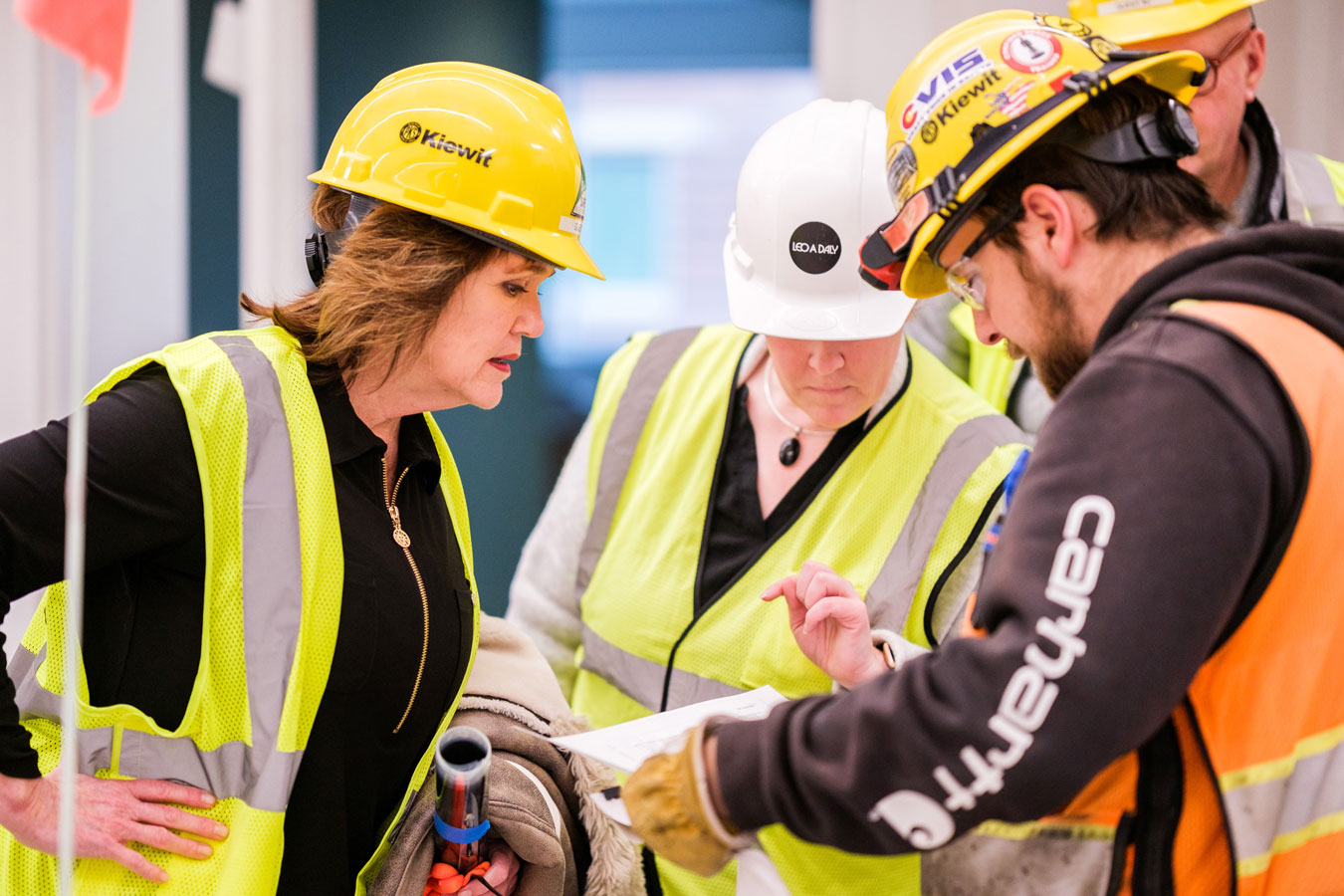
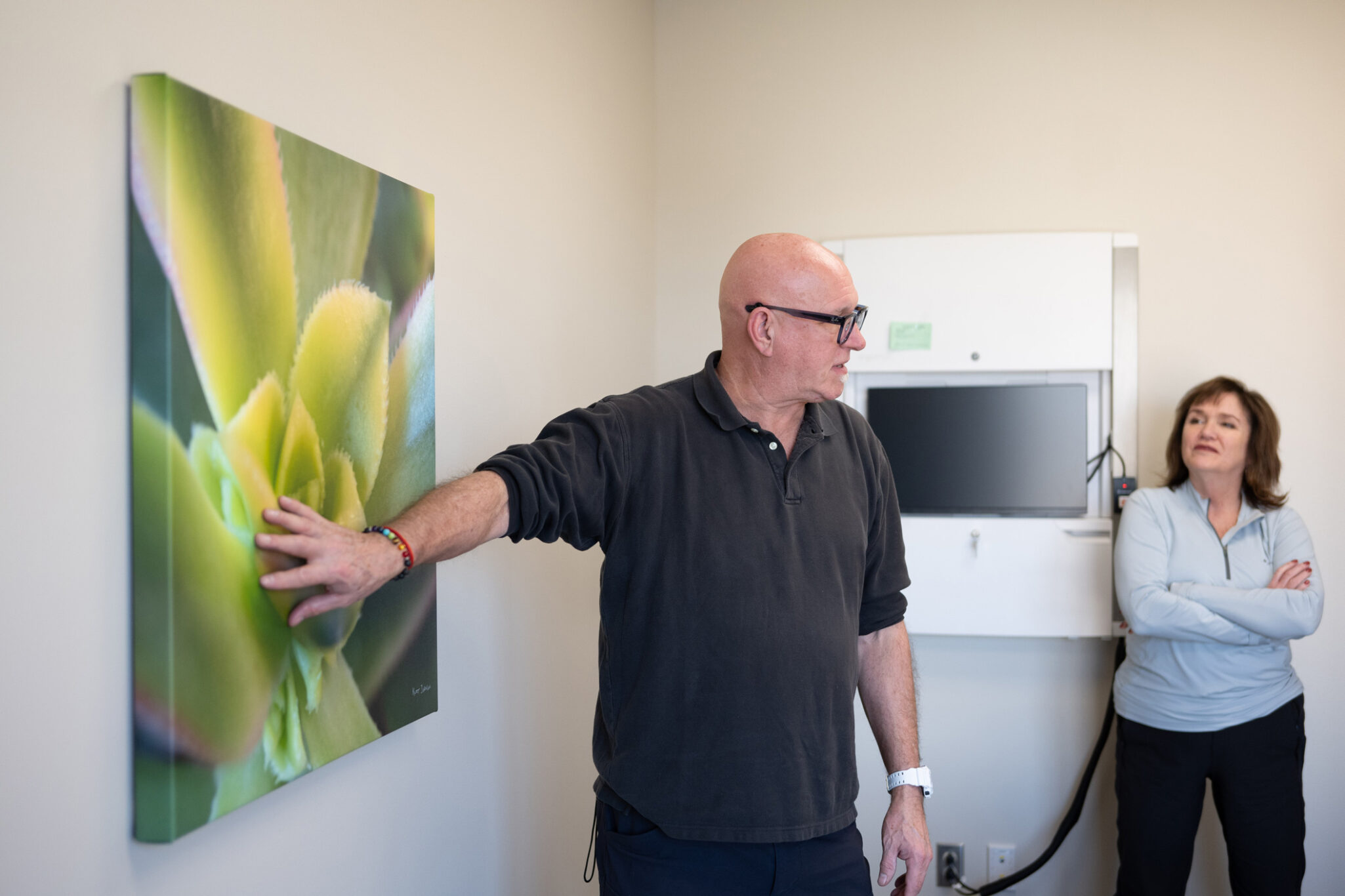
Carolyn Johnson does a walk-thru with Leo A Daly’s Jenn Ankerson.
5. Partnership That Understands Healthcare Complexity
Healthcare projects are layered and complex. Timelines shift. Budgets tighten. Specifications evolve.
An experienced art partner understands production logistics, durability standards, vendor coordination, and the need for seamless collaboration across multiple teams.
Over the past two decades, we’ve built strong relationships with framers, installers, substrate specialists, and production experts nationwide. From wallcoverings and acrylic to film, glass, canvas, and custom solutions, we help connect the dots so the art process feels smooth instead of stressful.
The right partner works with the realities of healthcare design and is prepared for them.
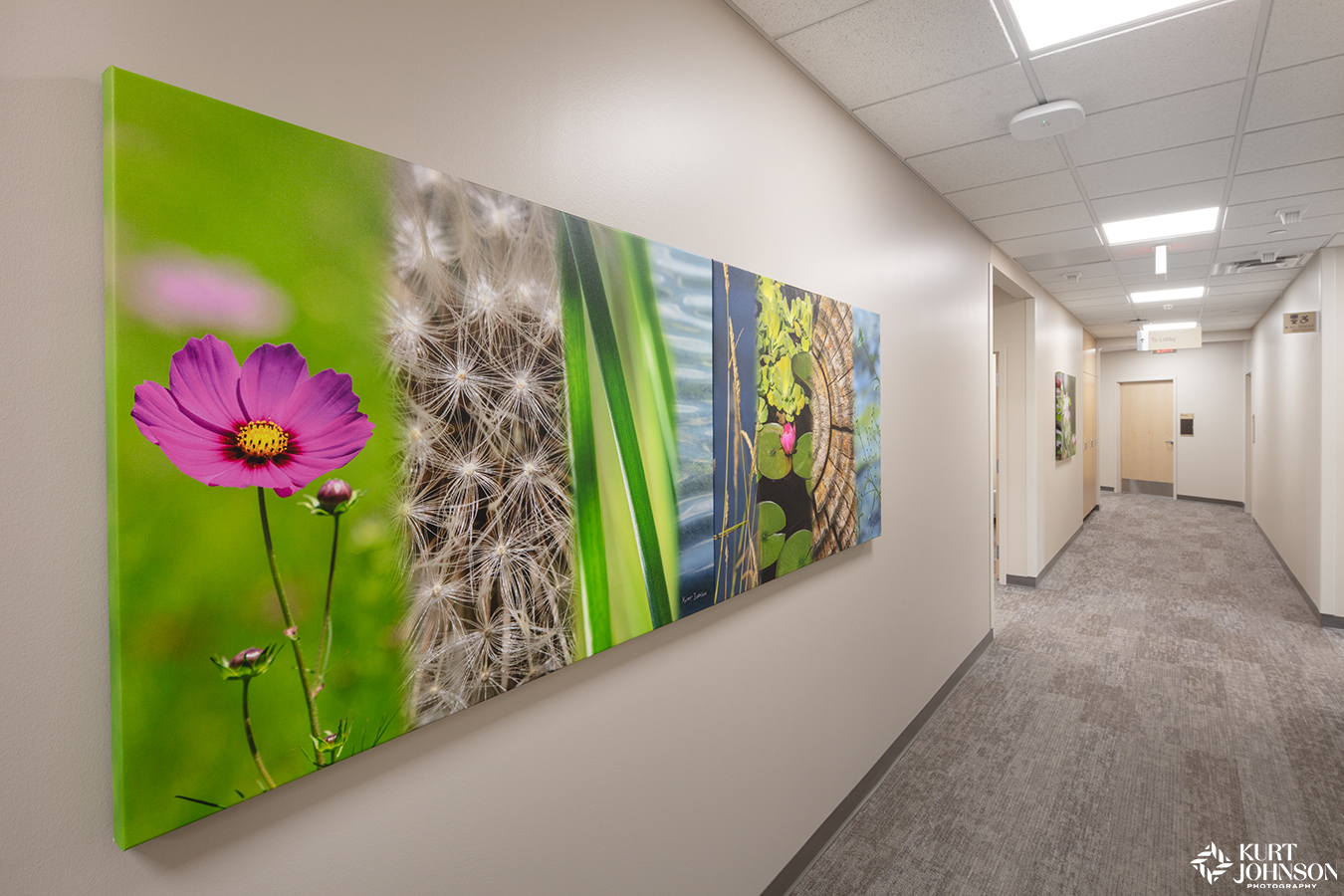
A custom color slice by KJP brightens the corrider at Allina Health Center for Mental Health and Addiciton in Fridley,MN.
Art That Supports the Bigger Picture
Choosing art for healthcare environments is about more than filling wall space.
Intention matters.
Familiarity matters.
Innovation matters.
Placement and partnership matter.
When these five standards are met, art becomes more than a finishing touch. It becomes part of the care team by supporting the well-being of patients, visitors, and the teams who serve them every day.
If you’re looking for a healthcare art partner who understands healing environments, values collaboration, isn’t afraid to admit they’re tree-huggers, and brings both creative innovation and operational experience to the table, we’d love to explore what’s possible together.
Categories: Healing, Healthcare