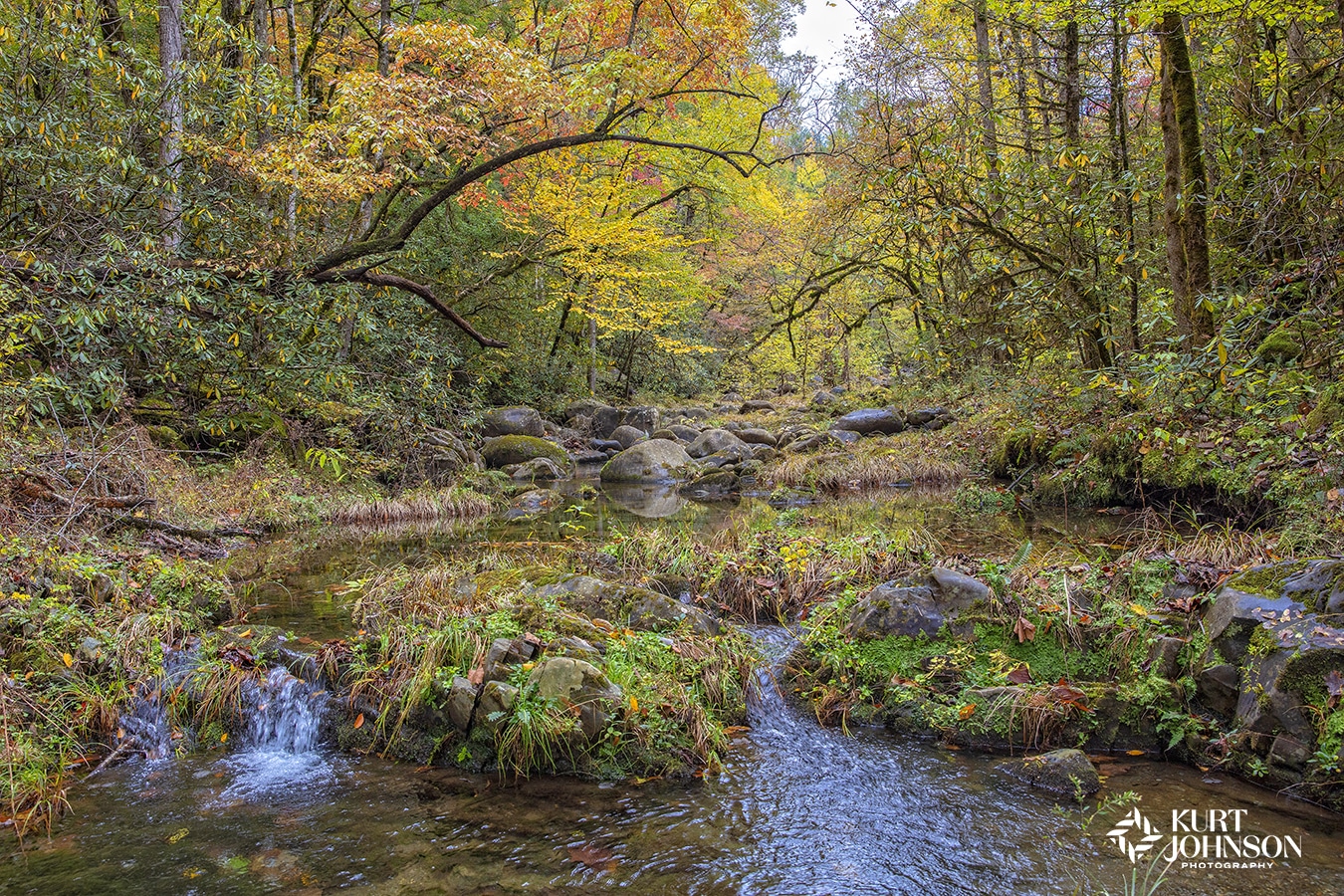
5 Things Designers Are Rethinking About Nature Art in Healthcare
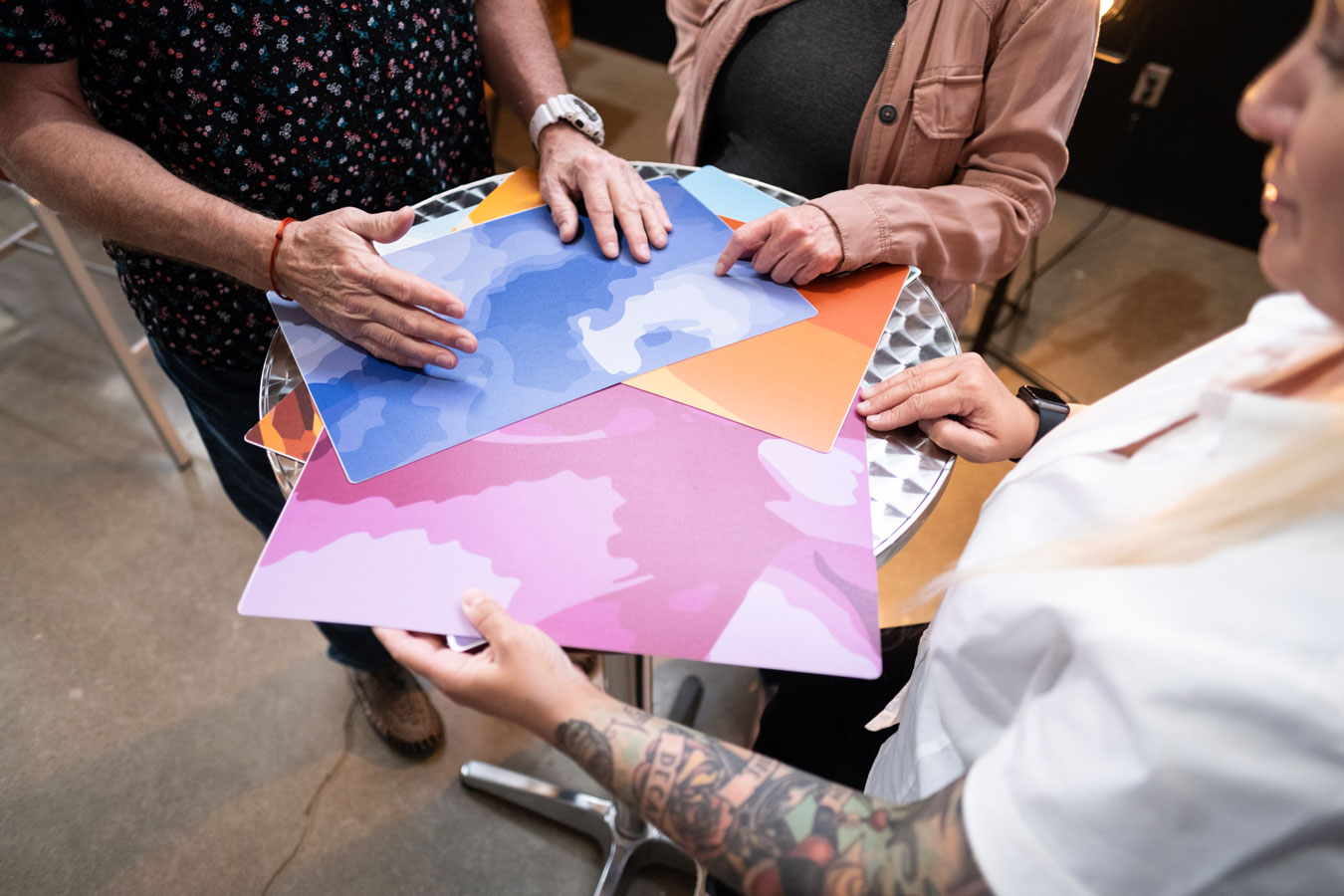
Nature art isn’t going away, but like most things in life, it’s evolving. If you work in healthcare design, this probably isn’t surprising. You’re seeing more windows in patient rooms, soothing sounds in waiting areas, and better access to outdoor spaces in healthcare environments throughout the country.
And when it comes to artwork, nature images are still the “go-to” choice for hospitals and other healing environments, but the way designers approach, select, and utilize nature art is evolving.
We’ve seen firsthand how feedback from patients, visitors, and staff is shaping decisions and the future of healthcare design. And that’s how it should be. Evidence doesn’t lie. It teaches us which imagery resonates, helps people navigate complex environments, improves outcomes, and holds up over time.
Rather than chasing trends, this shift is about listening and ultimately refinement.
Here are five things designers are rethinking about nature art in healthcare as we move into 2026.
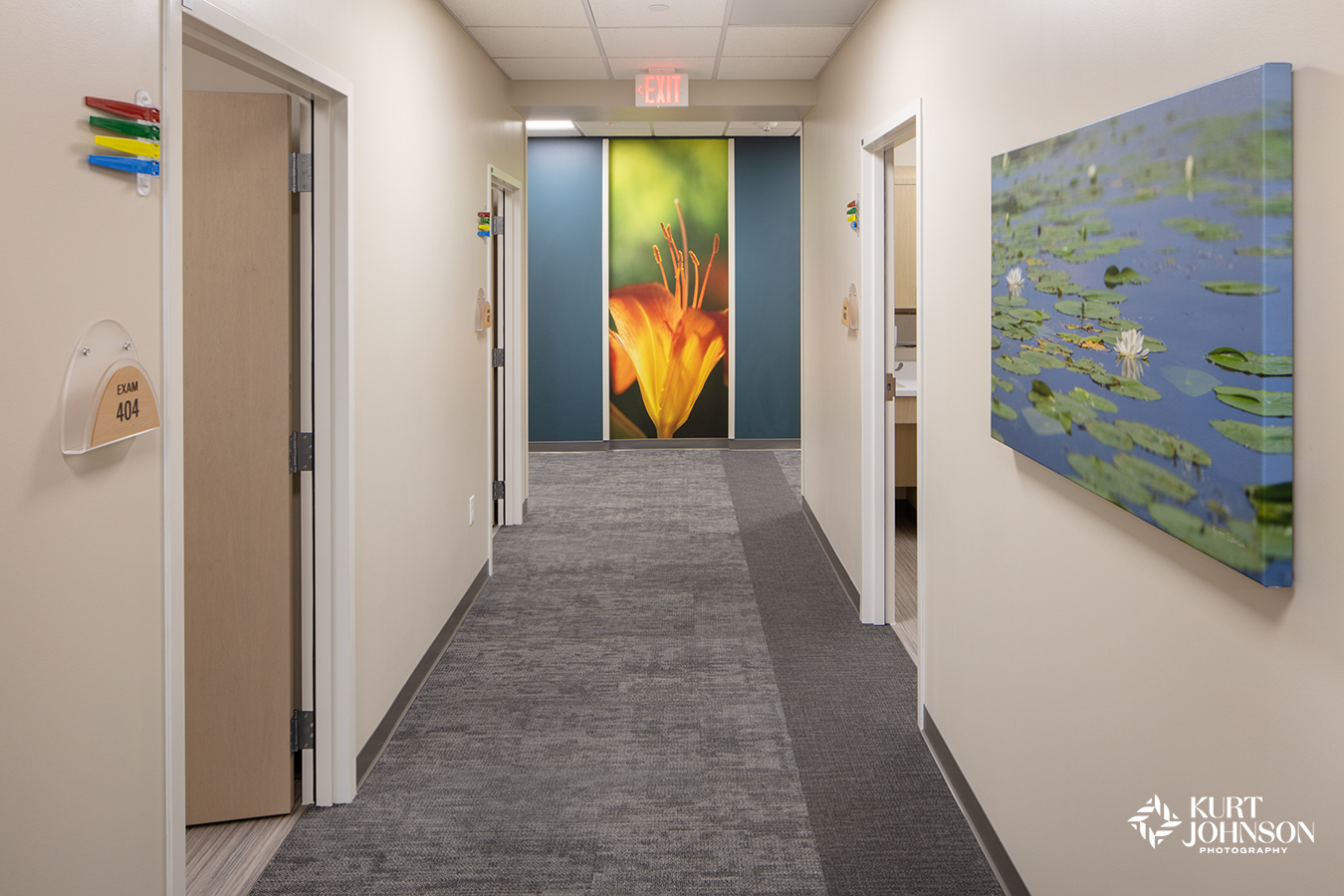
A vibrant vinyl wallcovering paired with a soothing canvas wrap turn this corridor from sterile to serene at Allina Health’s Lakeville Clinic in MN.
1. Biophilic Isn’t the Point. Outcomes Are.
Biophilic design still matters, but a deeper understanding of what it means when it comes to nature art is rising to the top during discussions and planning sessions.
The conversation has shifted to more intentional questions like:
- Does this help people feel calmer, or does it create visual stress?
- Does it support wellbeing and wayfinding in the space?
- Does it work organically with other elements of the design, like architecture, furniture, and lighting?
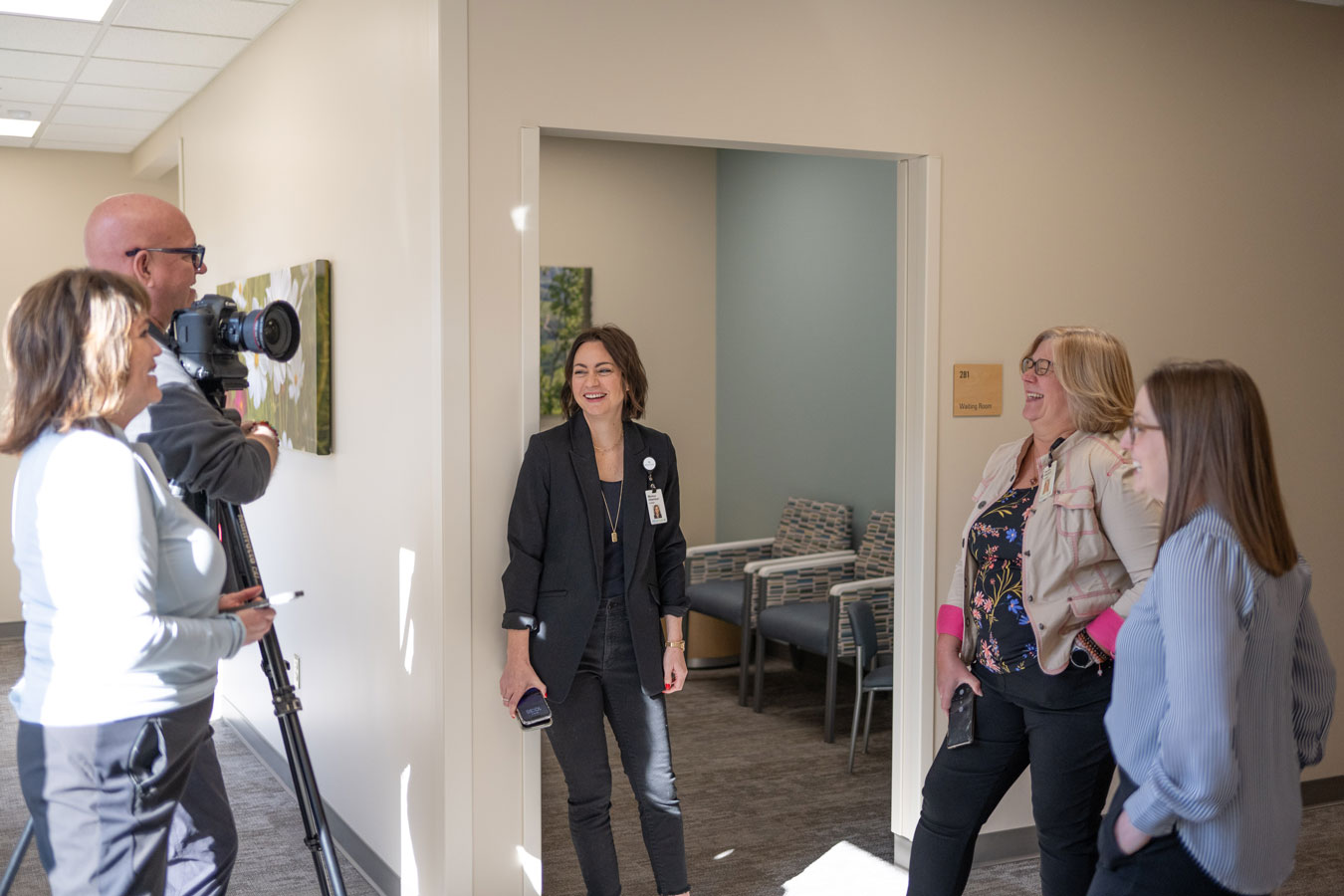
Kurt & Carolyn Johnson meet with Allina Health designers Monica Albertson, Rhonda Carlson, & Emily Gavin in MN.
Research continues to show that realistic nature imagery can reduce stress and anxiety in healthcare settings, particularly when it falls into certain categories like slow-moving water or non-threatening wildlife.1 What’s changing is how intentionally that research is being applied and how early it’s being discussed with designers, facilities teams, and clinical staff.
Nature art is being selected less as a concept and more as a tool, one that supports healing environments in specific, measurable ways. That’s when art has the most impact because it becomes part of the care team.

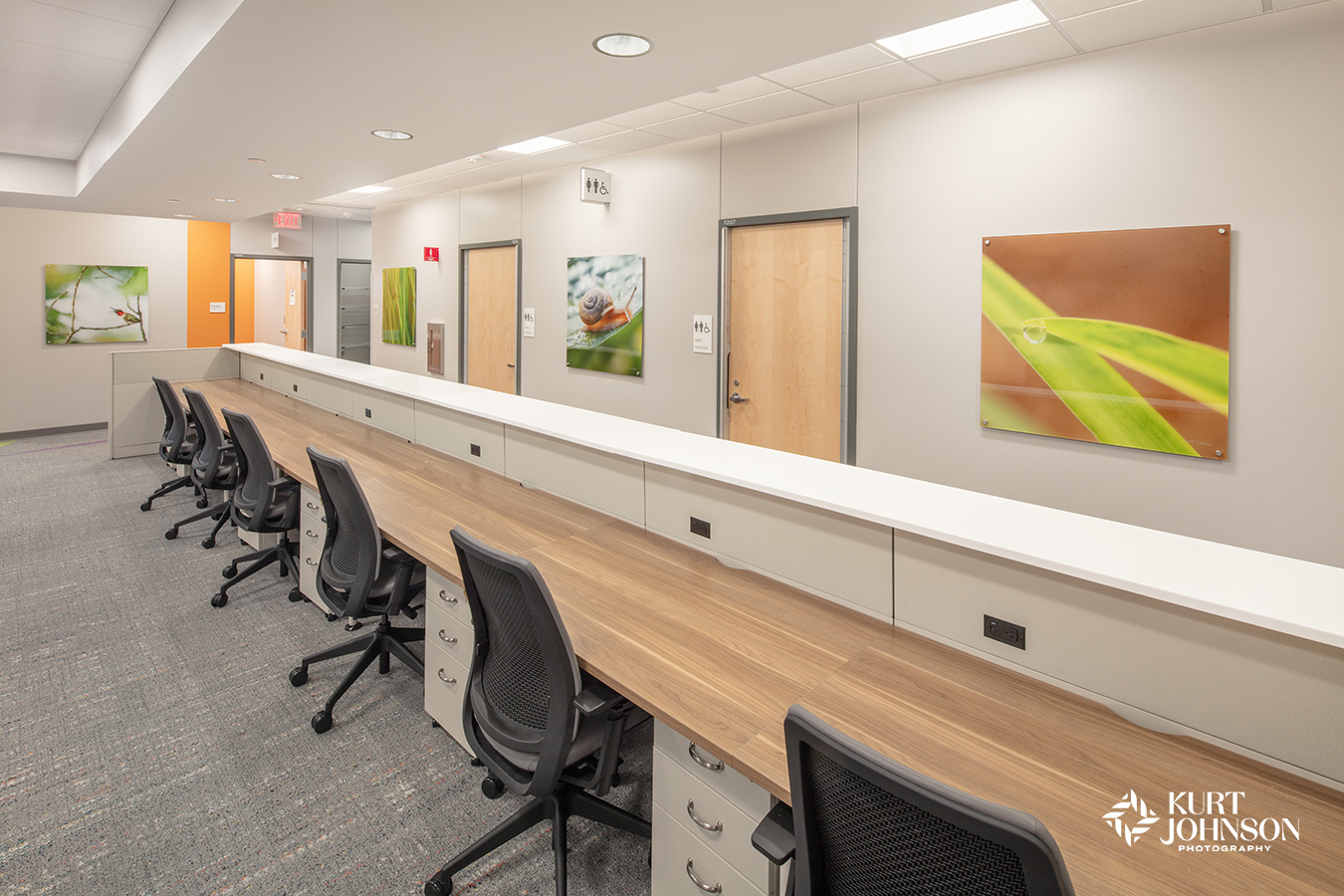
Film on glass adds privacy, wayfinding and an uplifting distraction at this pharmacy counter at UNMC’s Nebraska Medicine’s Village Pointe Clinic in Omaha, NE.
2. Purpose over Decoration.
There’s a noticeable move away from nature art that’s there simply because the wall needed something.
Designers are asking:
- What does this space ask of the people moving through it?
- Is this area already overstimulating?
- Should the artwork help orient, calm, or offer a visual pause?
- Does it support wayfinding (a common frustration in complex healthcare environments)?
-
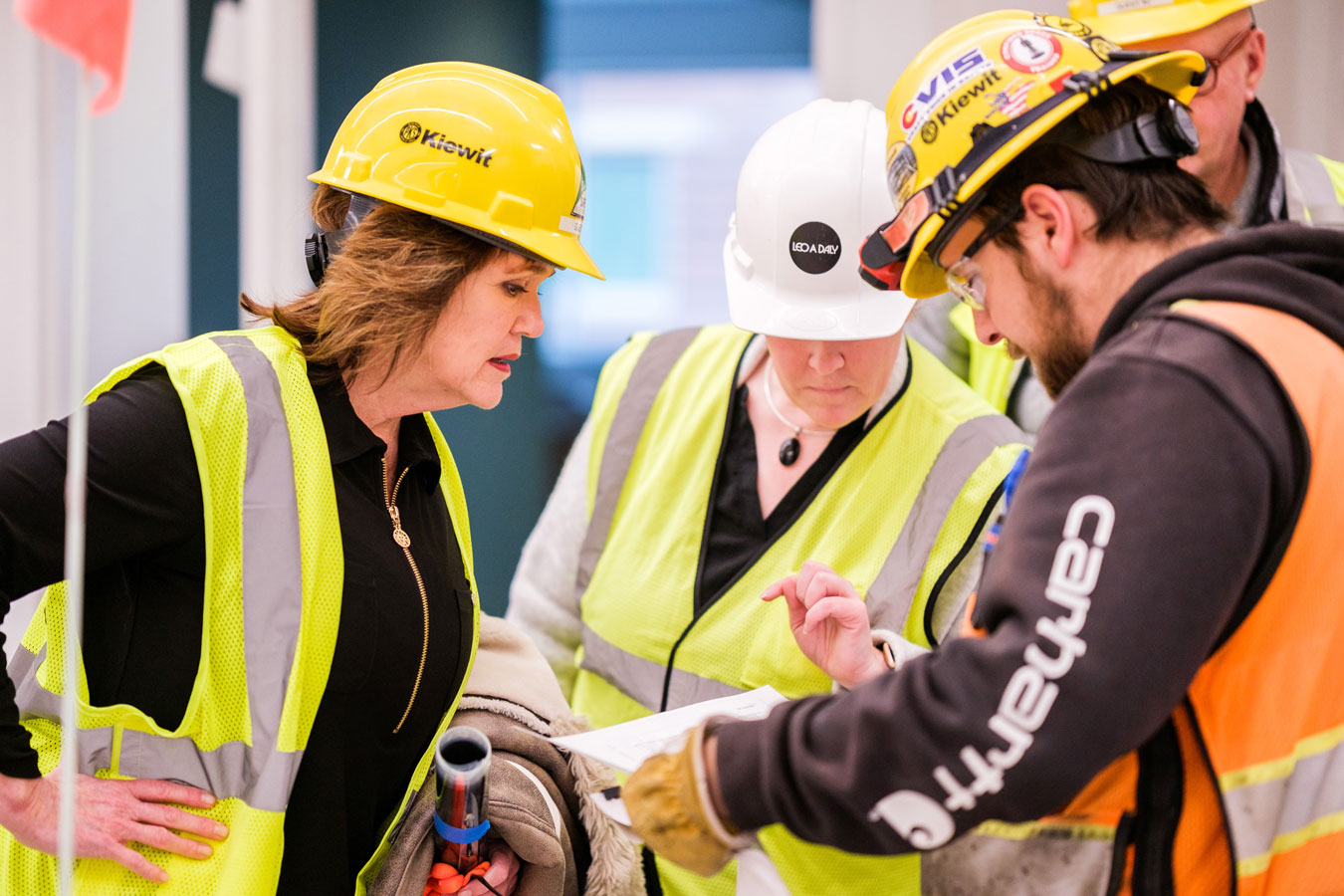
- Carolyn Johnson does a walk-thru with Leo A Daly’s Jenn Ankerson.
-
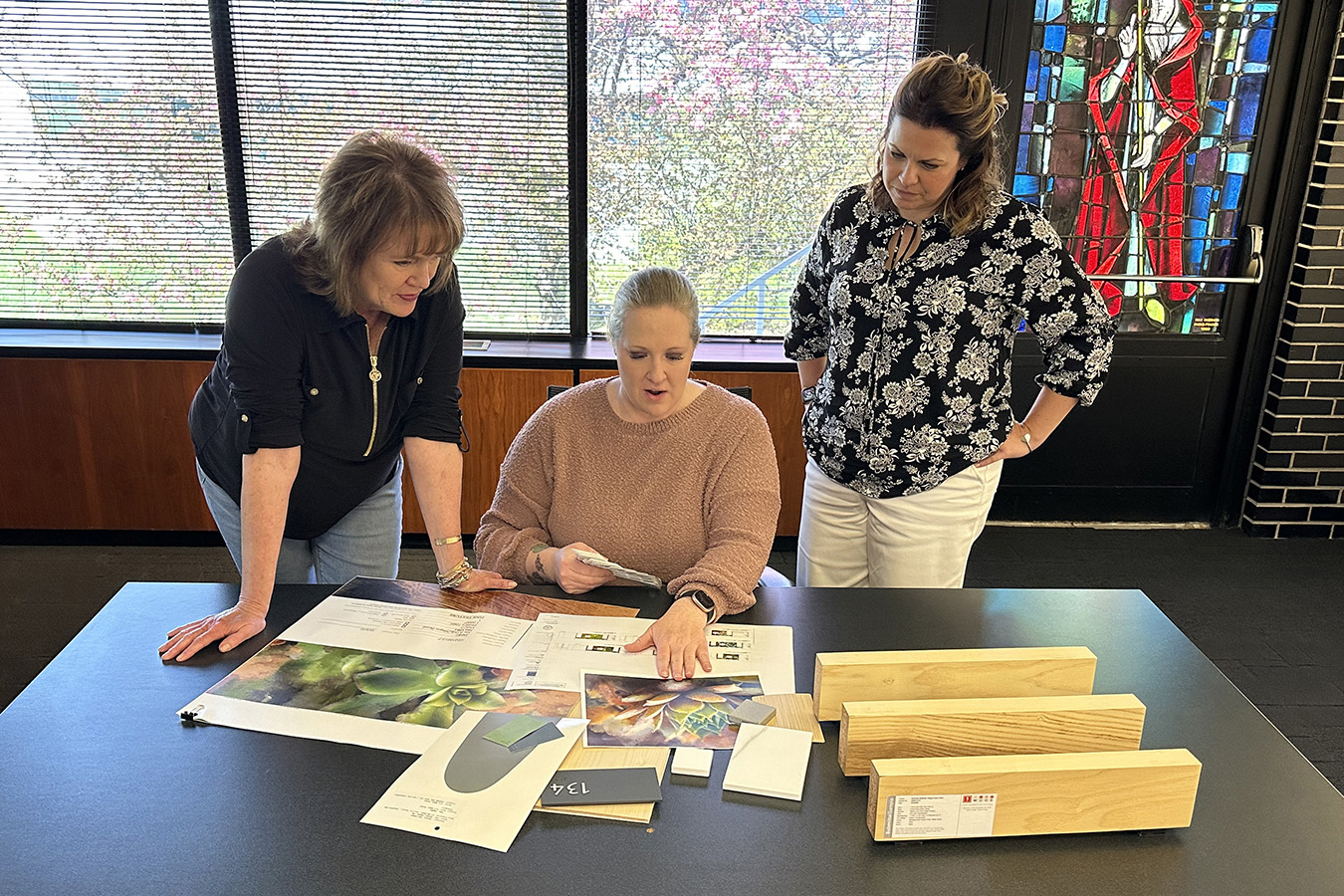
- Carolyn meets with Leo A Daly designers Jenn Ankerson and Alison Topp.
Asking these questions before specific images are chosen results in calmer, clearer, and more organic results that support healing rather than working against it. As Leo A Daly designer Alison Topp describes, “Art should be a part of design as a whole instead of an afterthought.”
Fewer competing elements and fewer visual interruptions lead to more imagery that lets the eye rest and recover.
The goal isn’t to impress or make a big splash. It’s to make the space feel easier to be in.
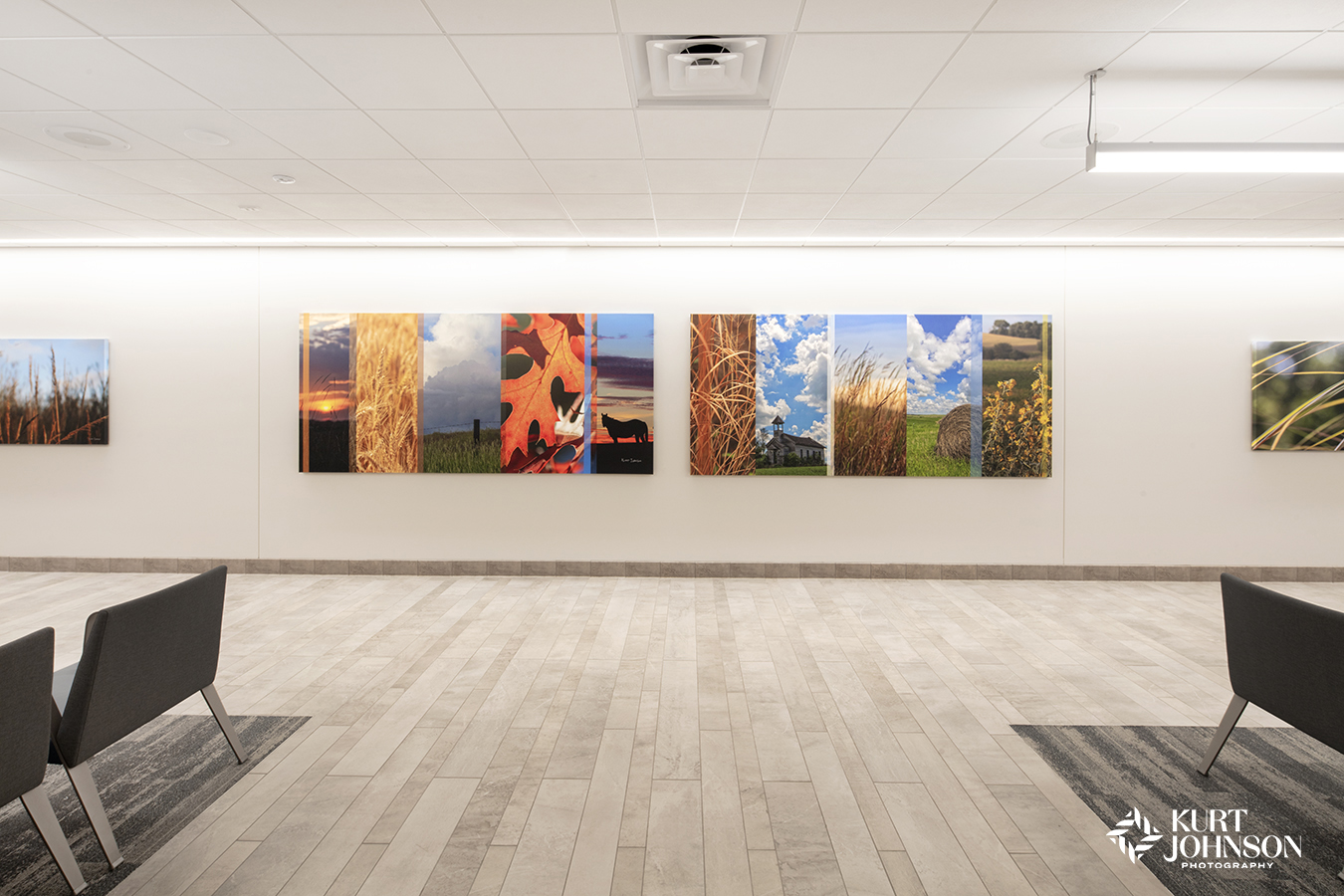
Boone County Health Center in Albion, NE.
3. Not All Nature Art Is the Same.
Nature imagery can be powerful, even transformational, but not all nature imagery is restorative.
Design analysis and research over the past few years continue to reinforce that context matters. Imagery that feels generic, overly busy, or disconnected from place can lose its calming effect, especially in clinical environments where people are already processing a lot.
That’s why more designers are gravitating toward:
- Familiar ecosystems
- Regionally relevant local landscapes
- Scenes that feel recognizable to the people who receive care in, and work in, the facility.
The shift isn’t about being literal. It’s about choosing nature art that reflects the surrounding community and landscape – imagery that feels comforting because it’s familiar, not because it’s cookie-cutter or interchangeable. That’s when stock imagery works against the process.
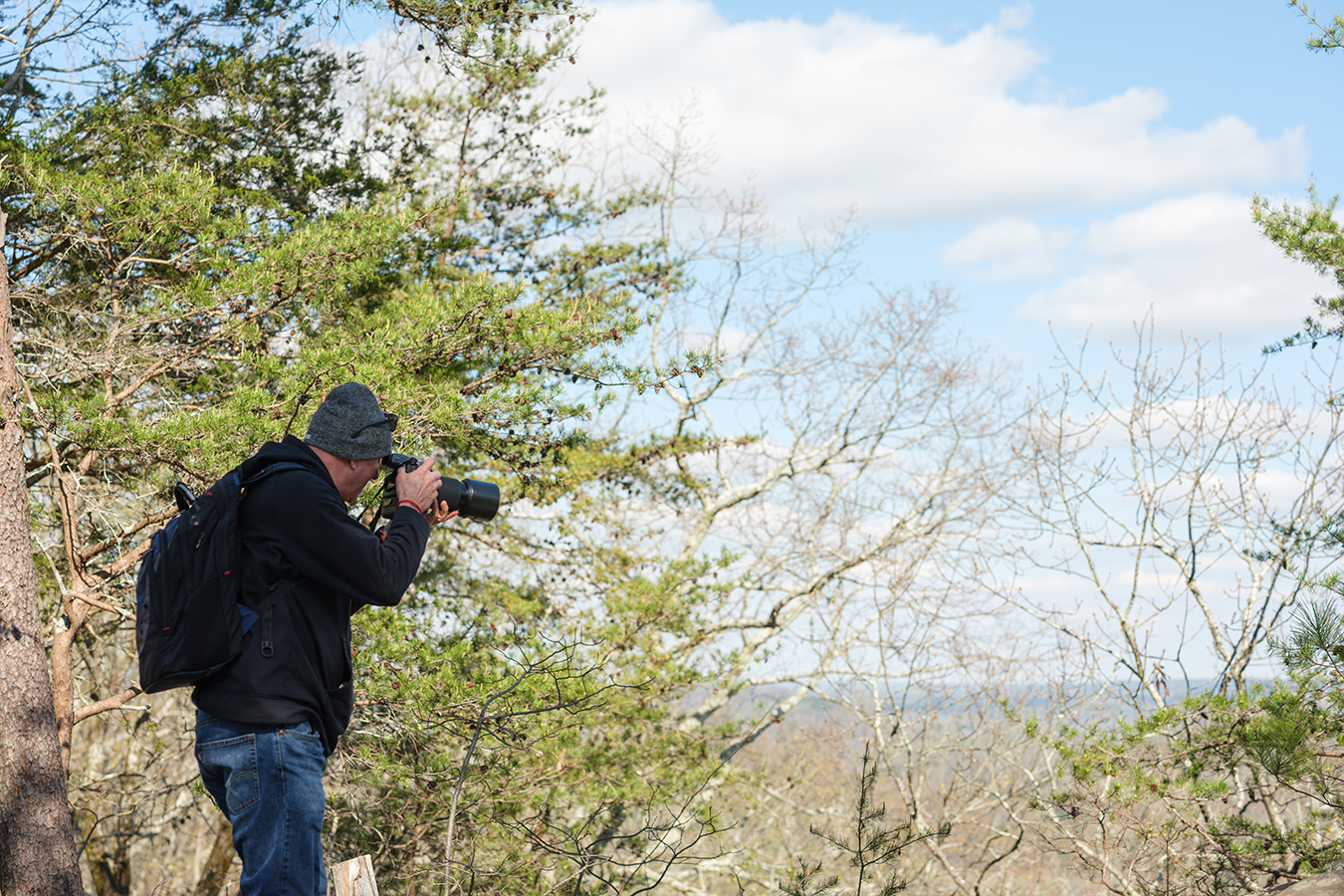
It’s essential to collaborate with a team that has expertise in interpreting and applying the research about which images truly heal. And an expert willing to travel to capture those images is a game-changer for the design team.
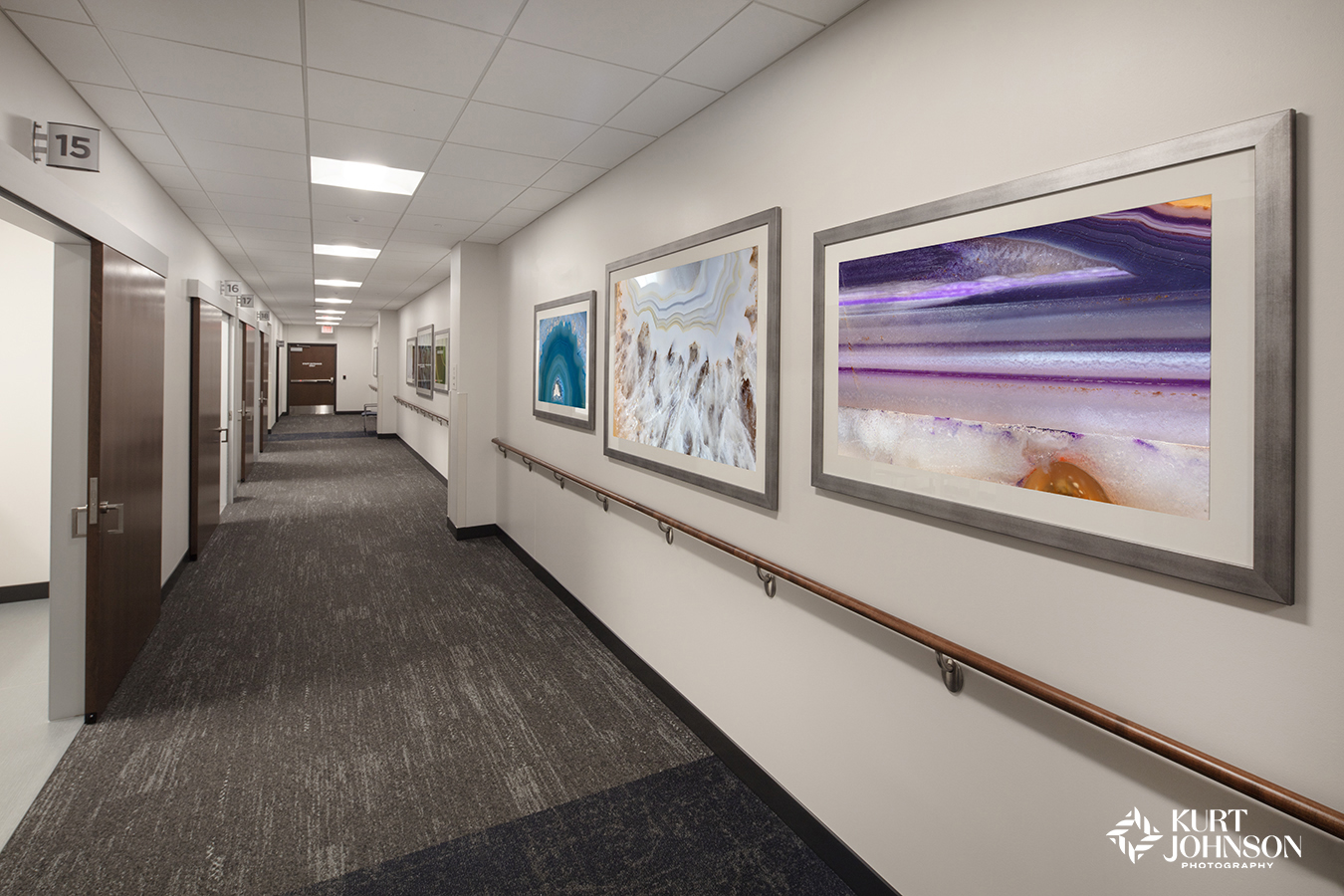
Corridor artwork benefits patients and staff at this Children’s Nebraska Facility in West Omaha, NE.
4. Staff Experience Is Becoming a Key Part of the Conversation.
This is one of the most meaningful changes.
Healthcare art conversations used to focus almost entirely on patients. And while patient experience is still central, staff experience is no longer an afterthought. And healthcare facilities are paying attention.
Recent research and design literature increasingly point to the role nature imagery can play in supporting staff wellbeing, particularly in spaces people move through repeatedly over long shifts.
Designers are paying more attention to:
- Staff corridors
- Work‑adjacent areas
- Transitional spaces used multiple times per day
Because small moments of visual relief add up. Nature art that offers calm and familiarity can quietly support staff wellbeing over time.
This isn’t about grand gestures. It’s about recognizing that the environment affects everyone who spends time in it.
Healing takes the form of bold agates against a calm, neutral backdrop at OrthoNebraska in Elkhorn.
5. Longevity Over Novelty.
Healthcare environments are long-term spaces. Decisions made early, whether during new construction or a remodel, have the potential to influence outcomes, wayfinding, and overall experience for years to come.
Designers are thinking beyond what feels fresh today and asking a more practical question:
- Will this still feel supportive ten or fifteen years from now?
That consideration goes beyond imagery alone and includes materials, durability, cleanability, and how artwork is installed.
-
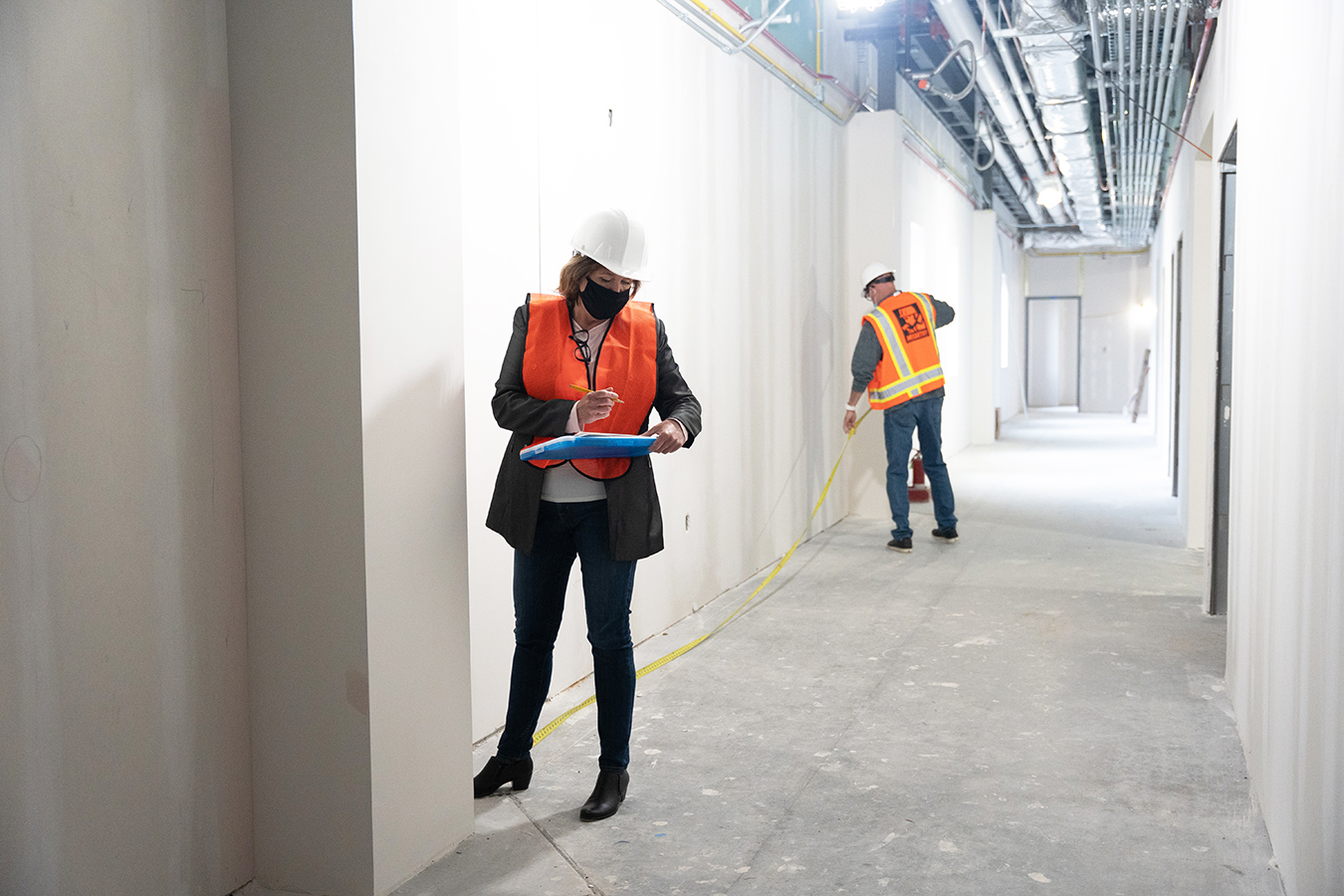
- Kurt & Carolyn Johnson at walk-thru for OrthoNebraska Orthopedic Clinic, Urgent Care and Physical Therapy Center in Elkhorn, NE.
-
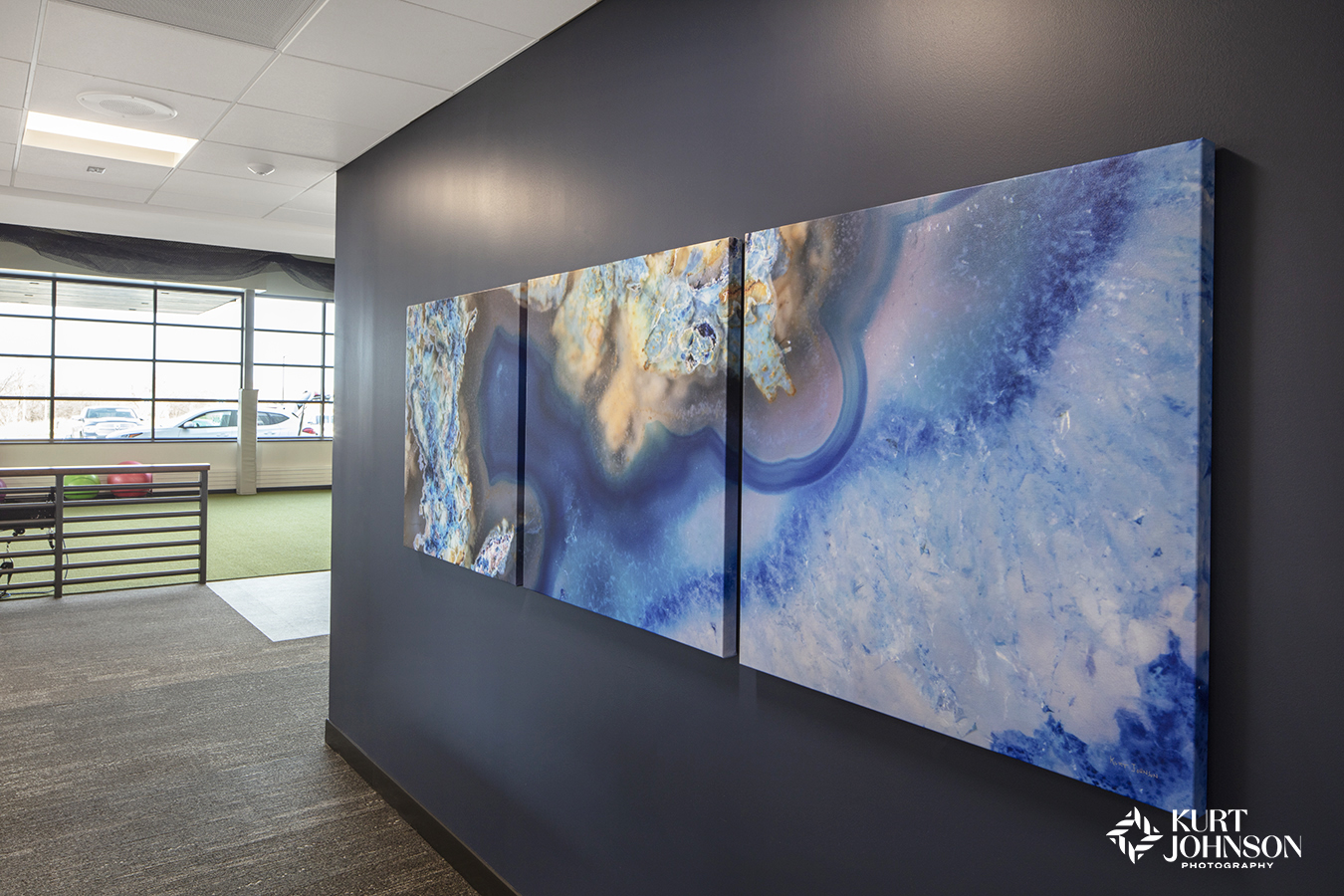
- Entrance to OrthoNebraska in Elkhorn.
In healthcare settings, art has to work hard. It needs to hold up to frequent cleaning, meet safety requirements, and adapt to very different environments, from acute care hospitals to mental health facilities, where material choices and installation details matter even more.
Hospitals aren’t art galleries. Artwork needs to be created, placed, and installed so it can quietly do its job over time, remaining safe, appropriate, and easy to maintain without becoming a burden on staff.
Nature art that ages well doesn’t demand attention. It does its work consistently, day after day. And in healthcare environments, that kind of reliability not only matters but improves outcomes.
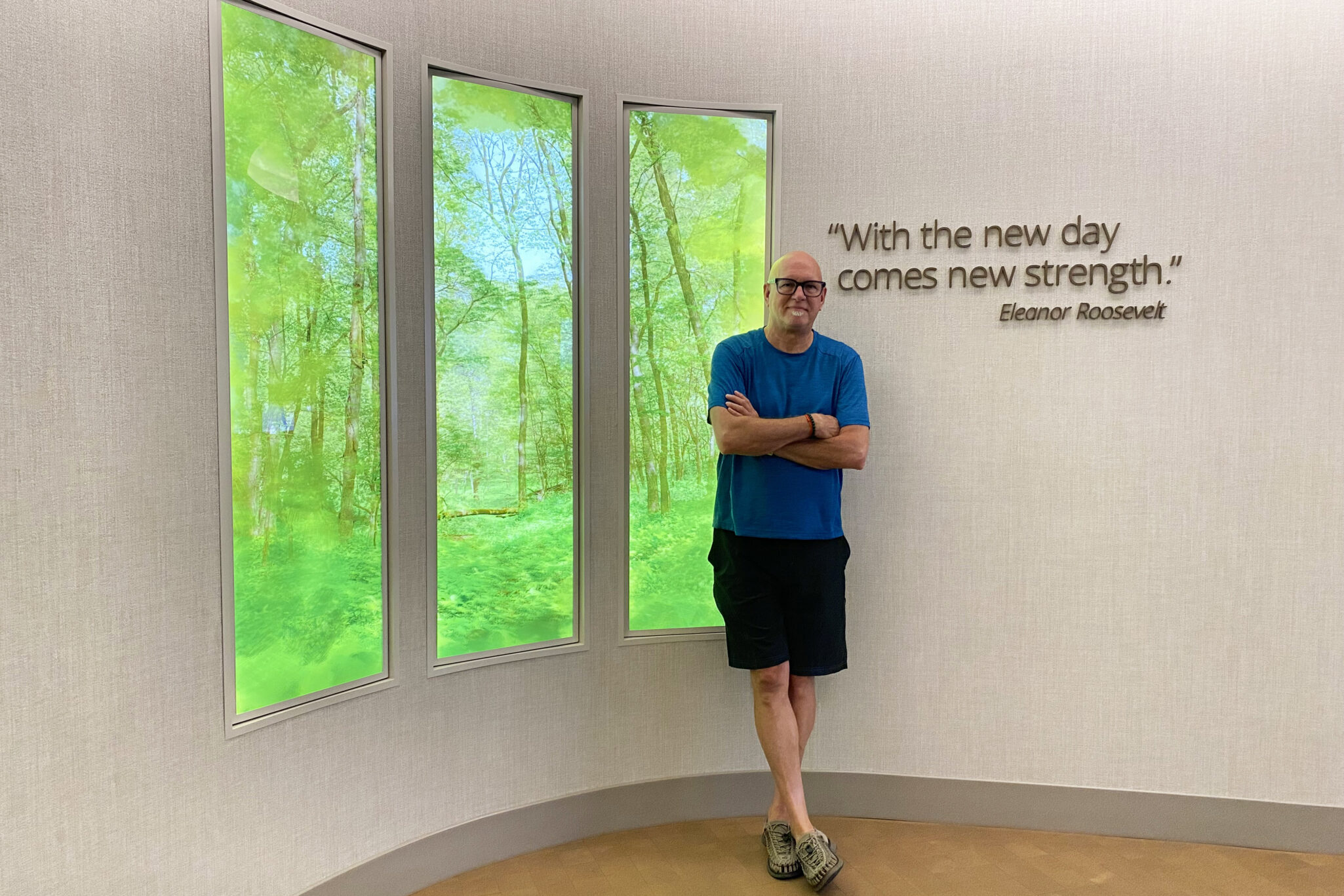
Kurt at Community Alliance’s Center for Mental Health in Omaha, NE.
A More Thoughtful Way Forward
Nature art in healthcare design isn’t changing because it’s stopped working. It’s changing because designers have seen what works best and what doesn’t.
The result is a quieter, more thoughtful approach to nature art: one that looks at evidence, experience, and real human responses from the entire care team.
Not trend‑chasing. Just better questions, better choices, and better outcomes. And that’s a trend we don’t see going away anytime soon.
If you’re navigating art decisions for a healthcare project and want a thoughtful sounding board, we’d love to help. This is work we care deeply about.
References:
1 Benefits of Nature Imagery and Visual Art in Healthcare Contexts: A View from Empirical Aesthetics
by Cardillo & Chatterjee, Buildings Journal, 2025
Categories: Healing, Healthcare, Installations