A Day at the Lake: How Local Nature Photography Inspired Allina Health’s Lakeville Specialty Center
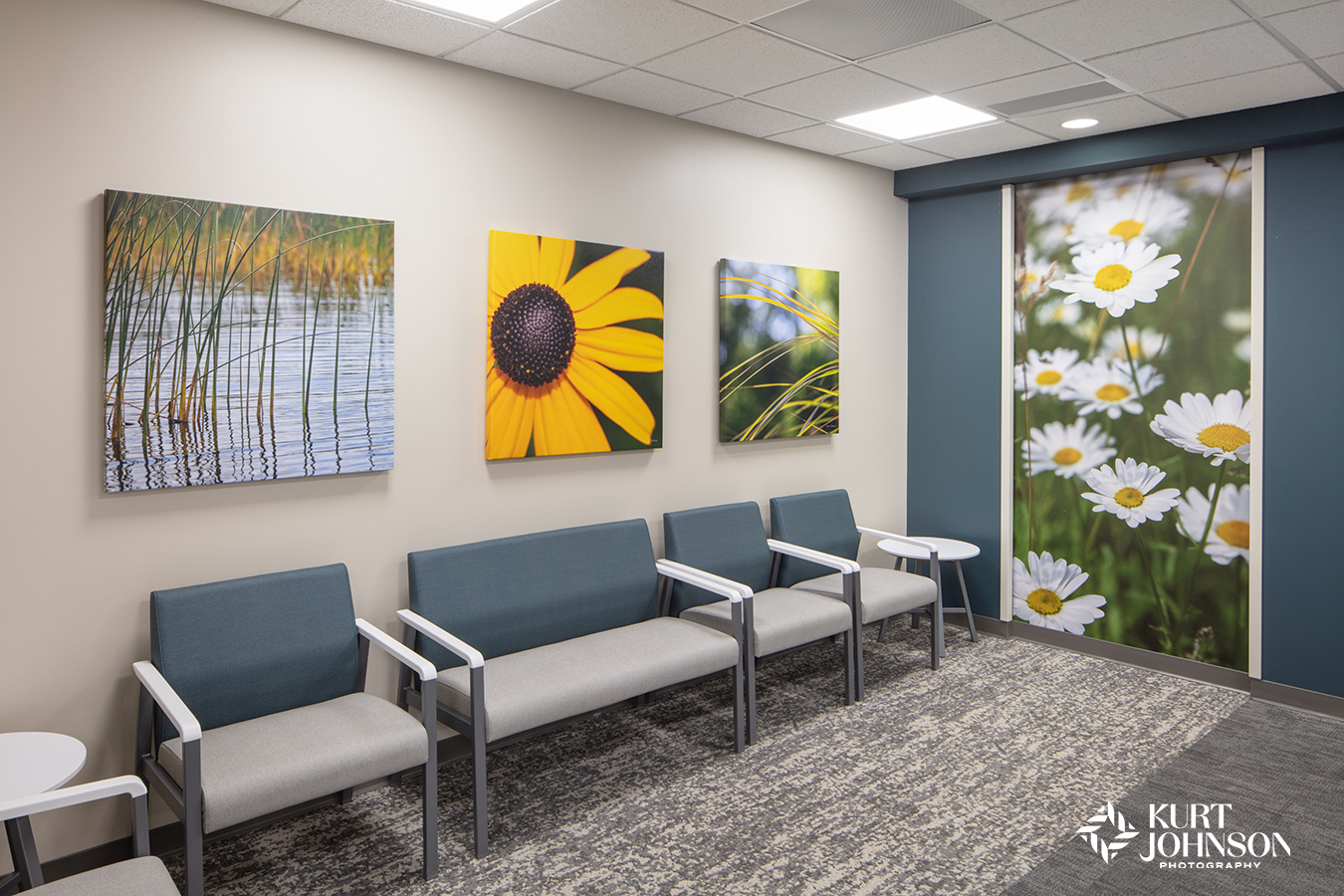
What if walking into your healthcare clinic felt like walking around your favorite lake? That was the idea behind the design of Allina Health’s Lakeville Specialty Center in Lakeville, MN.
From the very beginning, the goal was simple: make the building feel connected to the local landscape. Every corridor, waiting area, and exam room was designed to bring a little lakeside tranquility indoors.
For us, that meant going beyond our catalog of images.
We wanted artwork that reflected the people who would use the building every day. So, we spent a summer day chasing the perfect light around two Minnesota lakes.
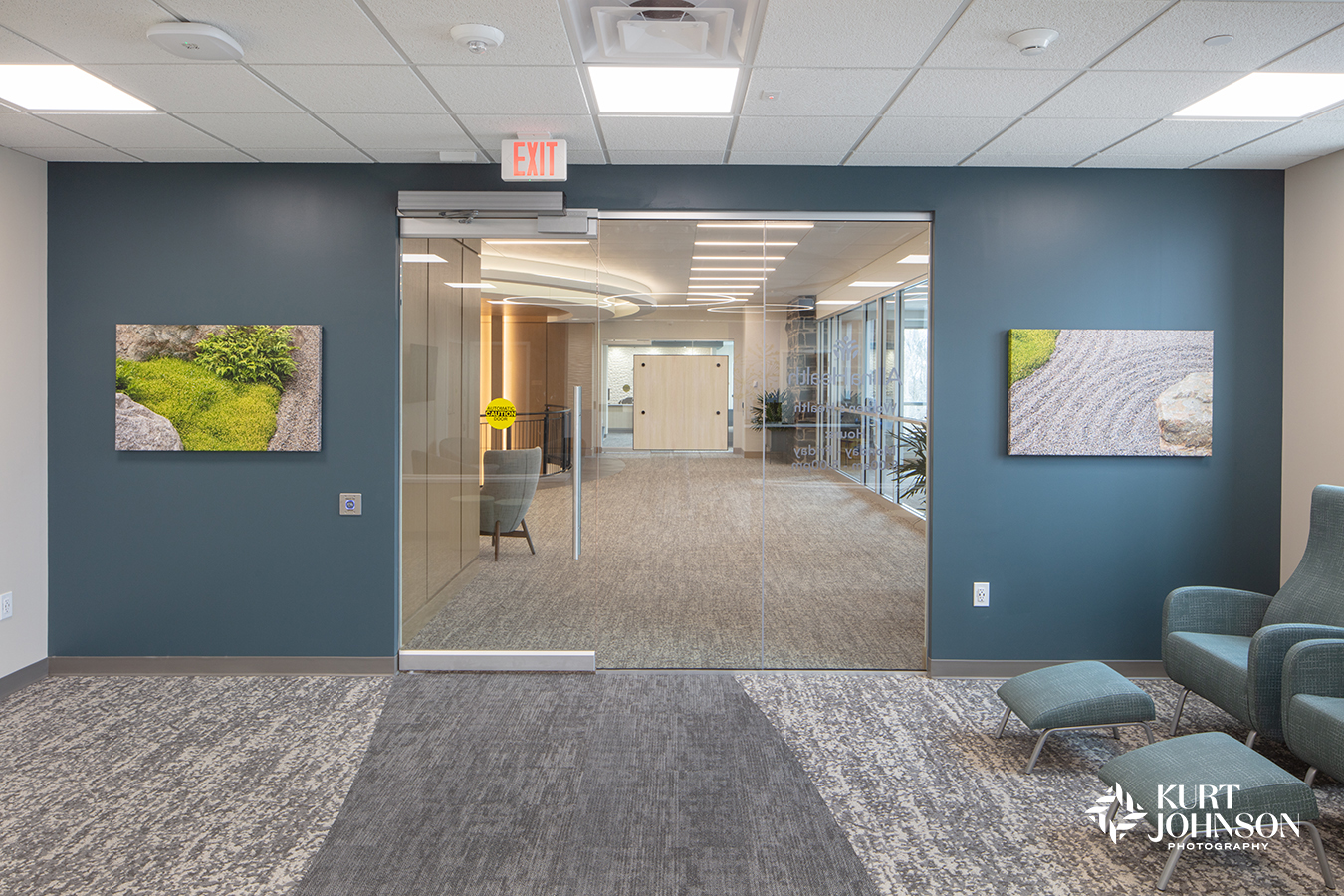
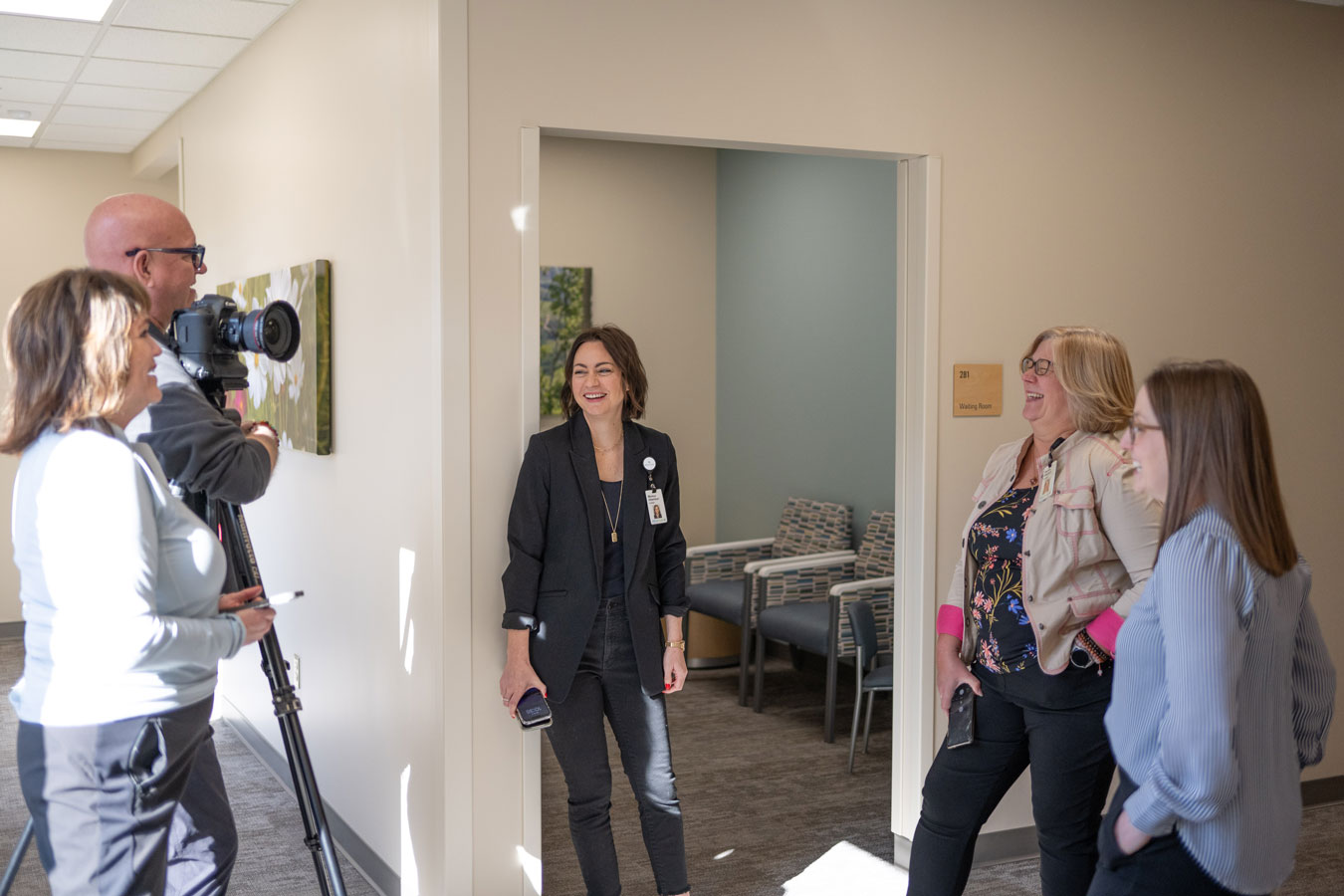
Allina Health interior designer Monica Albertson knew exactly what she wanted the building to accomplish, starting with the colors she used: “All of the paint tones are reminiscent of a day at the lake.”
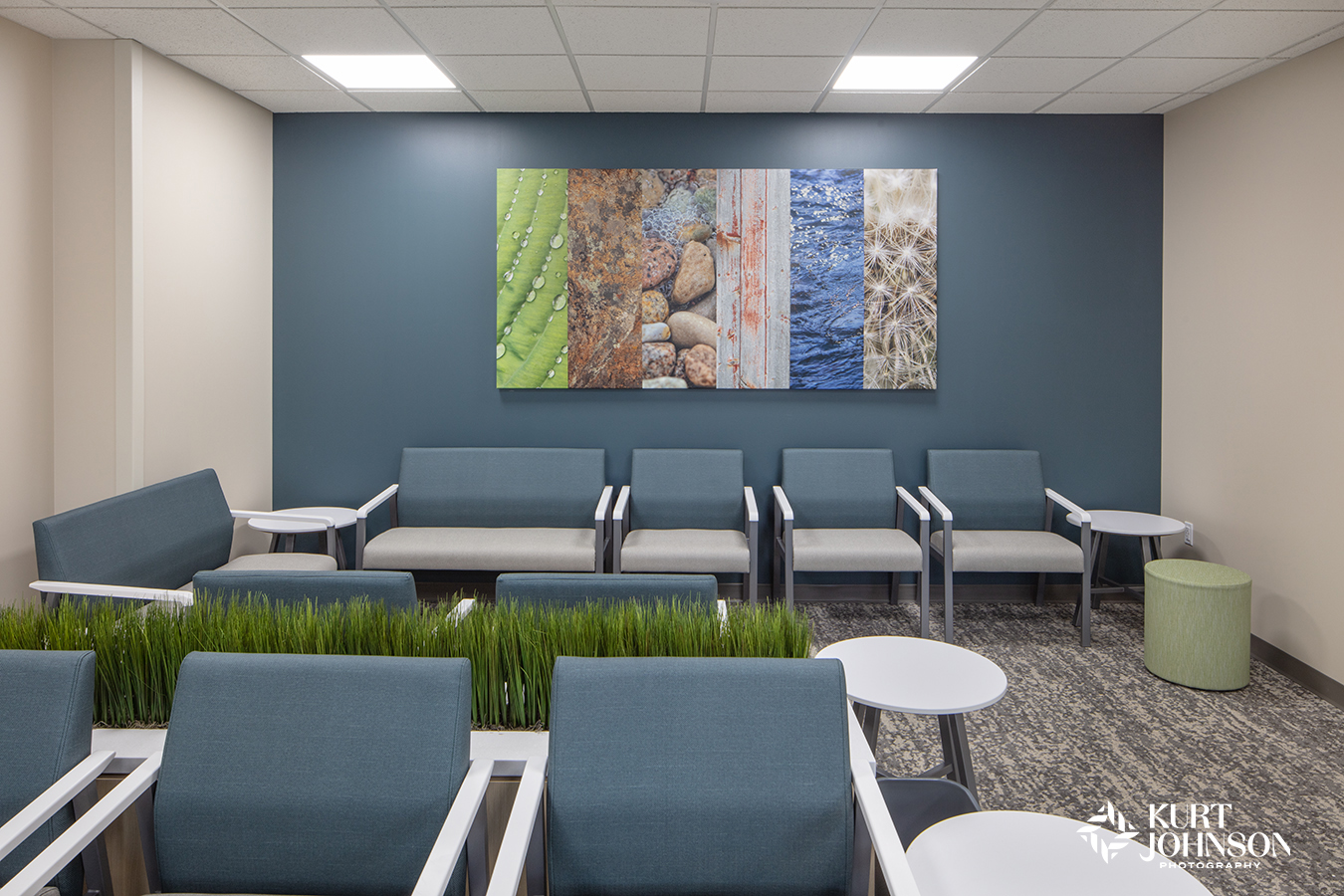
We know from years of research that nature imagery can reduce stress and create a sense of calm. That’s the heart of biophilic design, and it became the guiding principle for the entire project because, as Albertson explained, “When people are anxious, the environment matters.”
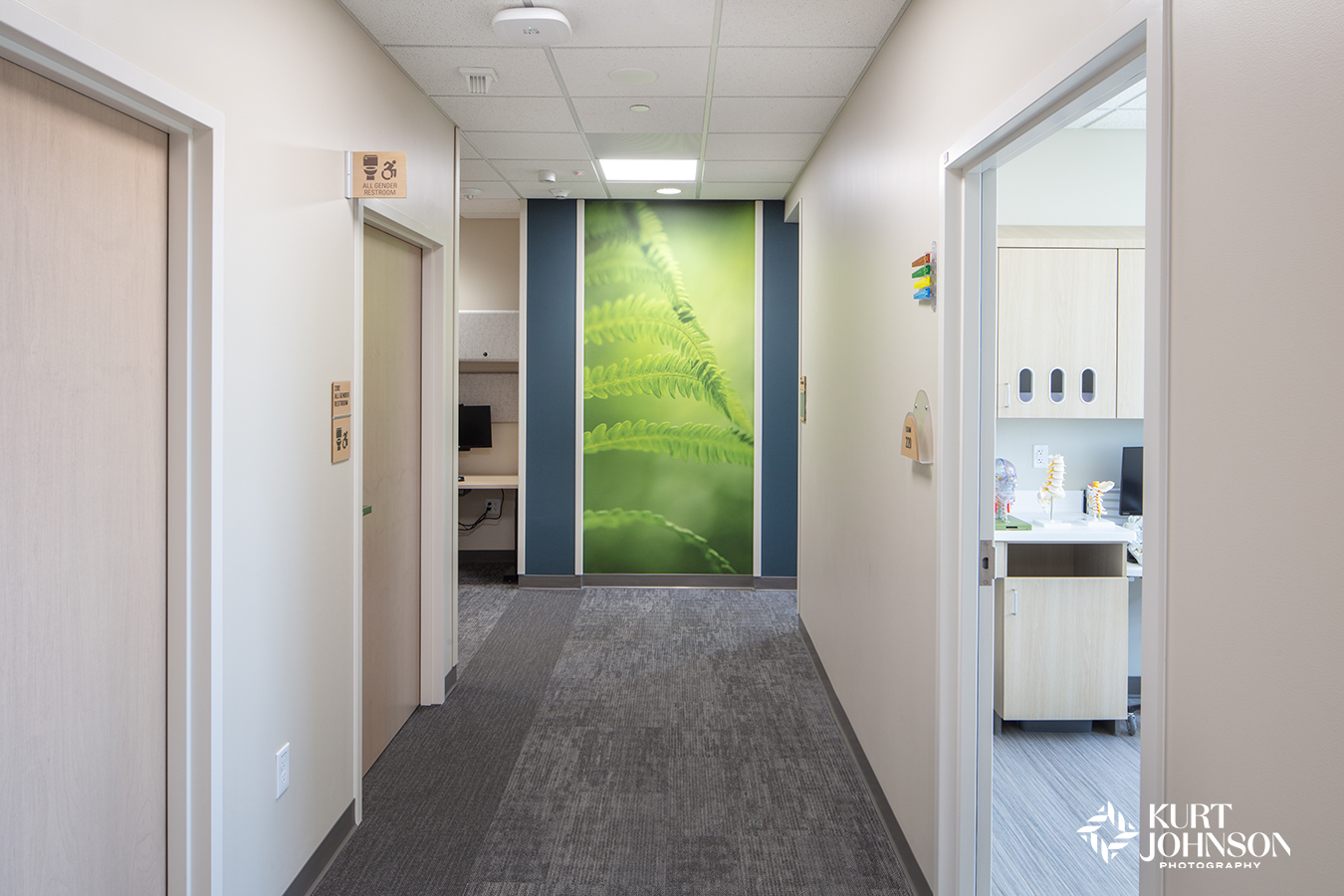
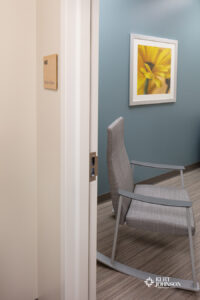
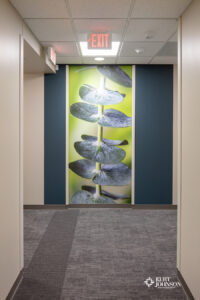
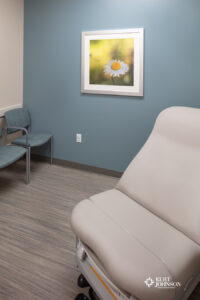
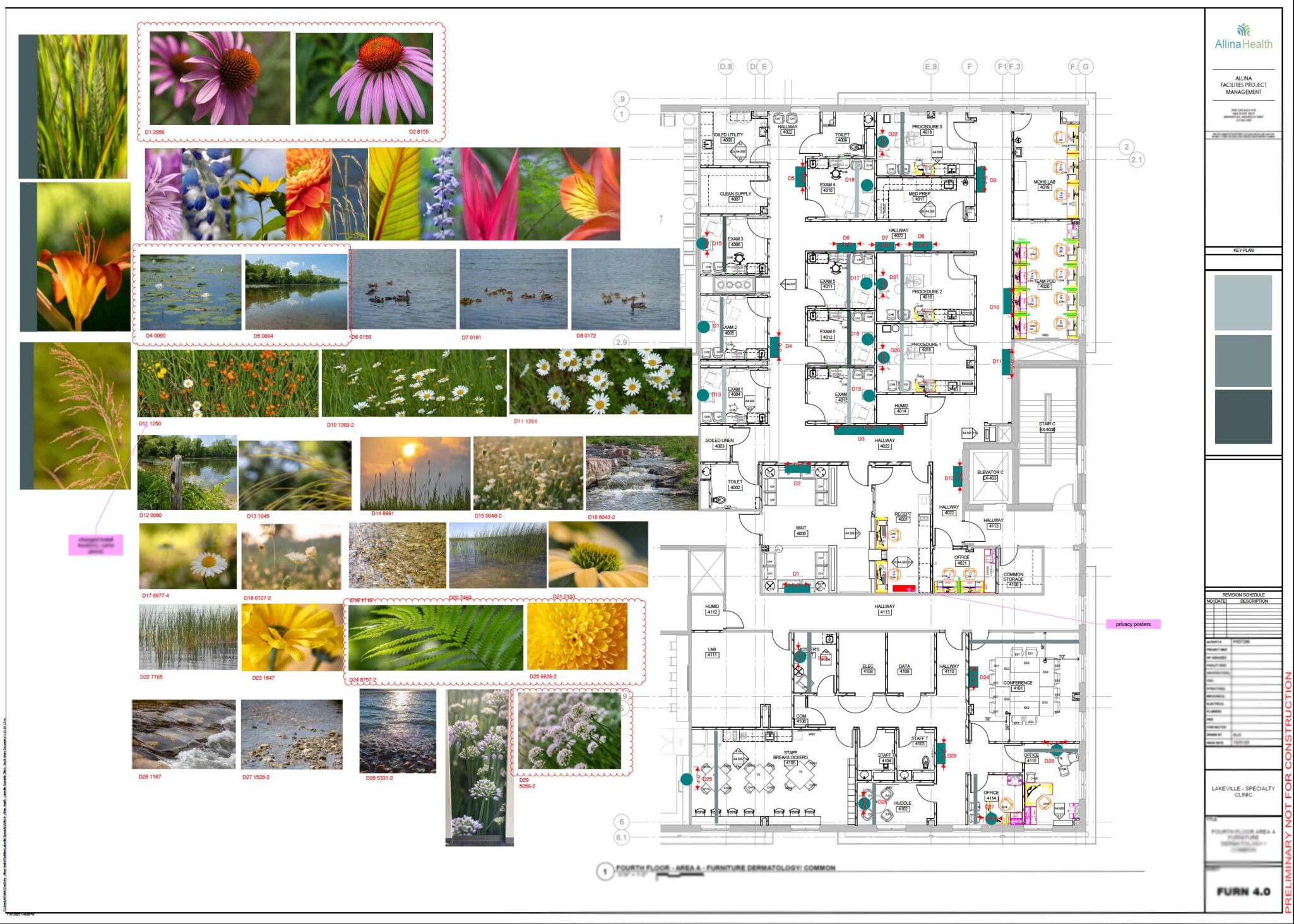
The artwork became part of the architecture, shaping how people experienced the building from room to room. That’s why it was important for us to visit Minnesota and capture the lakes near the new facility.
Albertson told us:
“This is their community. These are the people who are going to be coming to this clinic. It’s their backyard. It’s where they have birthday parties. It’s where they live. Their life happens here, so we wanted to be able to incorporate that into the space.”
So, we packed up the cameras and headed to Lake Marion and Orchard Lake in MN.
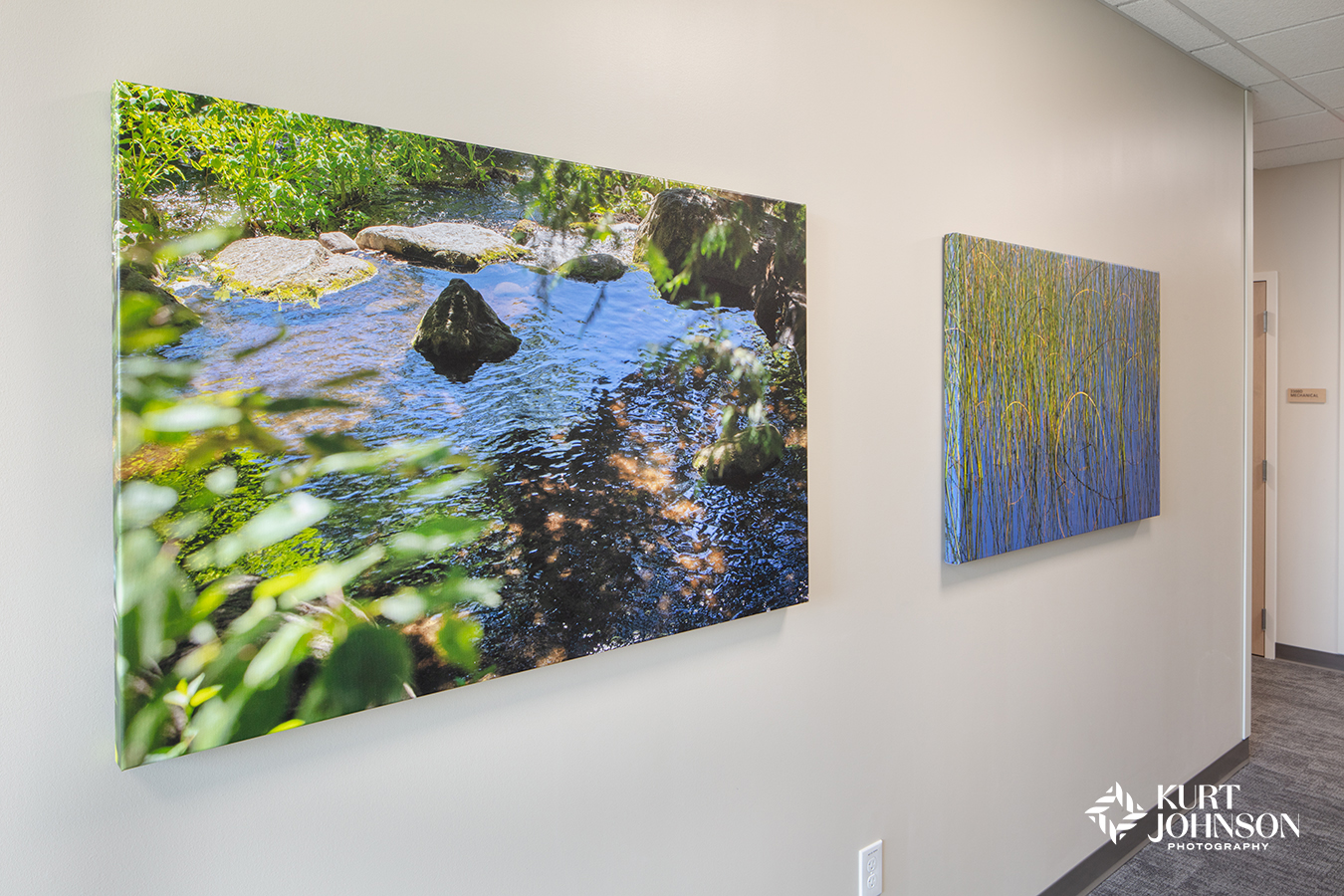
When staff and patients see photographs of nearby Lake Marion and Orchard Lake, something subtle happens: the space becomes familiar.
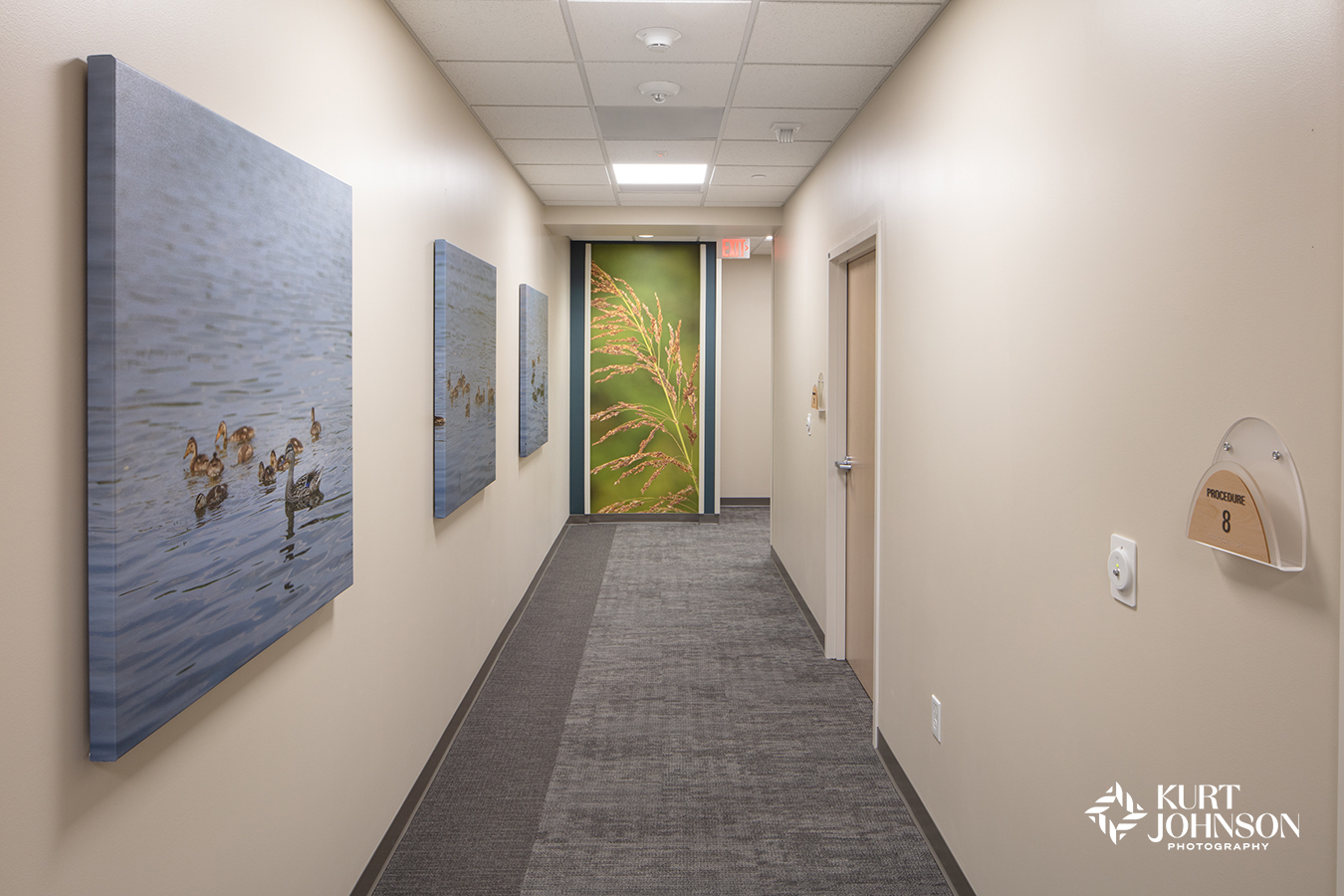
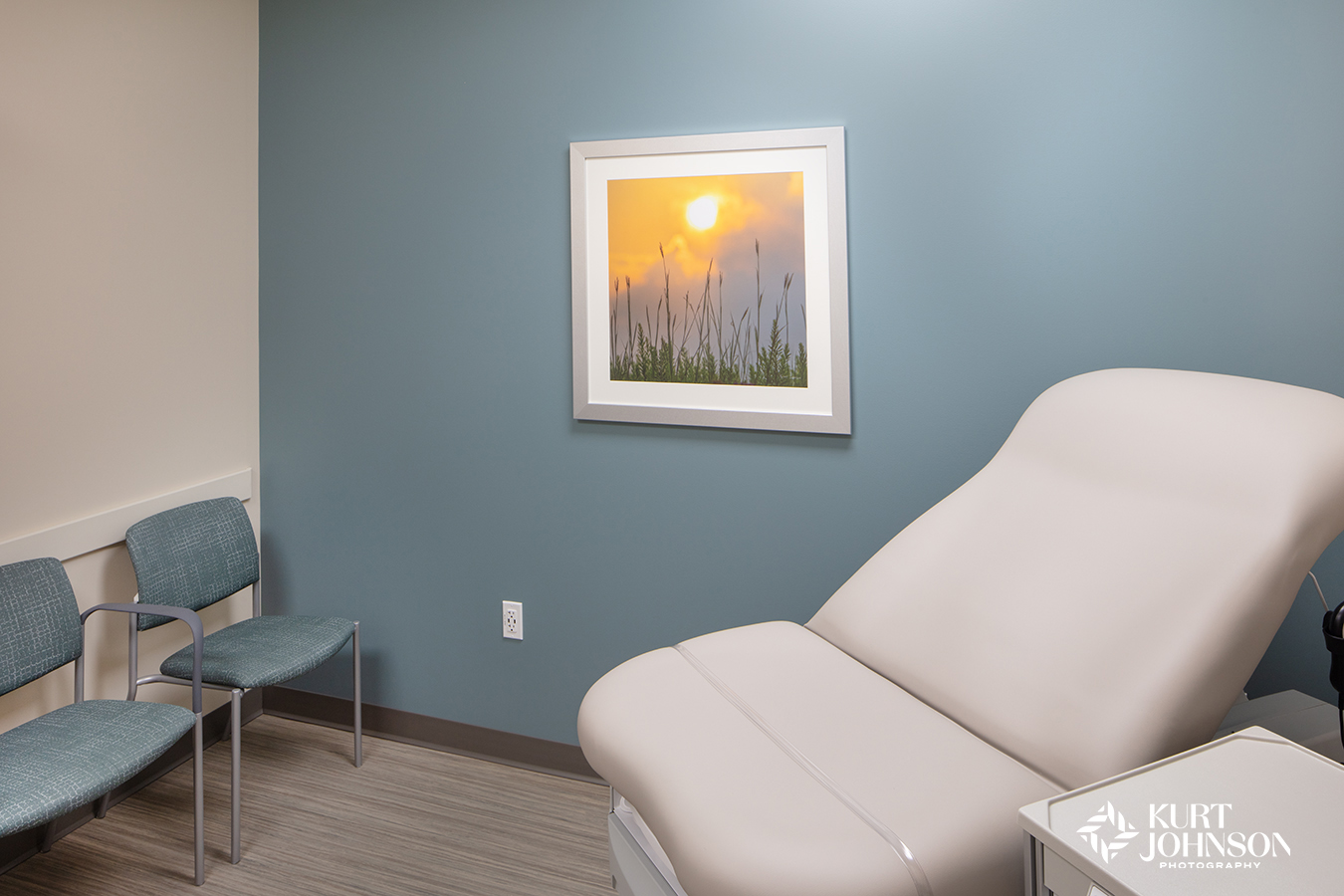
Instead of walking into a sterile medical facility, patients are greeted by scenes that already belong to their community. There’s a quiet sense of recognition that helps replace uncertainty with comfort, and that’s something stock photography can’t replicate.
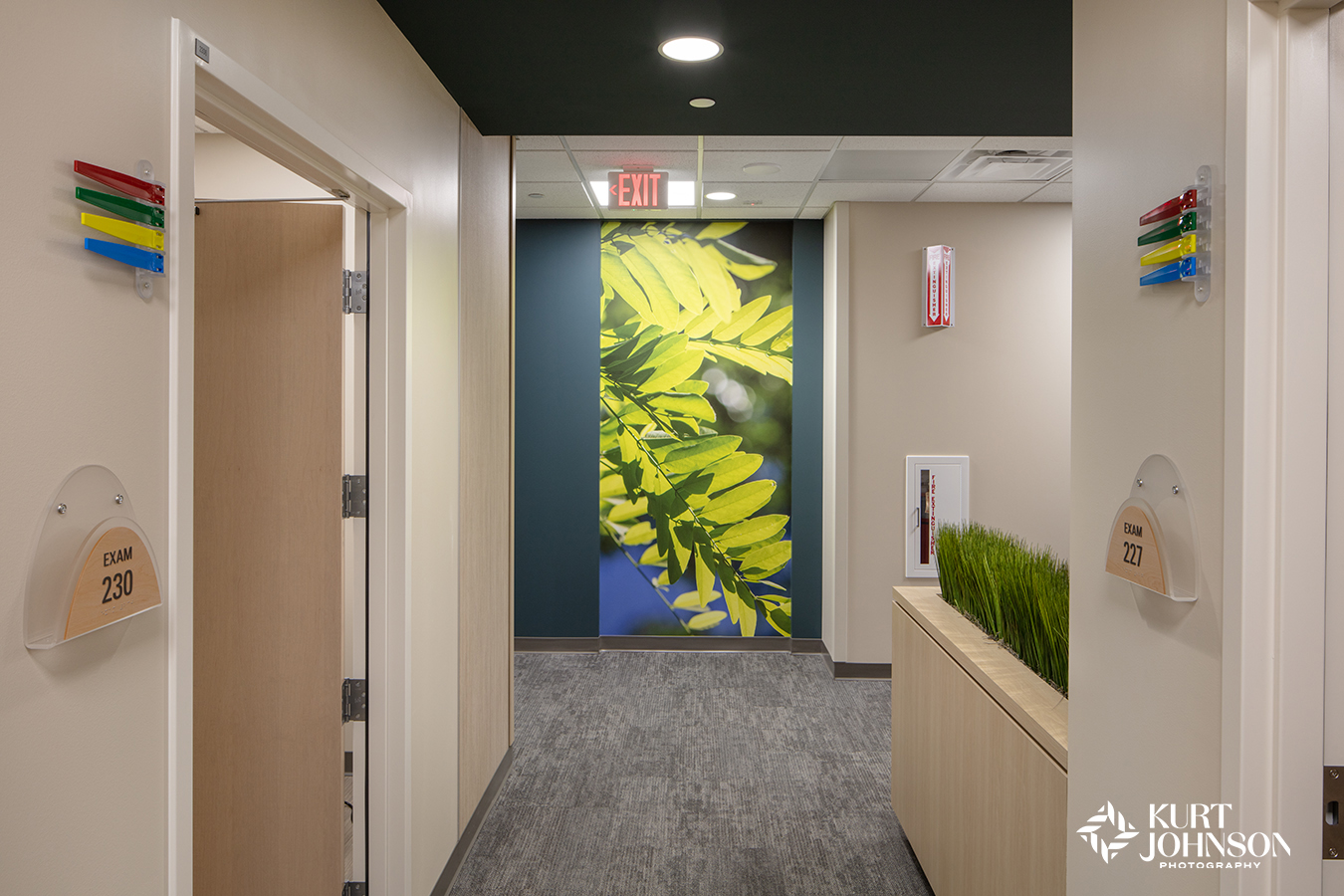
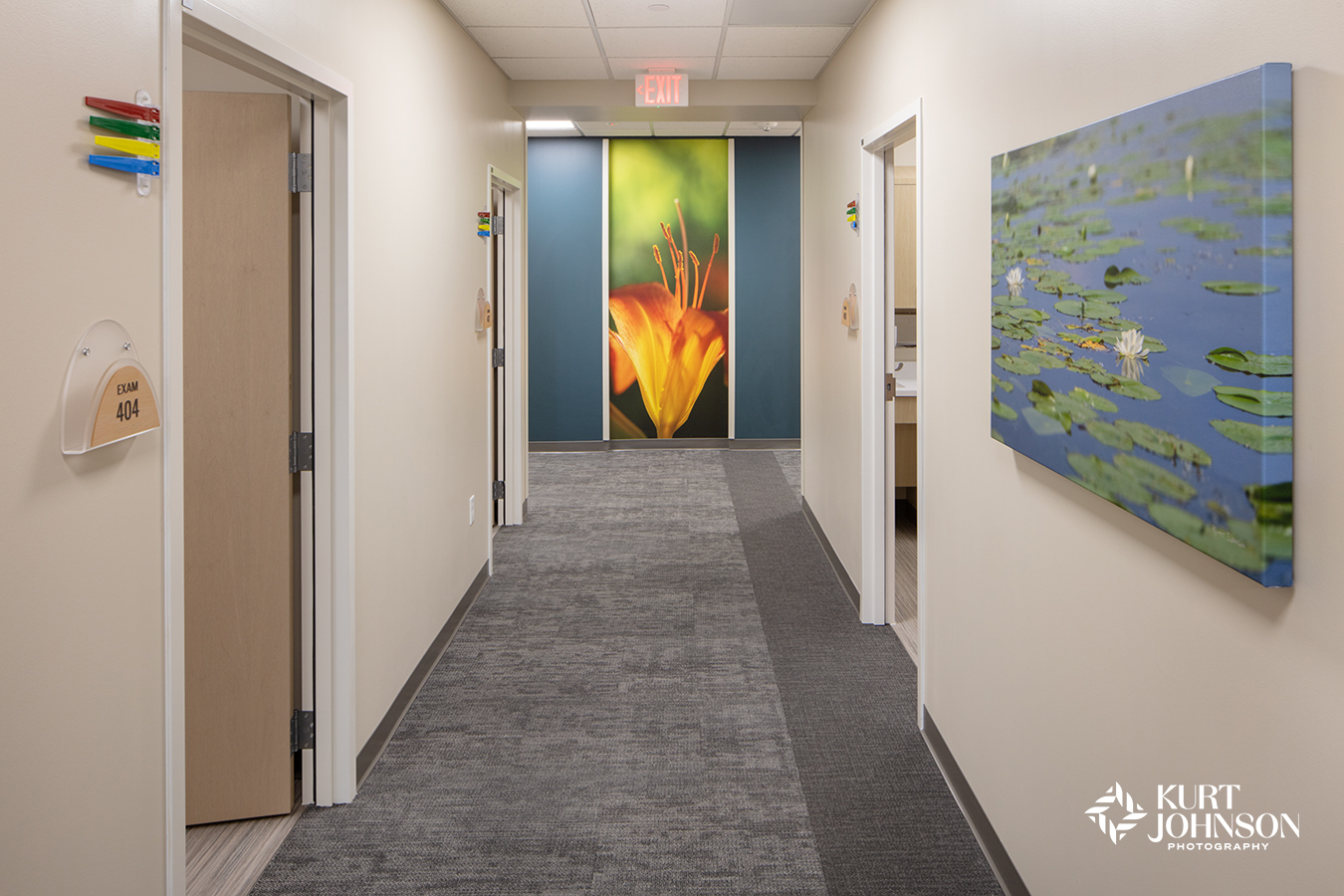
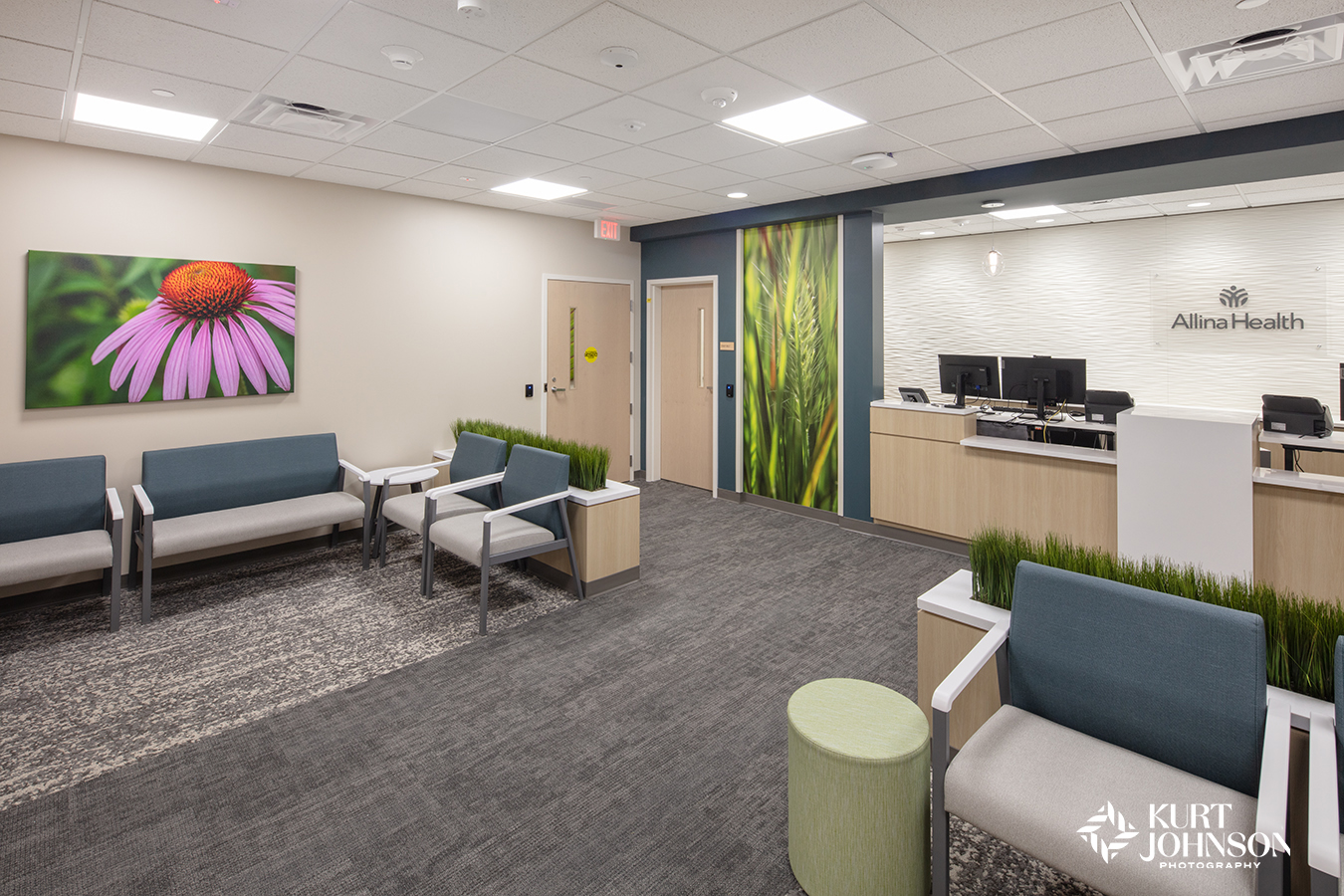
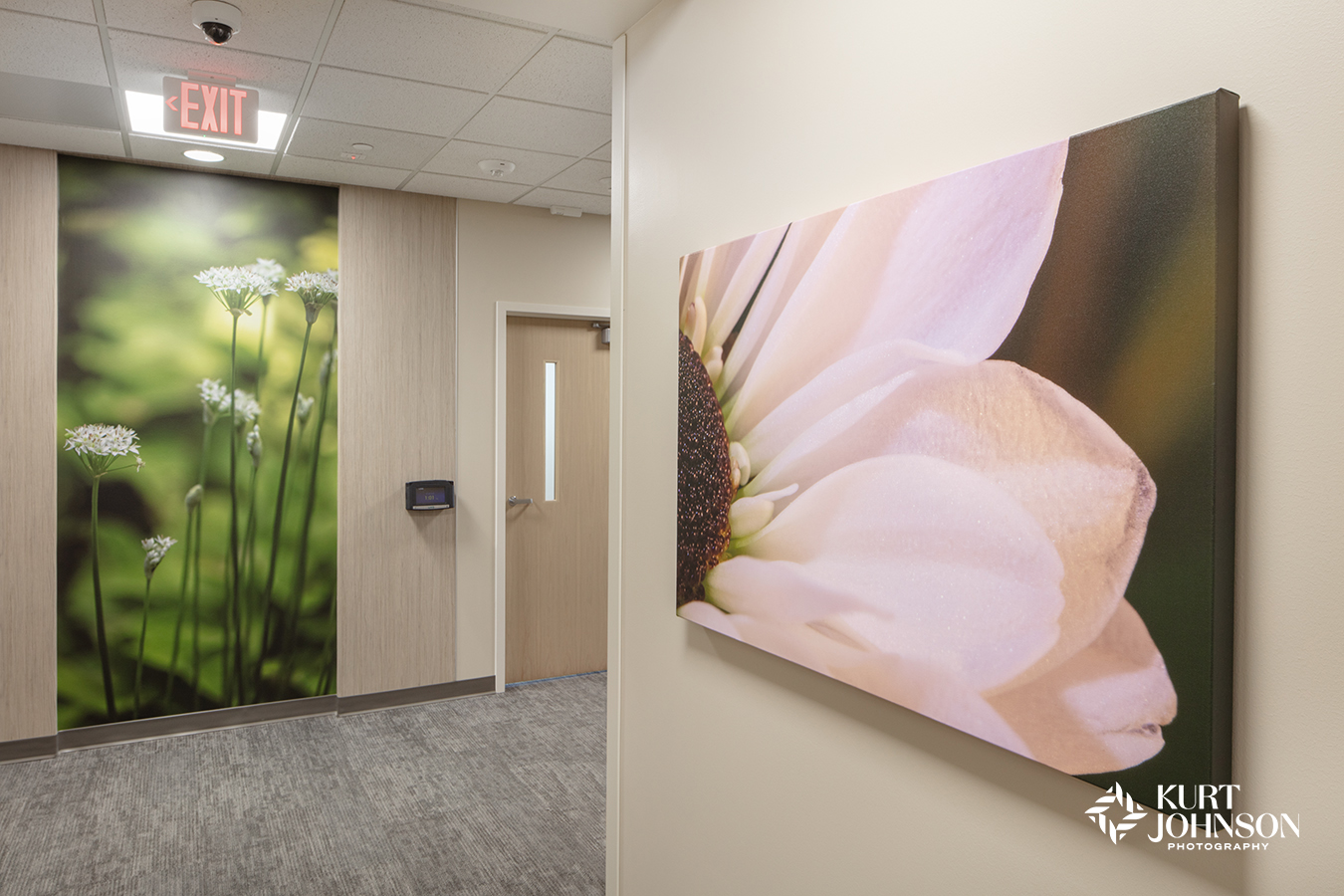
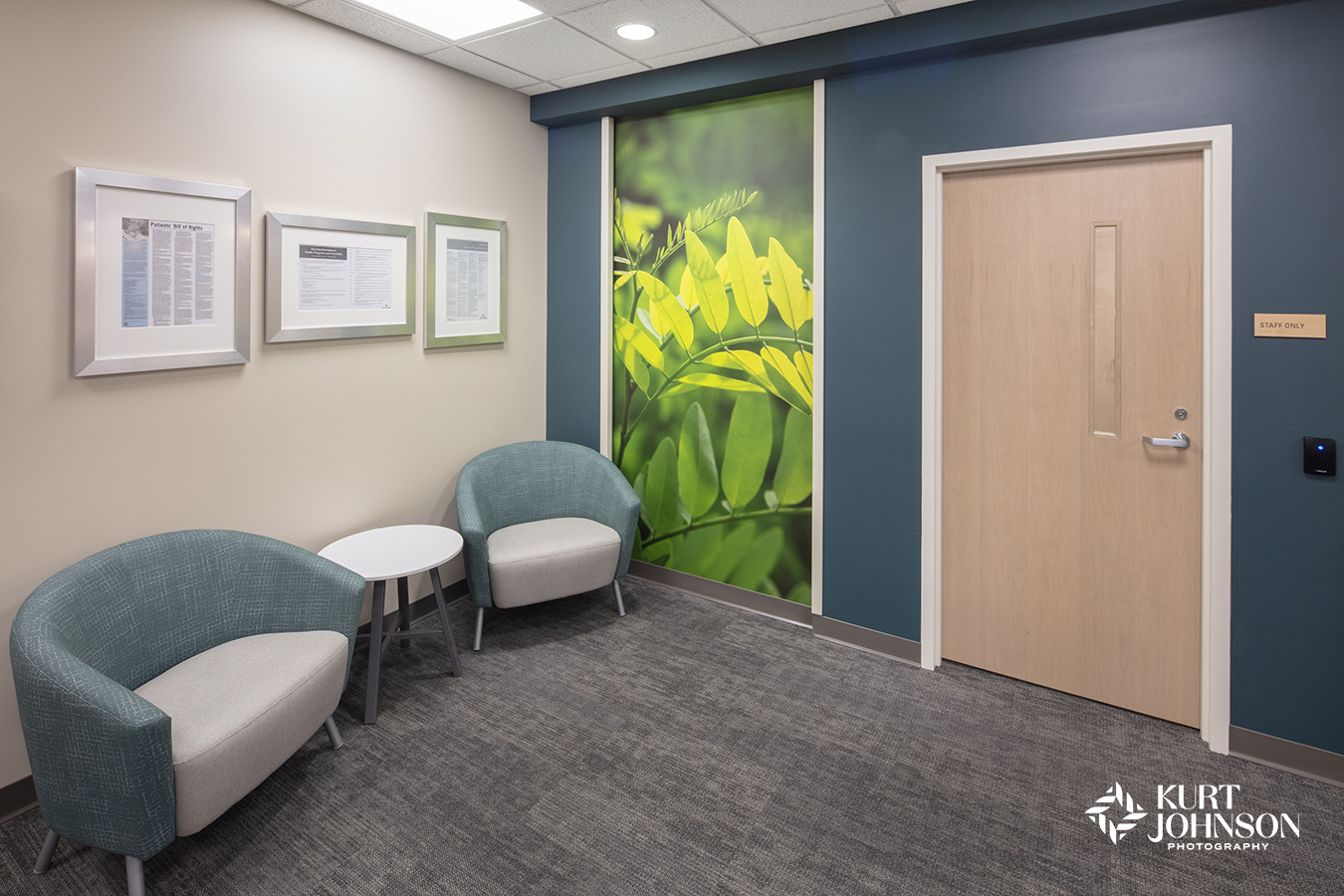
Throughout the building, Albertson designed wayfinding niches at the end of corridors. Rather than asking stressed patients to remember another room number or sign, each destination is anchored by nature imagery. It’s a simple idea that makes navigating the building easier while adding a moment of calm along the way.
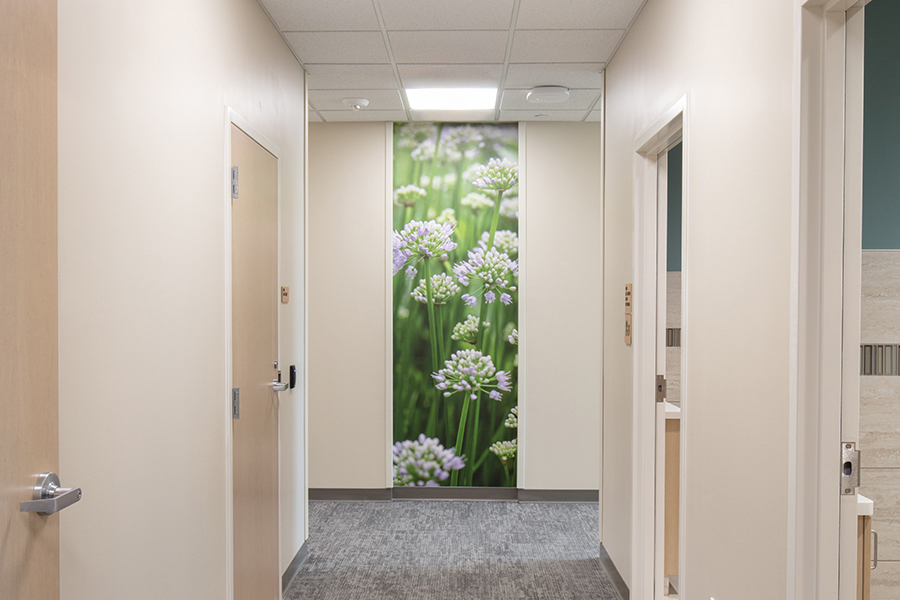
“Each of these wayfinding niches spark joy and help you find your place,” she told us. Because let’s be honest, we’ve all forgotten which hallway someone told us to take. When people are anxious, they don’t read signs, but as Albertson put it, “people remember images.”
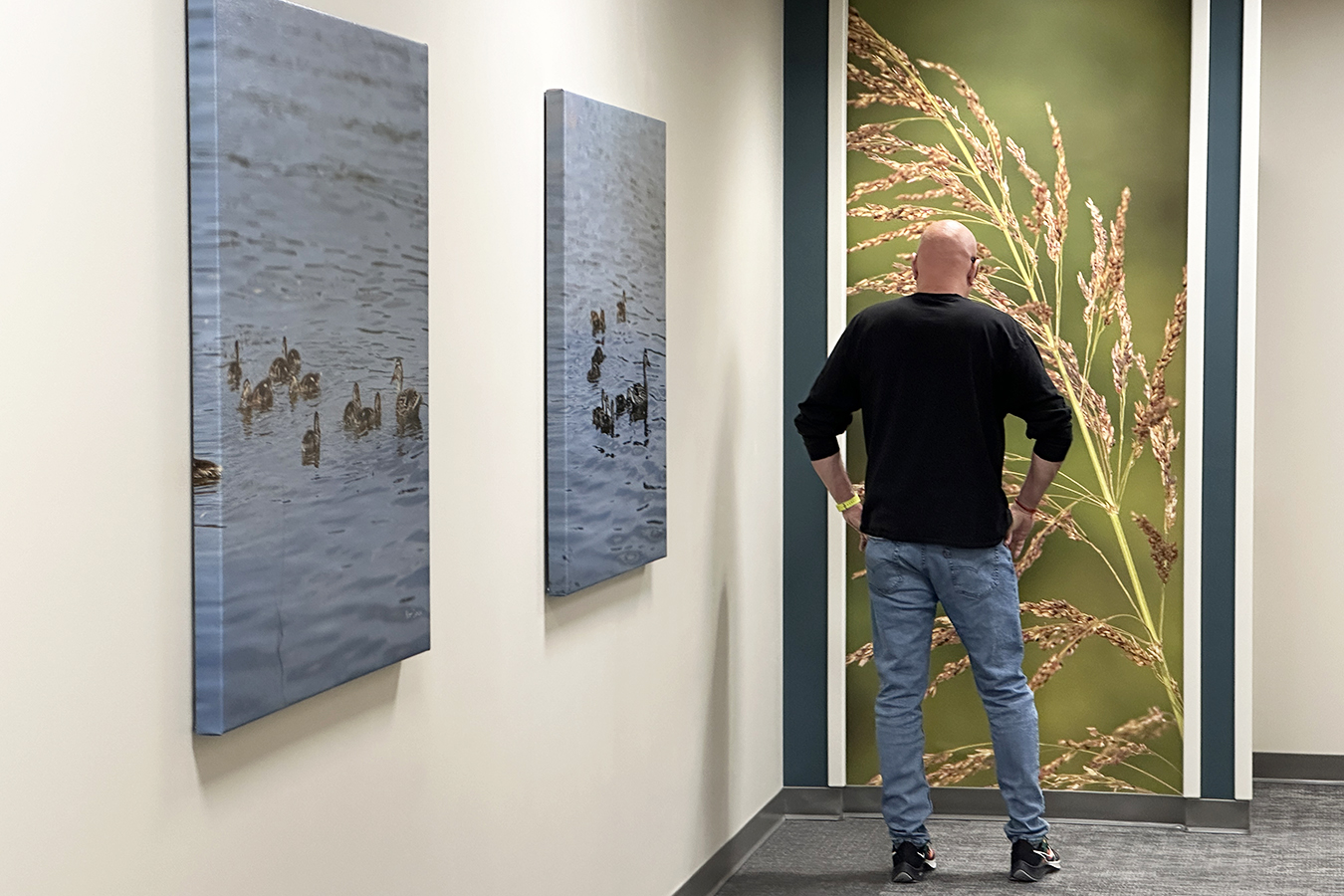
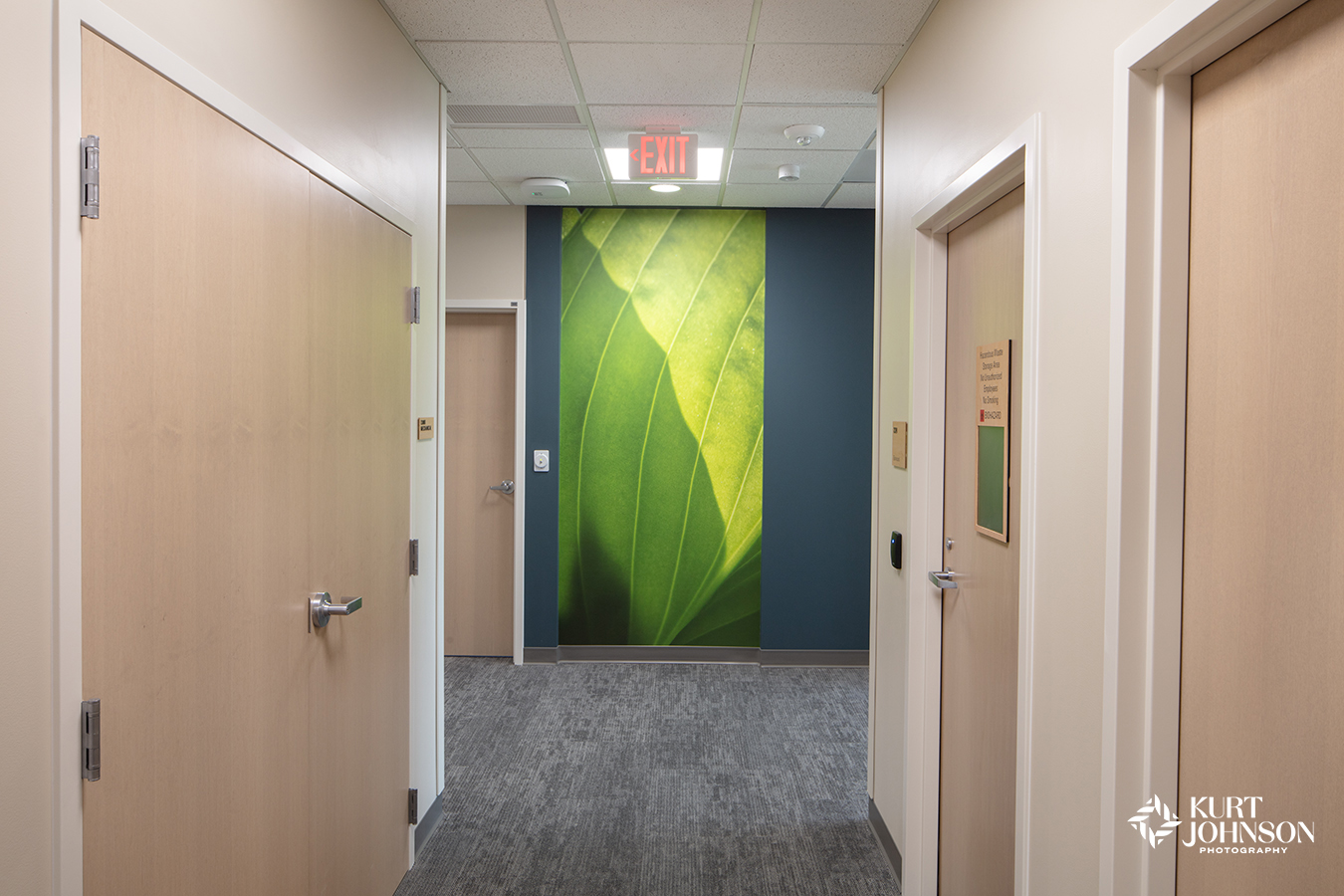
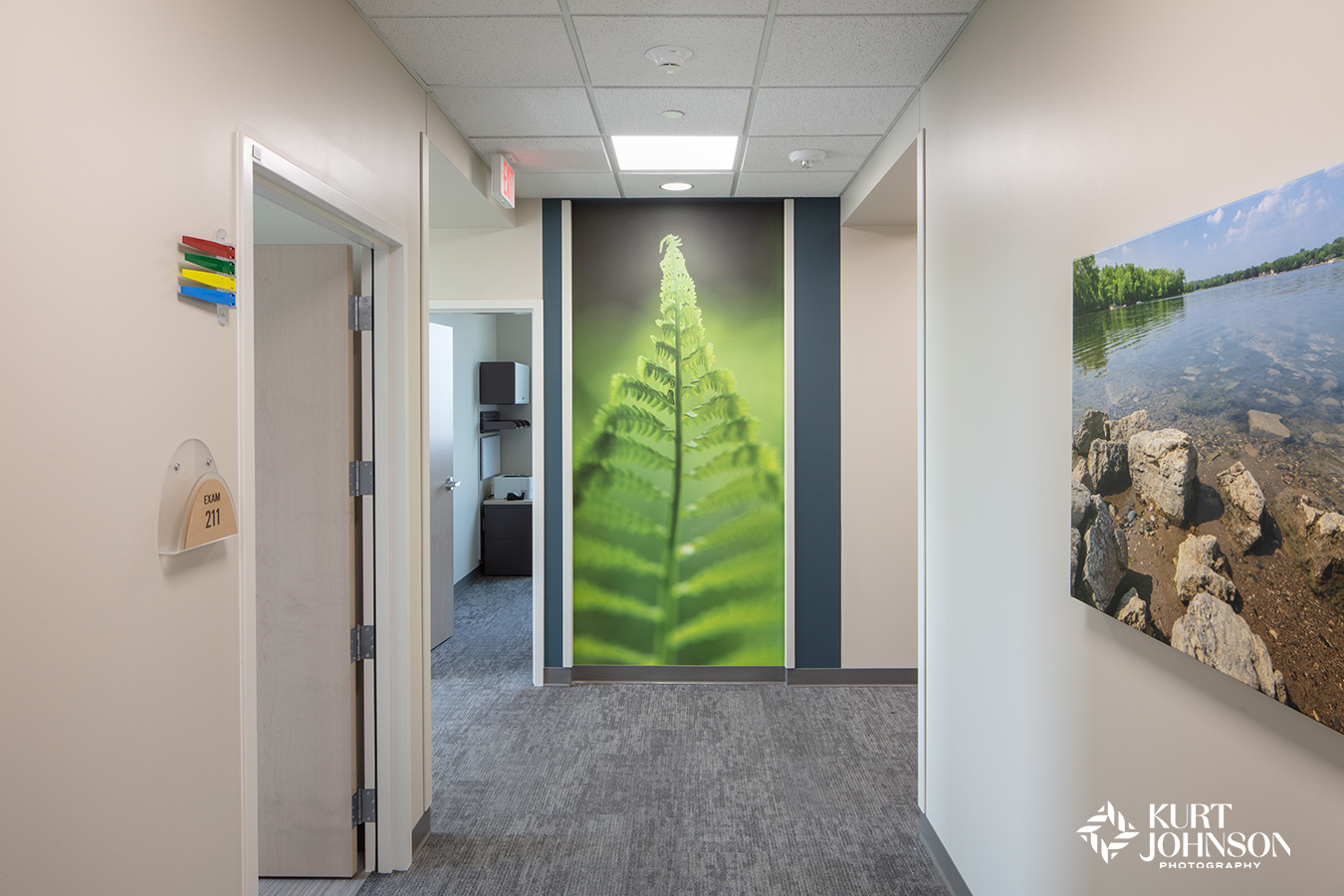
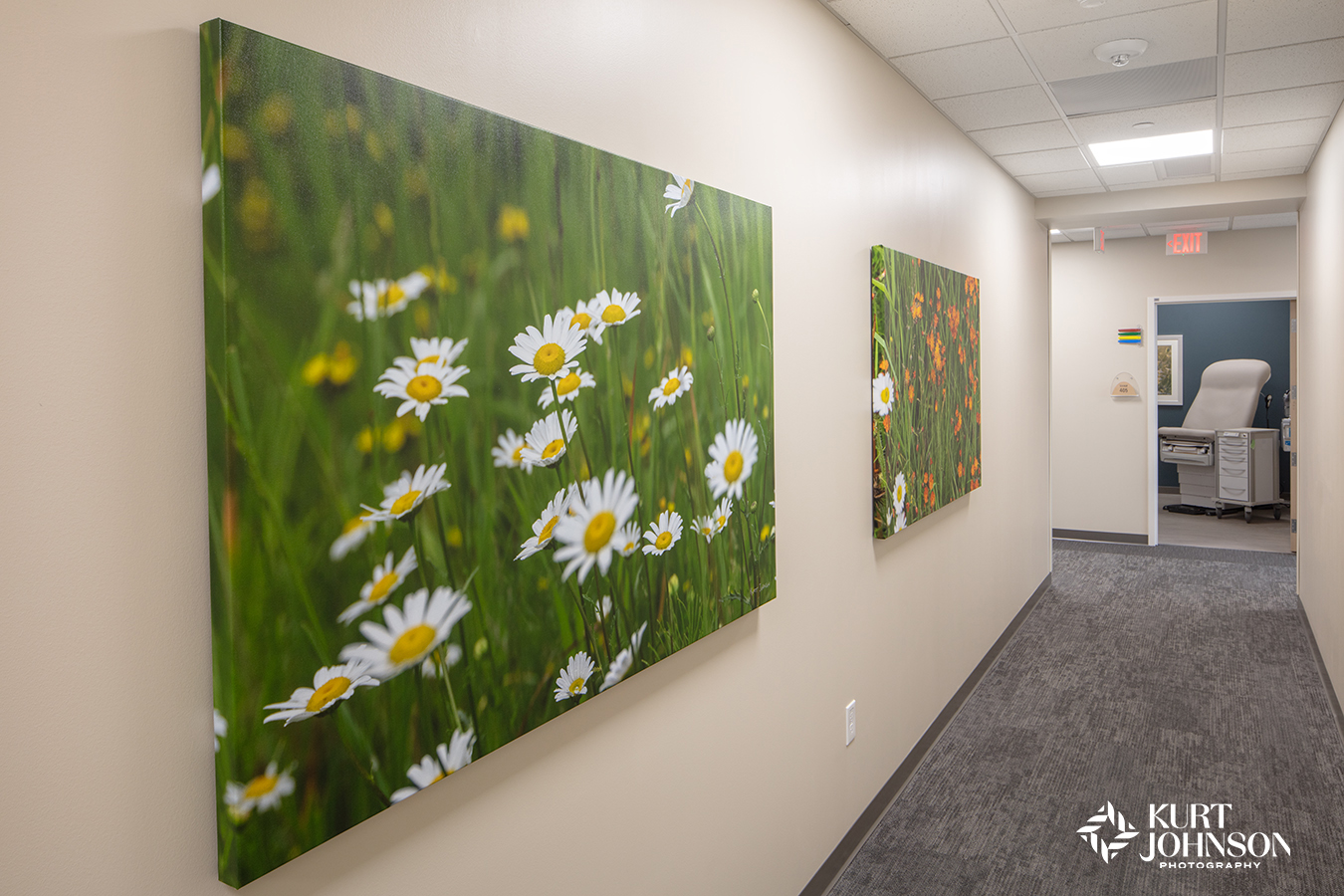
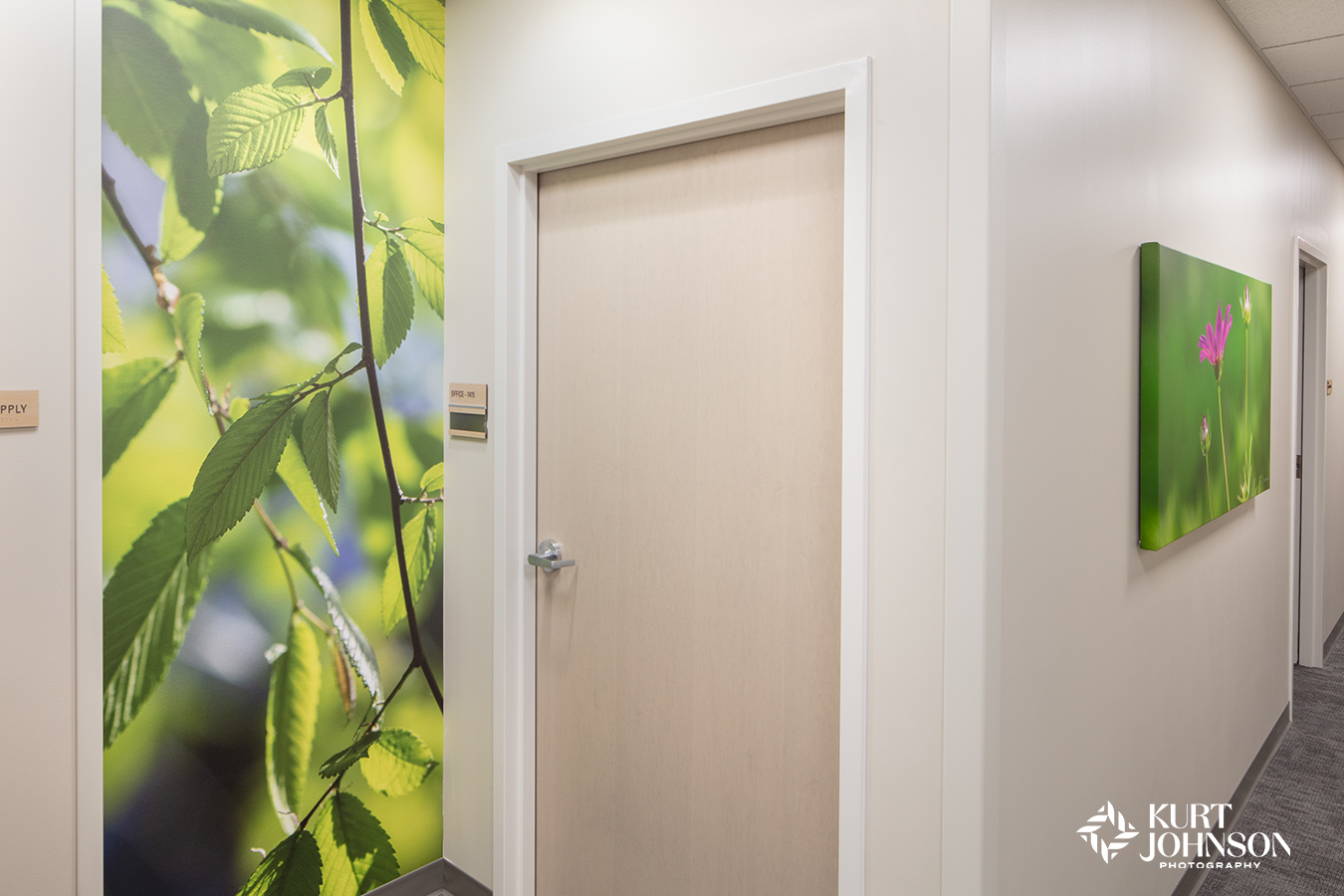
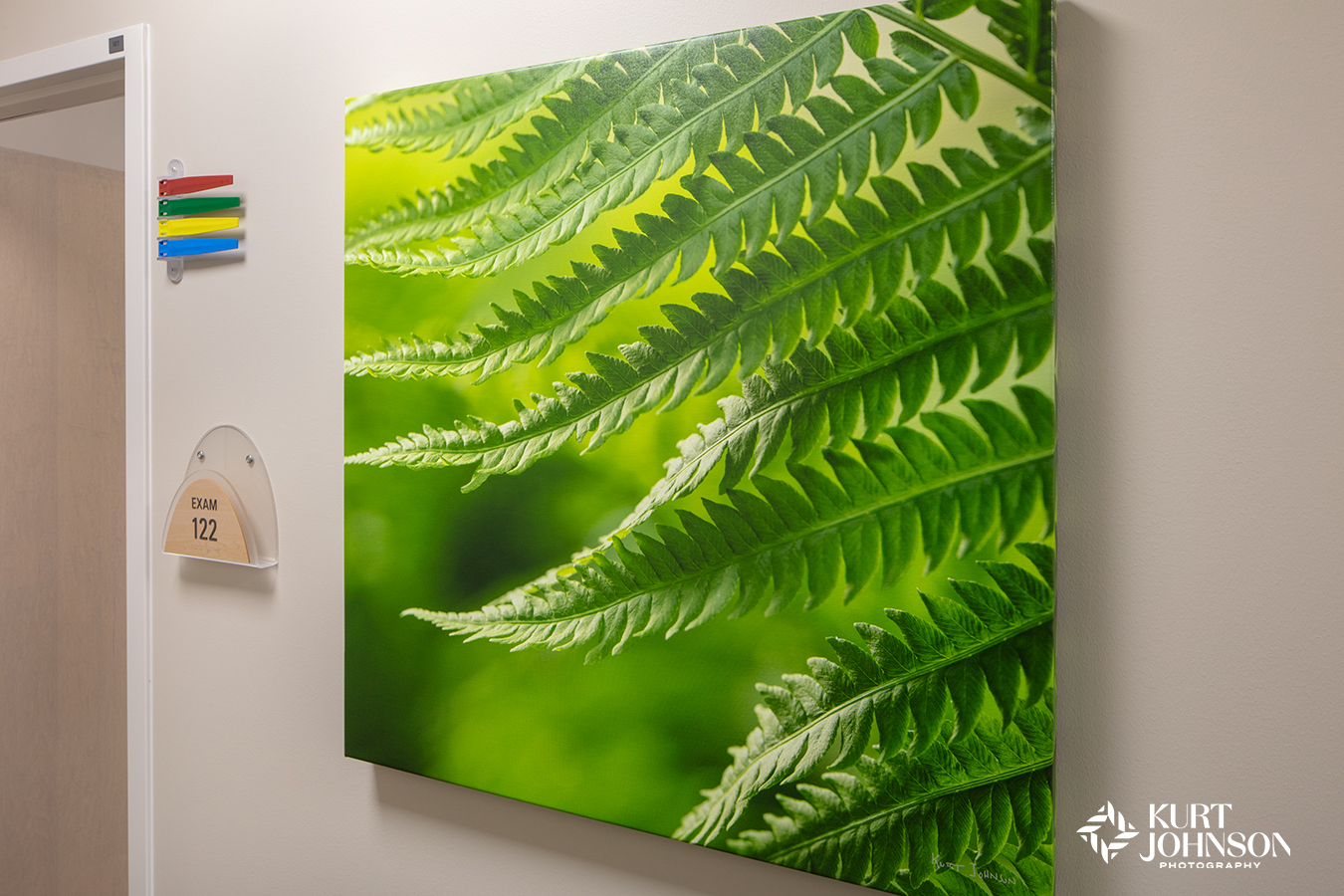
One of the things we love most about this project is that there isn’t just one kind of artwork. Large vinyl wallcoverings by Koroseal invite people into the space, floating framed canvases create warmth in waiting areas, and traditional framed pieces and frameless canvases each have their own purpose while still creating one cohesive experience.
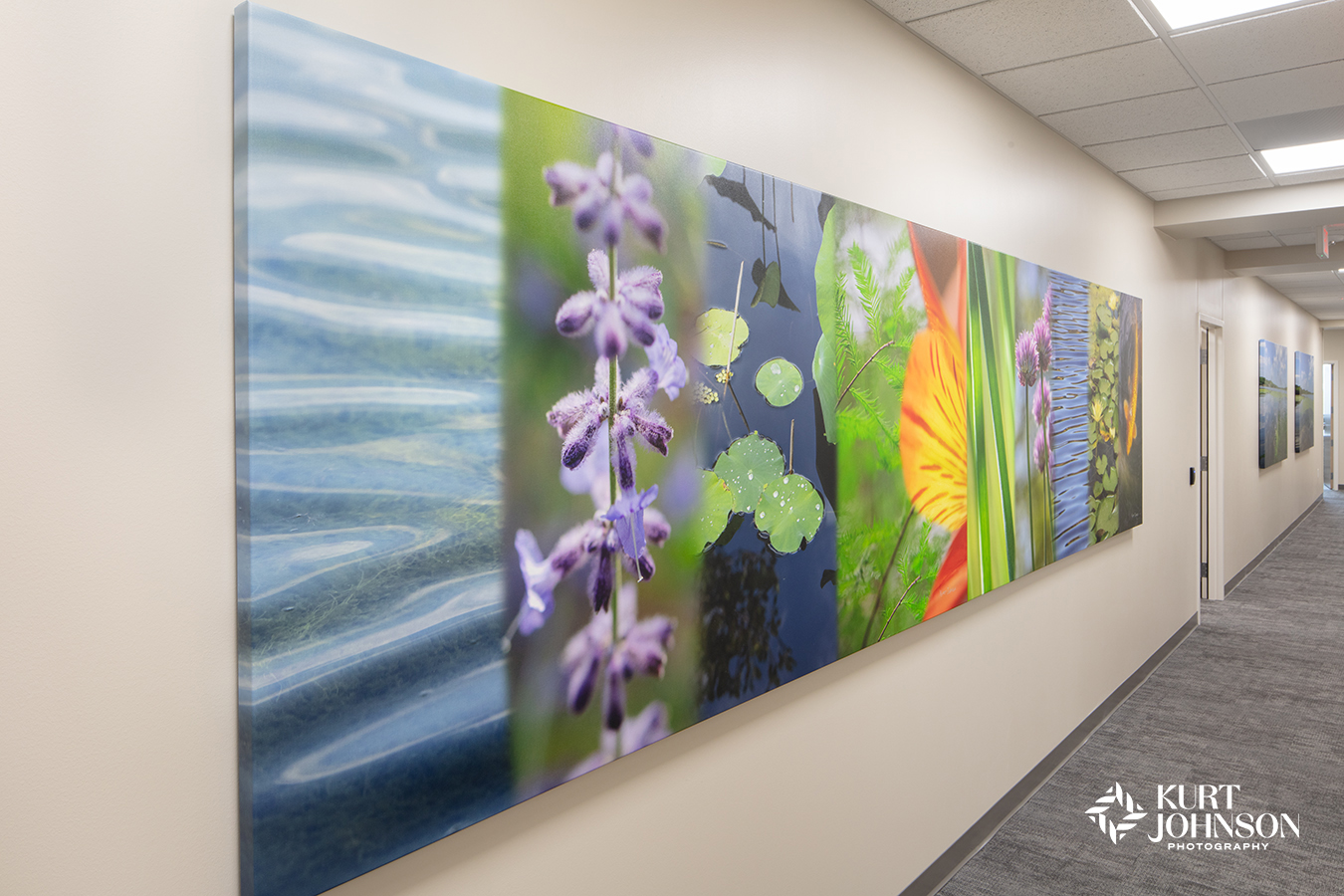
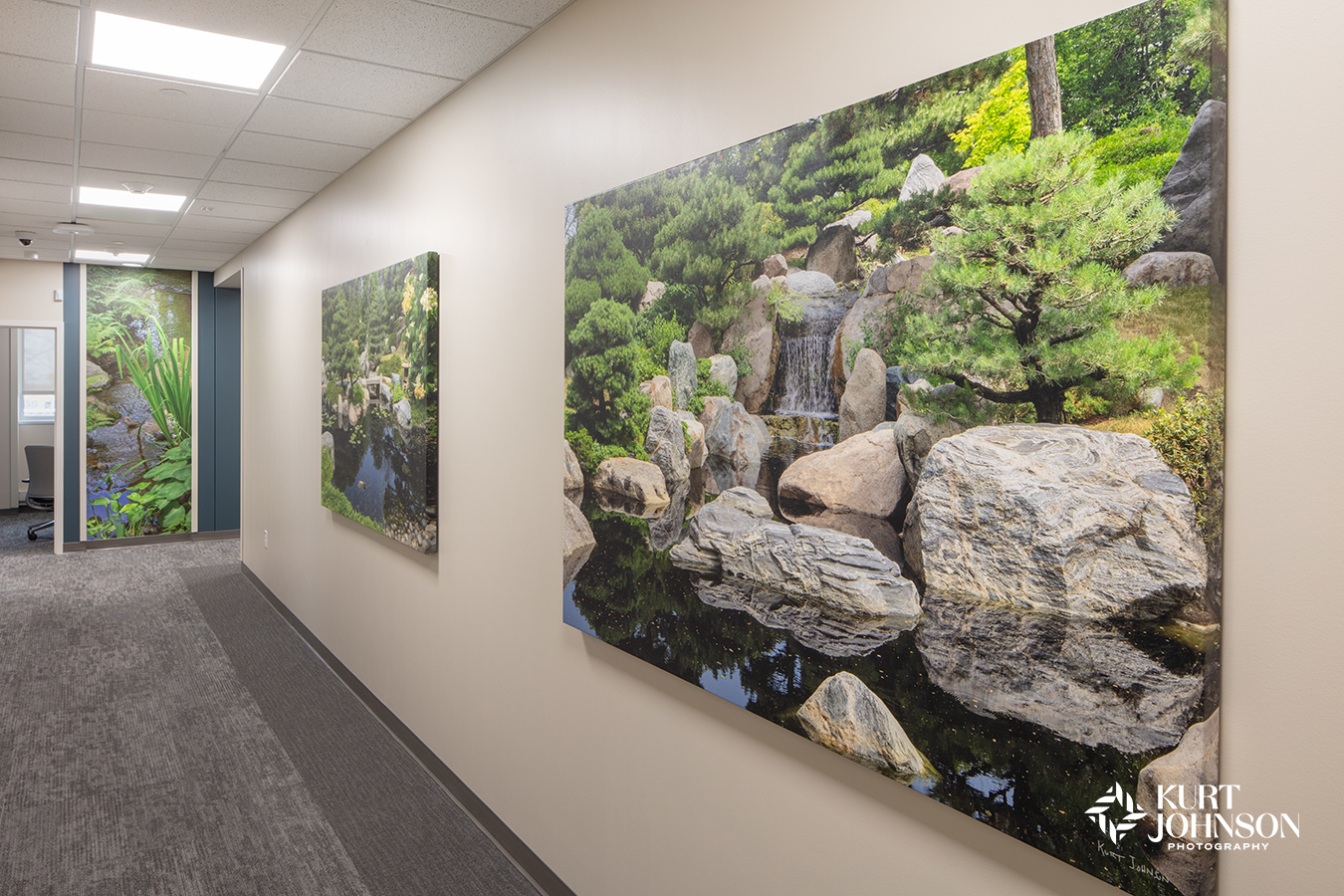
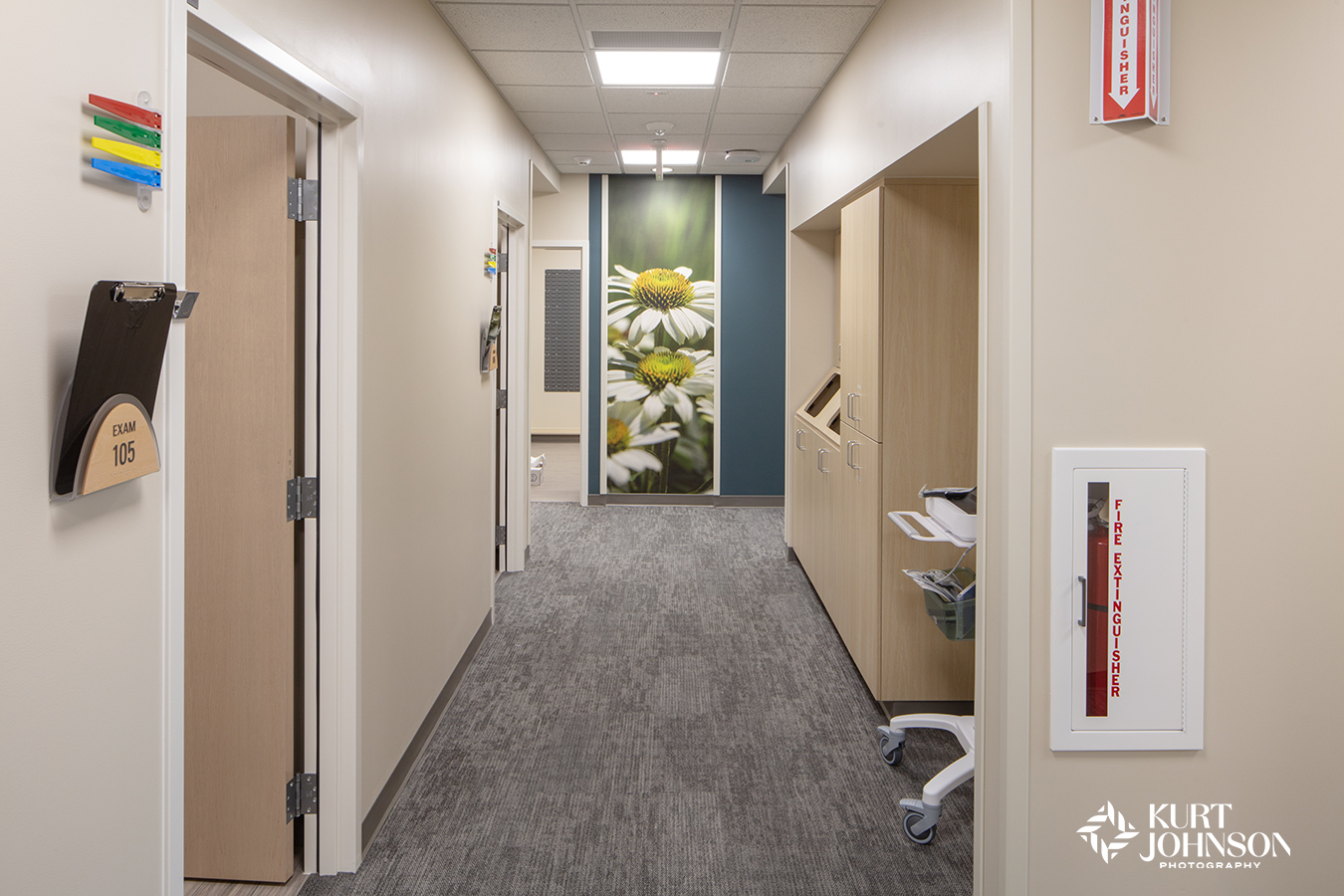
The colors follow the same philosophy: blues inspired by the lakes, greens borrowed from shoreline grasses, and soft neutrals that echo sand, stone, and open skies. Now and then, a pop of pink or orange adds just enough energy to keep the spaces feeling fresh without overwhelming them.
Nothing competes. Everything works together to create a space that feels peaceful, welcoming, and alive.
Looking back, what stands out isn’t just the finished installation.
It’s knowing that someone nervous before an appointment might pause for a moment because a familiar shoreline catches their eye. It’s watching local landscapes become landmarks inside the building. And it’s hearing that people enjoy spending time in the space because it’s welcoming and familiar.
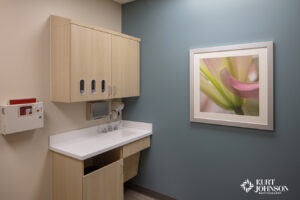
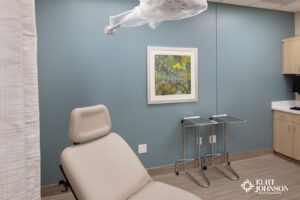
As Albertson told us, this is what it comes down to: “It’s their backyard, brought inside, so their life can keep happening here too.”
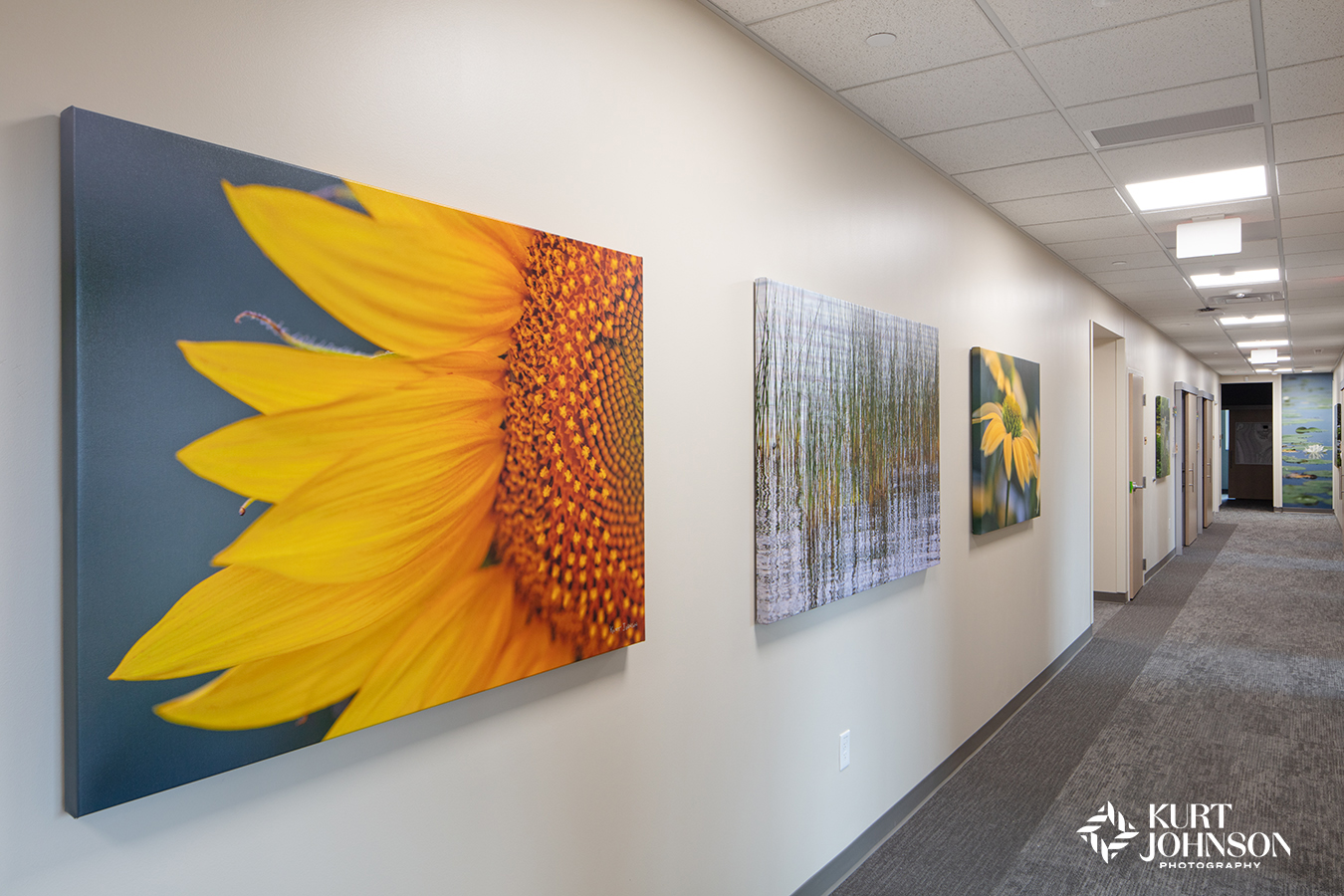
When art is thoughtfully planned, locally inspired, and woven into the architecture from the very beginning, it becomes part of how people experience the space.
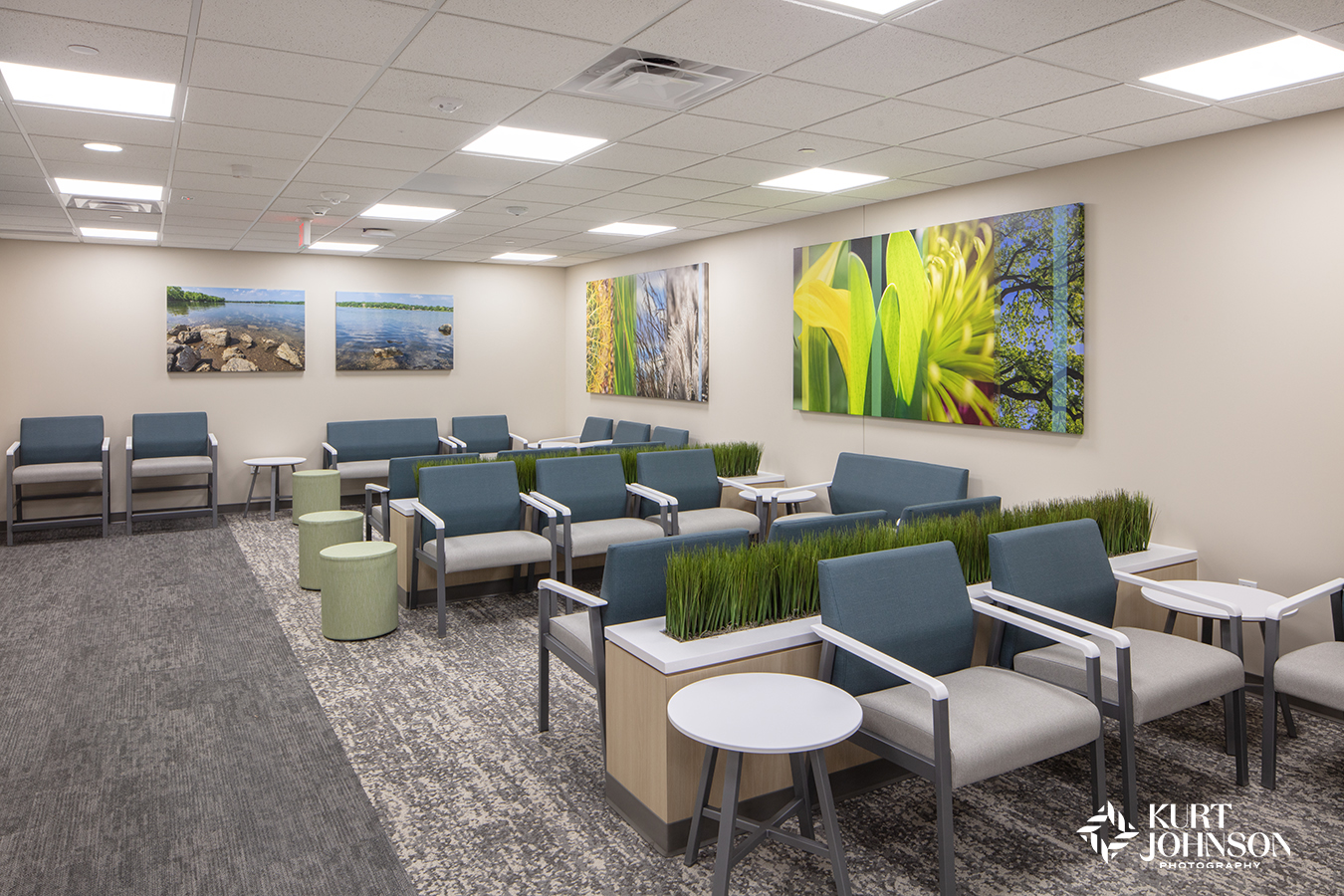
Sometimes that’s helping someone find their way. Other times it’s giving them one peaceful moment before an appointment. And that’s exactly what this project set out to do.
Nature has always had a way of helping people slow down and feel less stressed. All this project did was bring that feeling inside, in a place where people need it most.
Categories: Healing, Healthcare, Installations, Travel


