How Nature, Color, and Wayfinding Shape the Mother Baby Center Experience
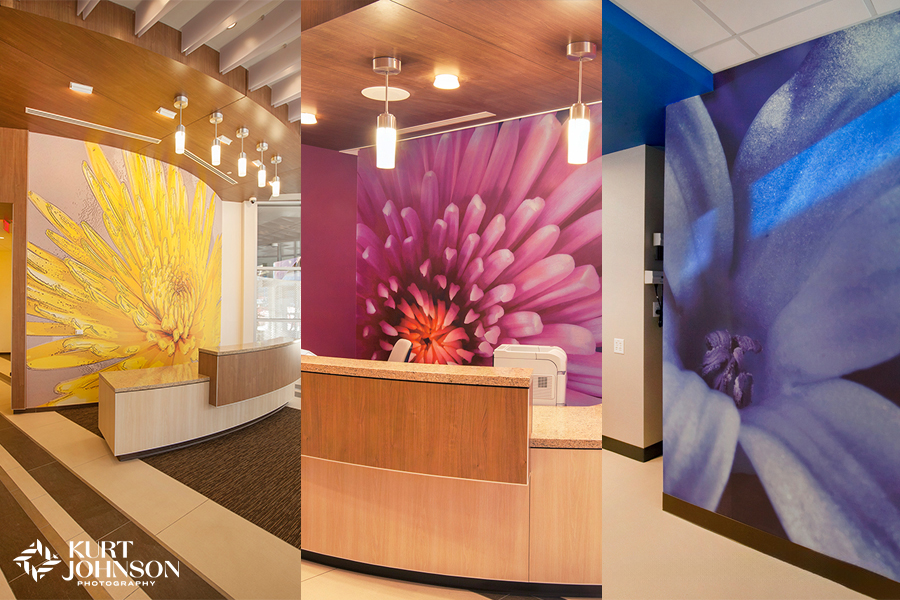
Some projects stay with you. The Mother Baby Center at Abbott Northwestern and Children’s Minnesota is one of those installations that still resonates with the design community and with the patients, families, and staff who walk through it every day.
From the moment it opened, this award-winning space set a new standard for how art, architecture, and healthcare design can work together using nature, color, and scale to create an environment that’s calming and awe-inspiring without sacrificing function.
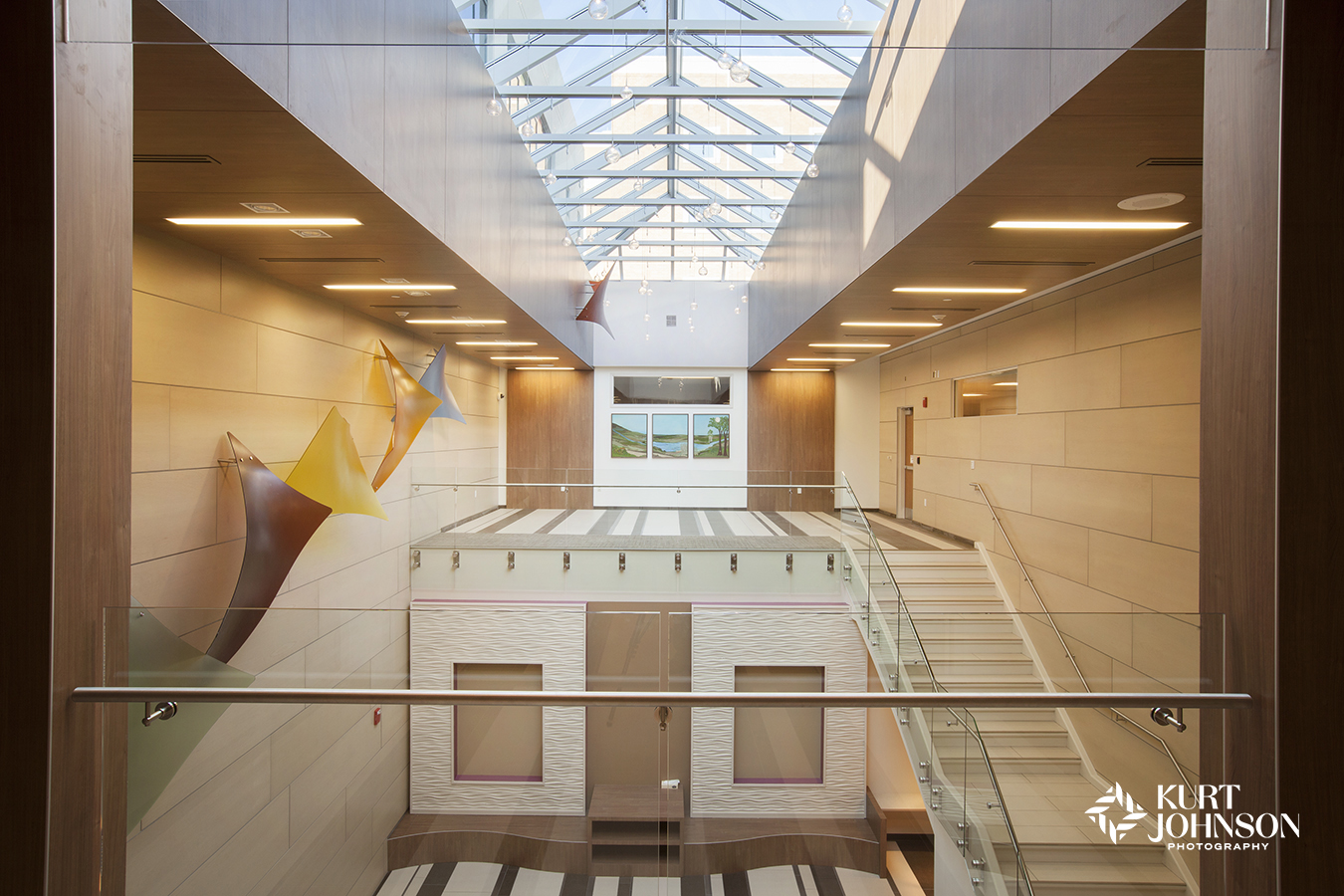
Where Two Worlds Come Together
The facility is a partnership between Allina Health’s Abbott Northwestern Hospital and Children’s Hospitals and Clinics: two respected healthcare systems with their own identities, expertise, and patient cultures.
But inside the space, they needed to feel like one.
Mike Rodriguez, Senior Project Designer at HDR for this project, described the complexity:
“The challenge… was to get the most out of a combined center between two hospitals who have their own unique identity, their own unique cultures, and the way that they would take care of the patient.”
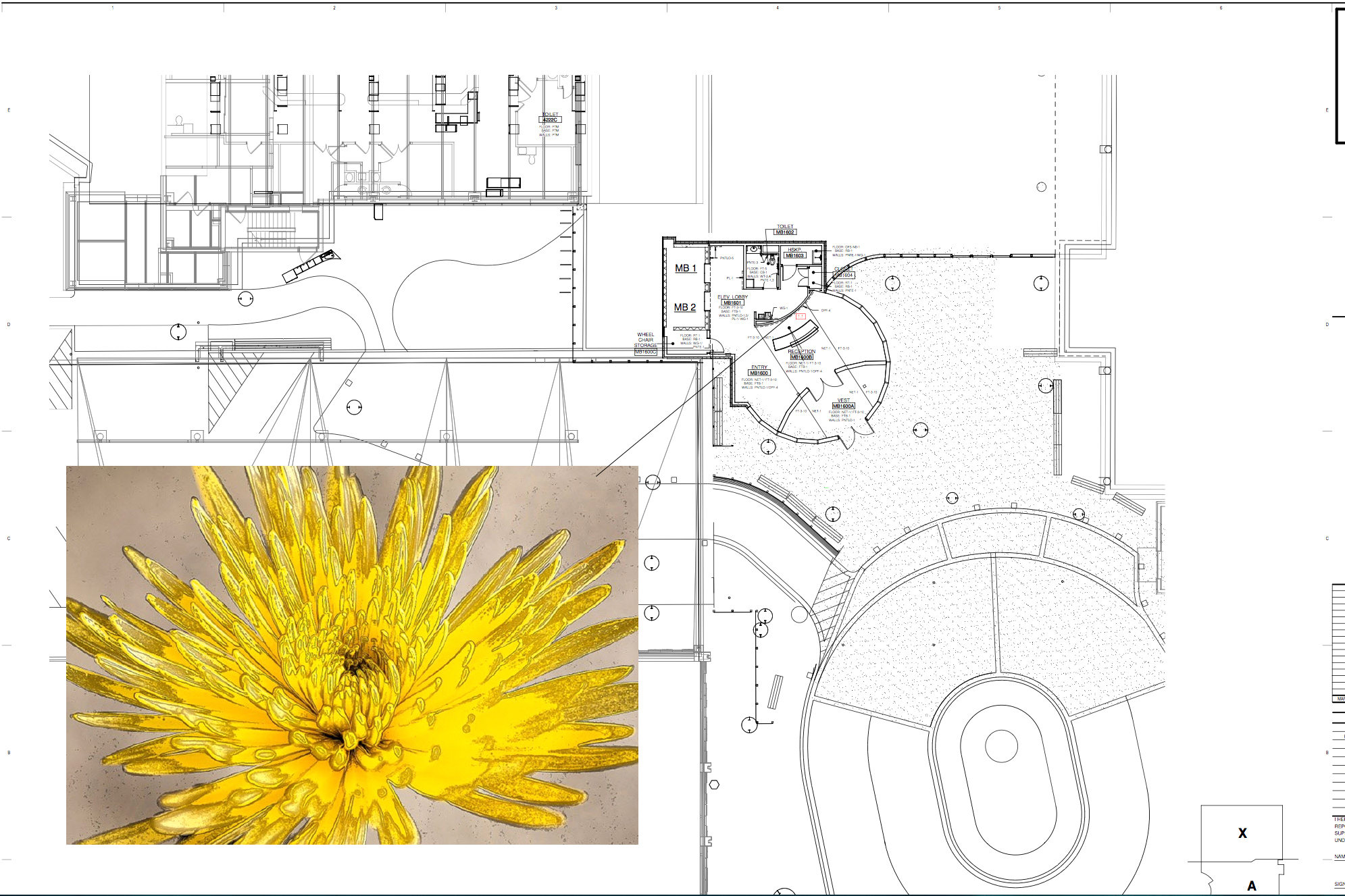
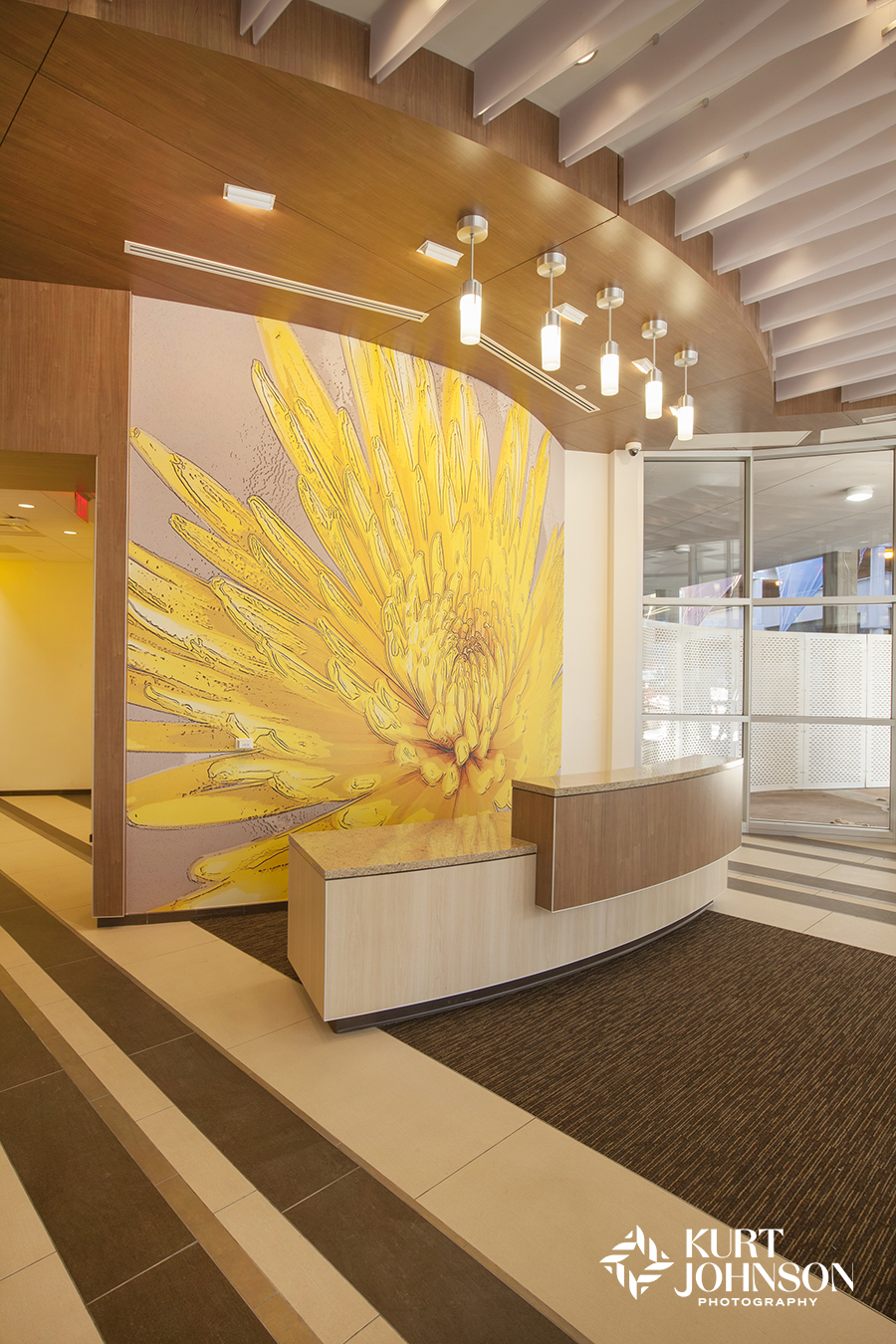
The team arrived at a solution through a collaborative design competition that brought together architects, interior designers, engineers, contractors, and healthcare leaders.
From the start, the team embraced a bold, shared vision, something Aneetha McLellan, Director of Interior Architecture at HDR at the time, summed up simply:
“Don’t give us the typical. Shoot for the moon. Try something different. Do something extraordinary.”
That challenge set the tone for the project and ultimately shaped what the Mother Baby Center is today.
Nature as a Healer
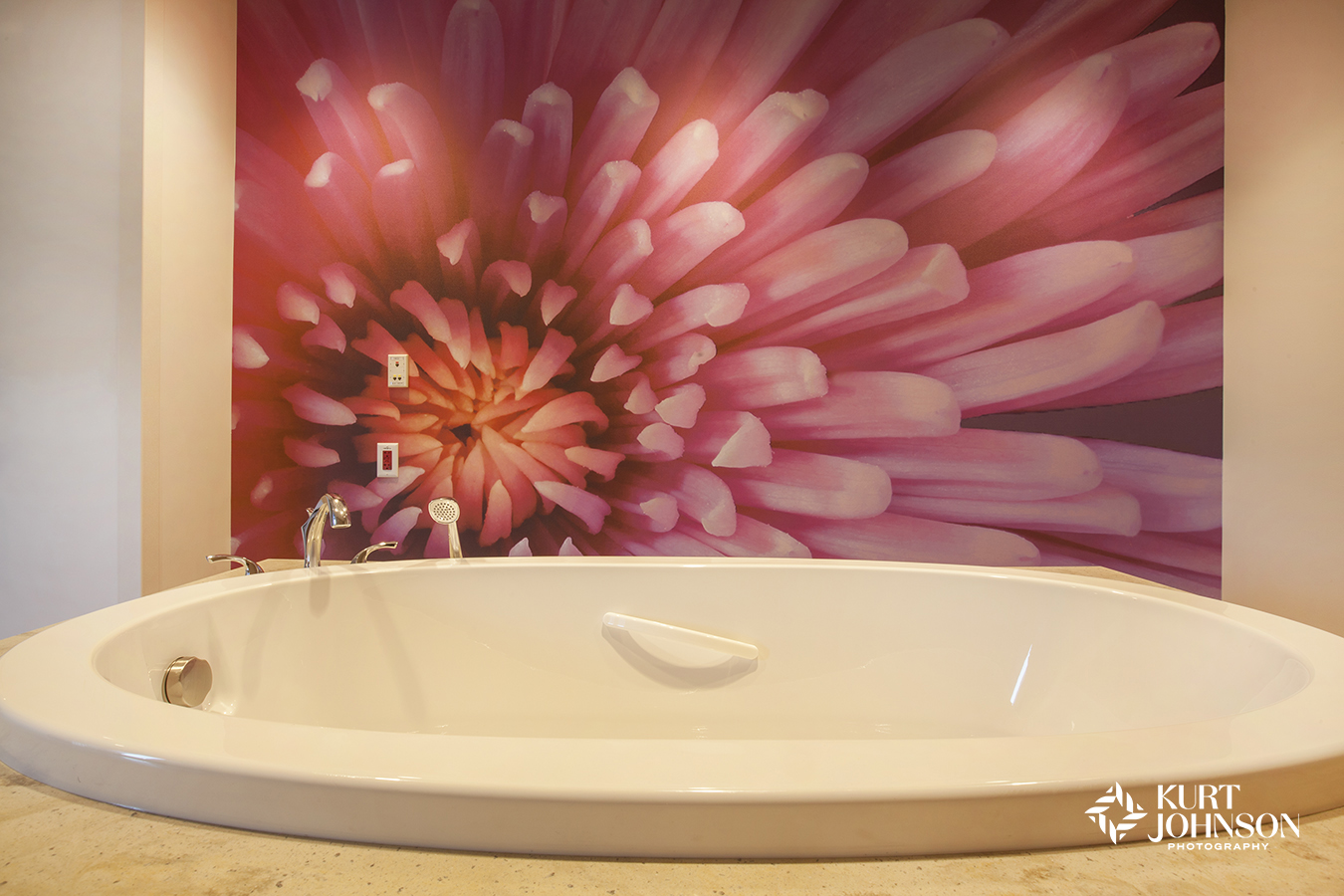
Research consistently shows that nature-based imagery reduces stress and supports healing. So for this project, nature became the heartbeat of the environment.
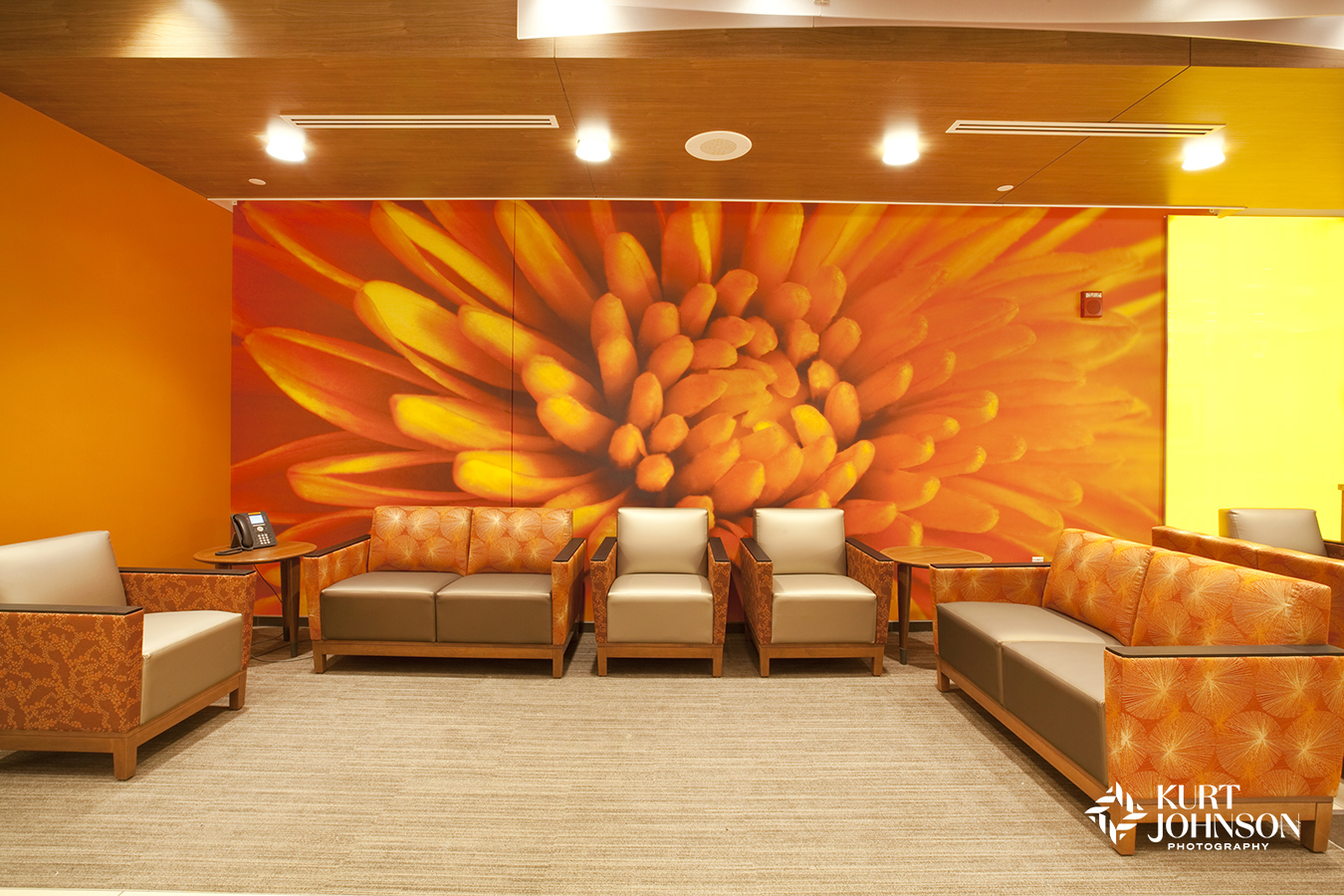
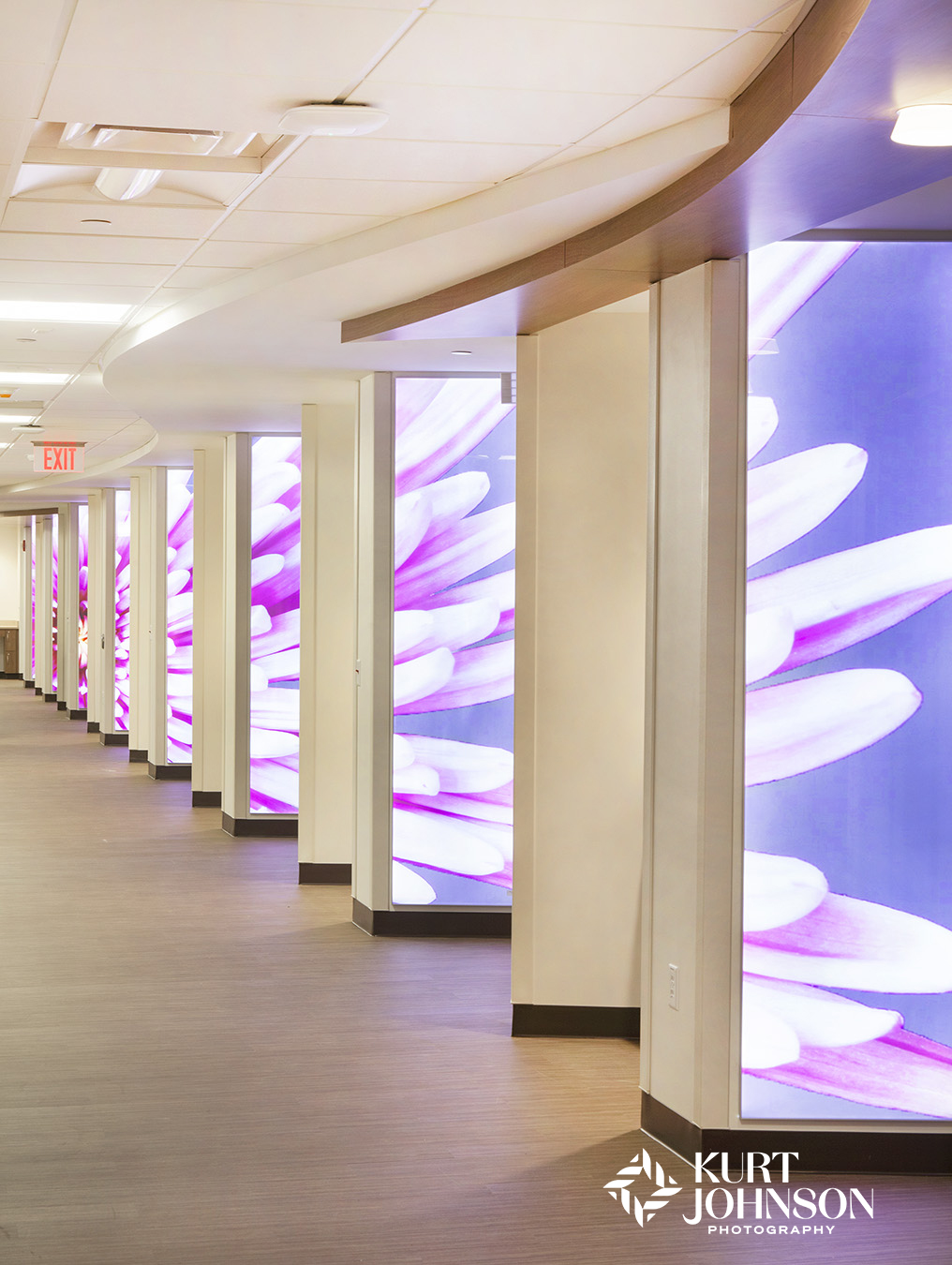
McLellan emphasized: “Nature is a healer,” which led the team to choose large-scale floral imagery as the centerpiece for the space. The concept was for patients and families to feel “physically embraced” by the flowers.
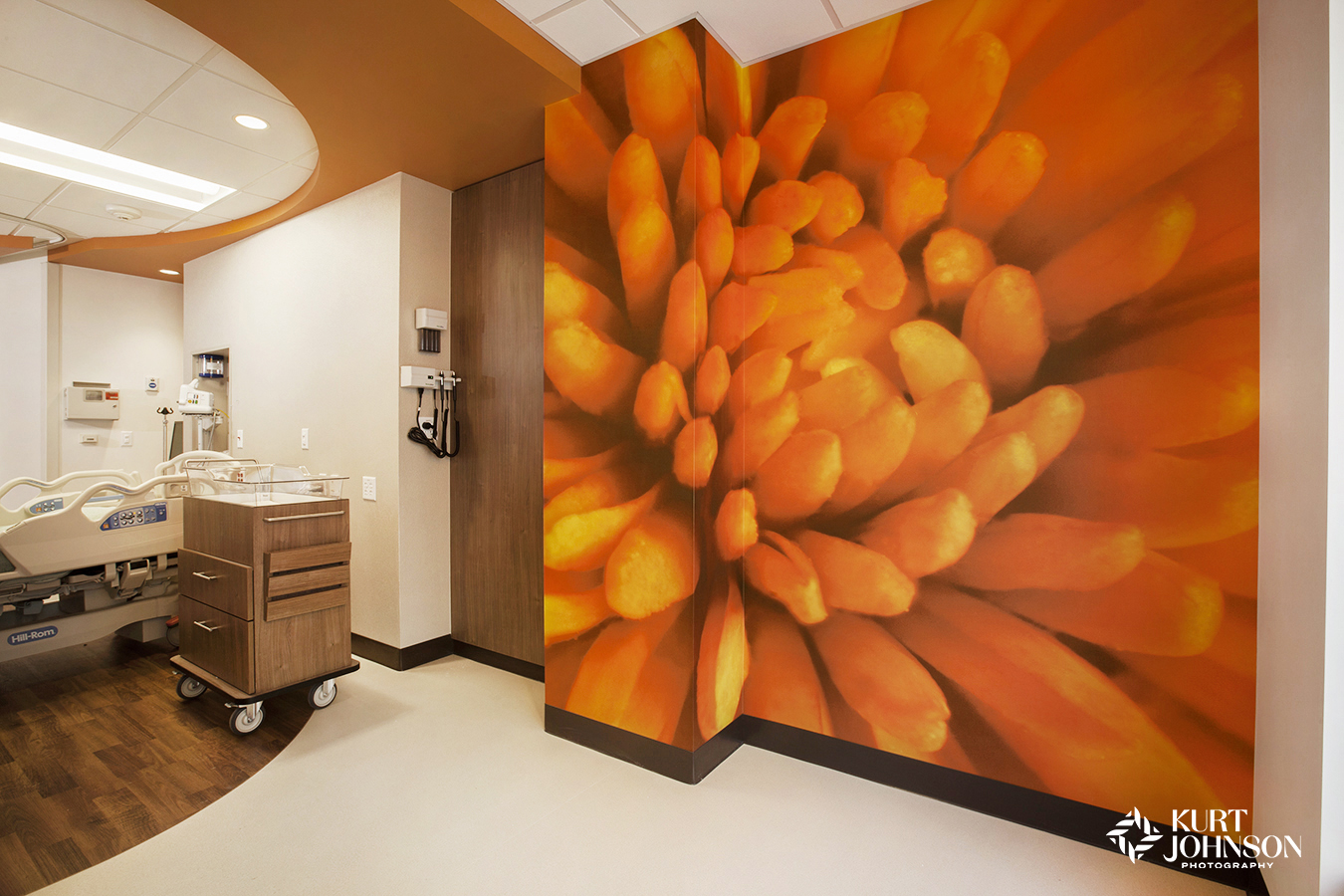
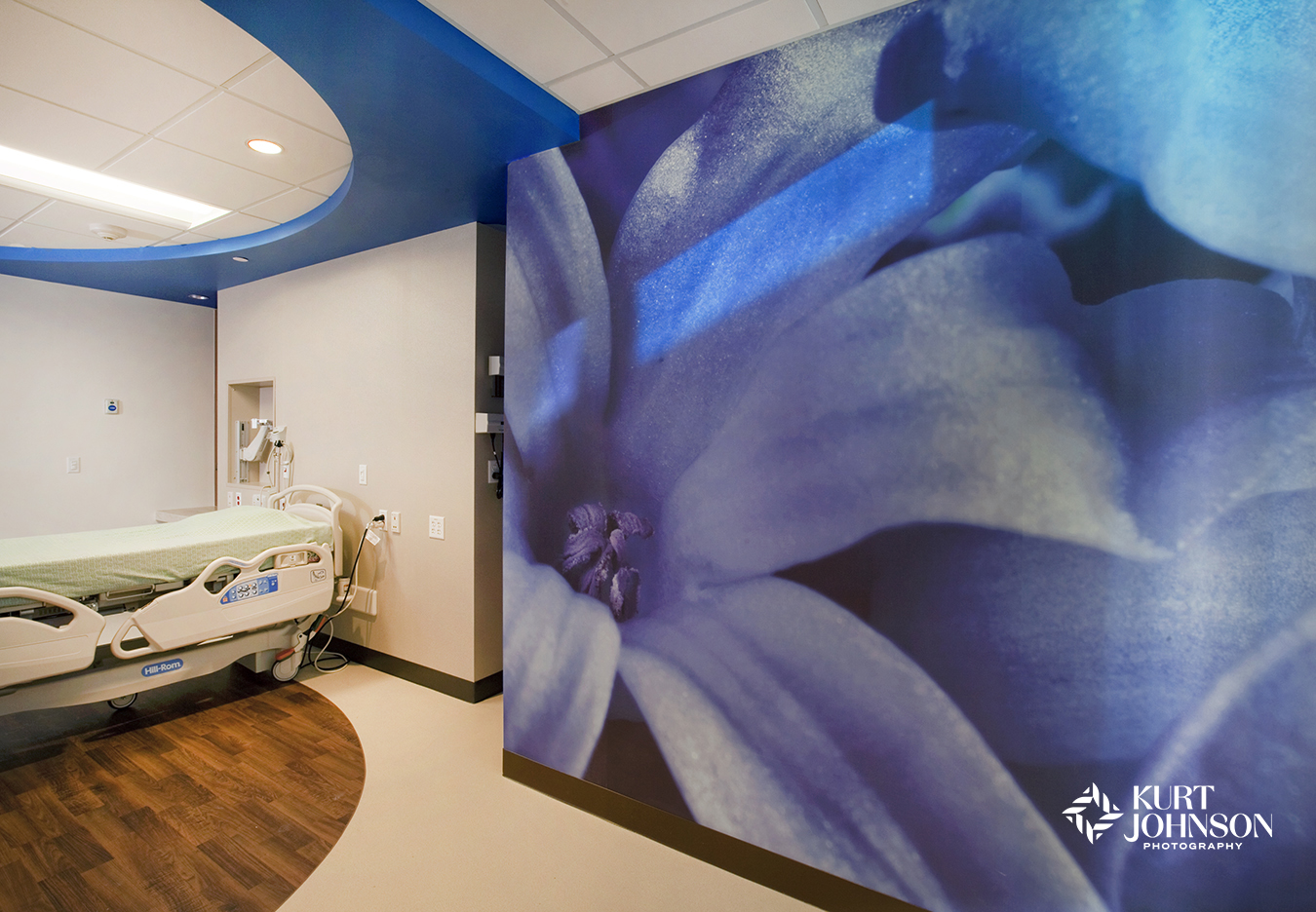
To achieve that level of impact, the imagery had to hold up at an architectural scale. That’s where Kurt Johnson Photography’s macro floral work became essential, capturing detail, depth, and softness that could be expanded to monumental scale while still feeling intimate.
The result surprised people, a space that feels very different from what most visitors expect a hospital to be. One patient described the environment like “being at a spa.”
Color as Wayfinding and Comfort
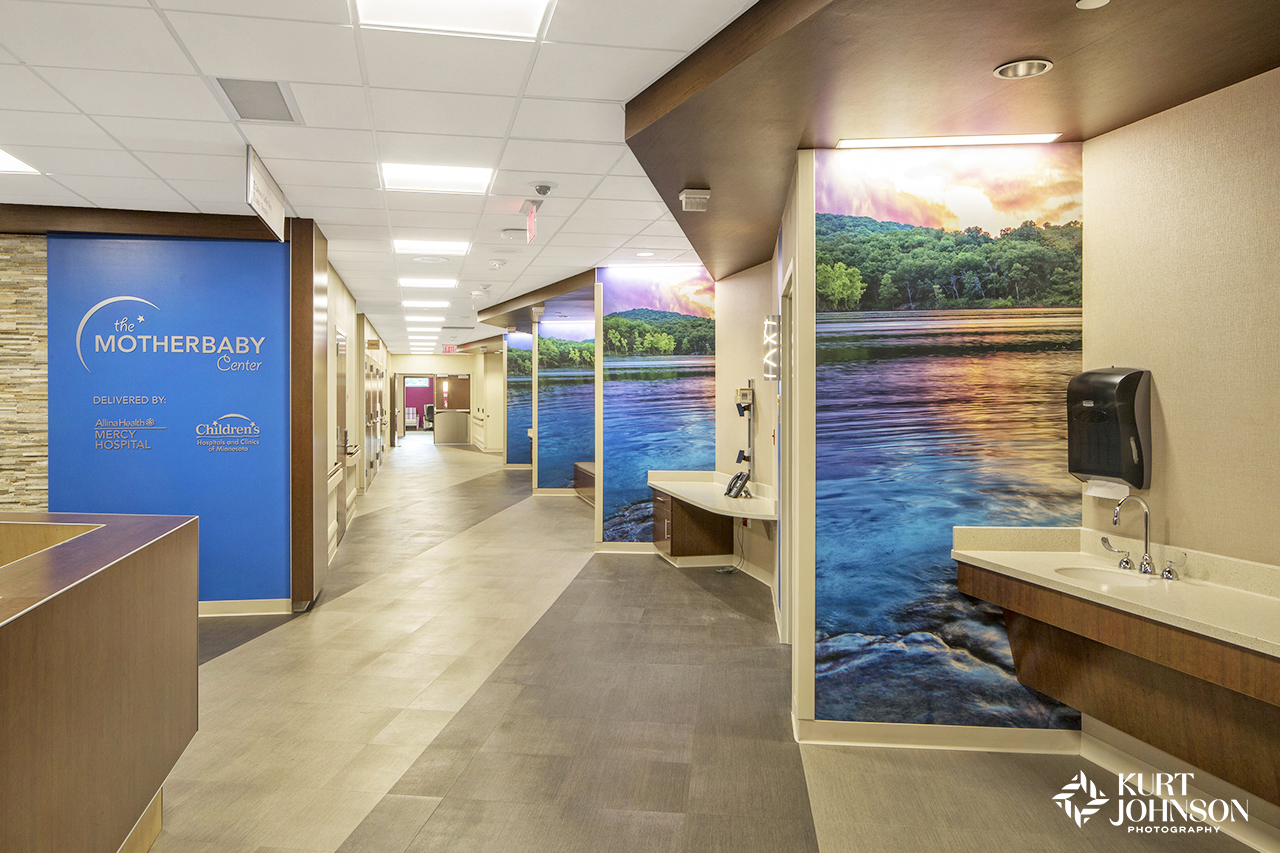
One of the most distinctive parts of this project is how color works simultaneously as art, intuitive wayfinding, and a source of comfort.
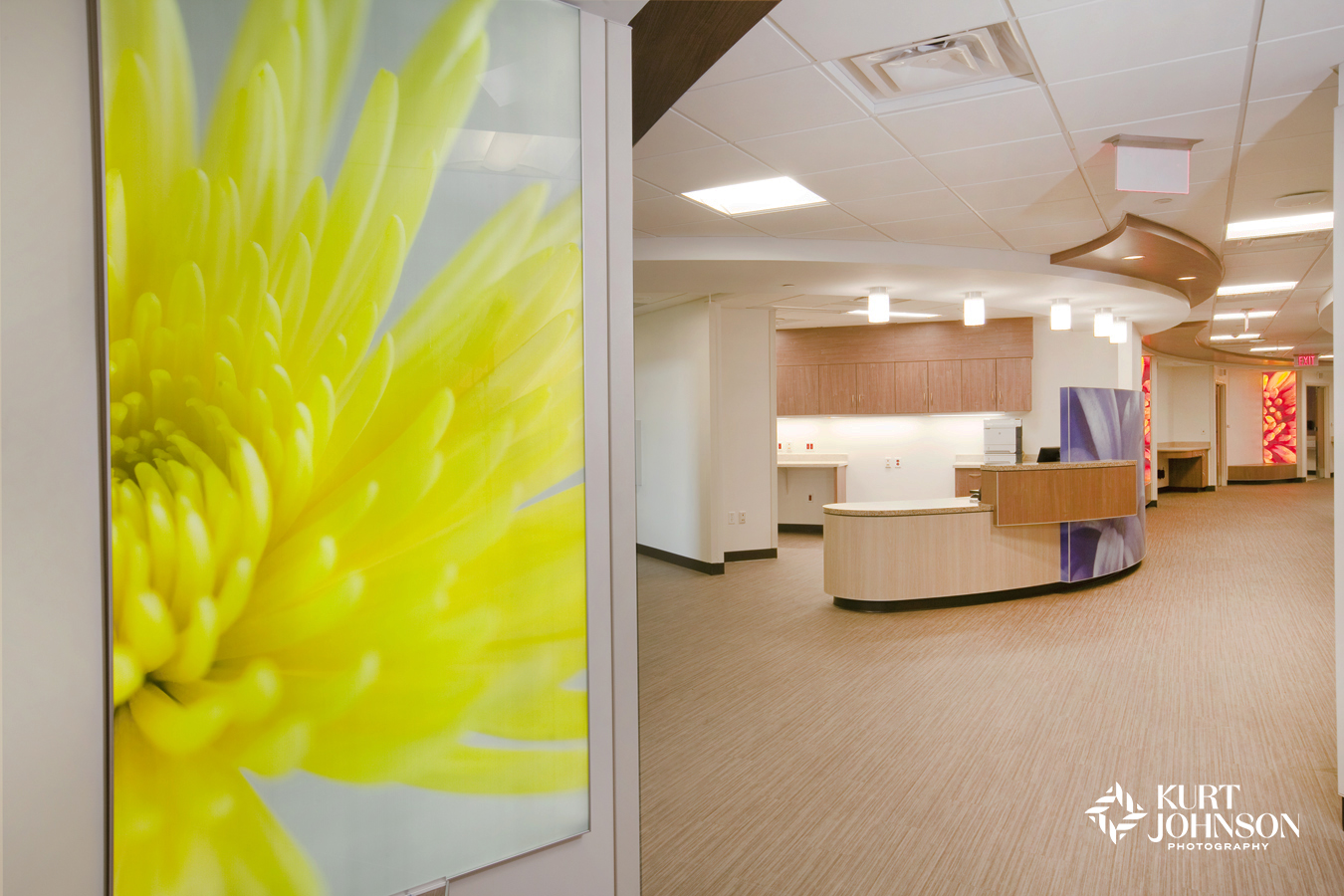
Throughout the Mother Baby Center, specific colors are assigned to different areas and floors. These colors appear consistently across:
- Large-scale environmental floral wallcoverings
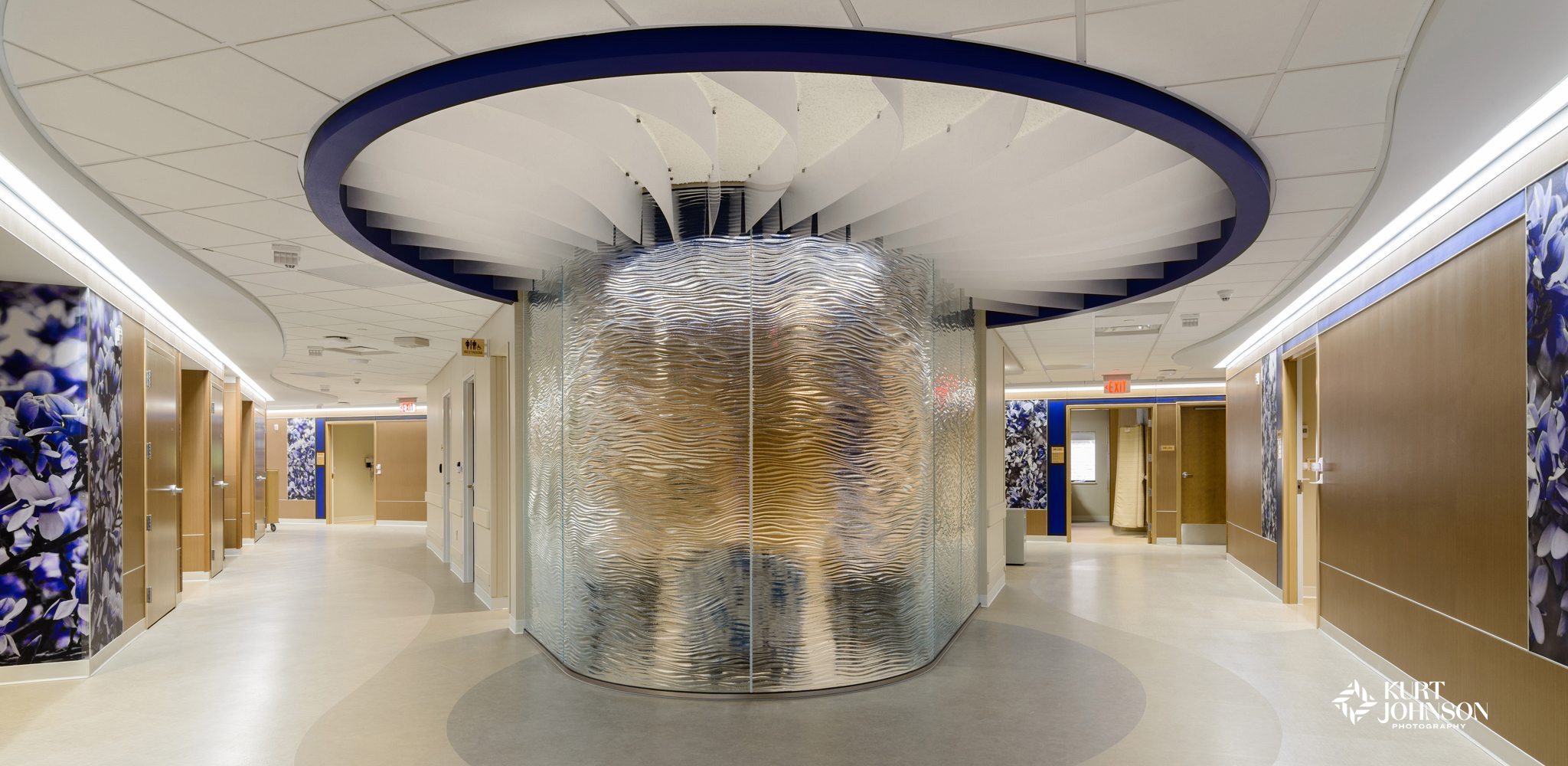
- Backlit acrylic wall panels
- Architectural details and integrated design elements
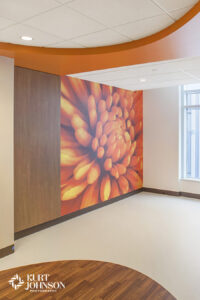
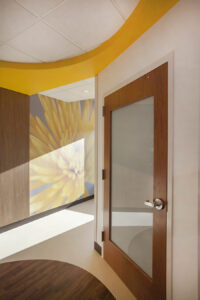
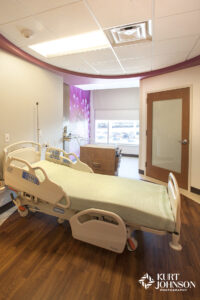
This layered approach allows patients, families, and staff to intuitively navigate the space without relying solely on signage.
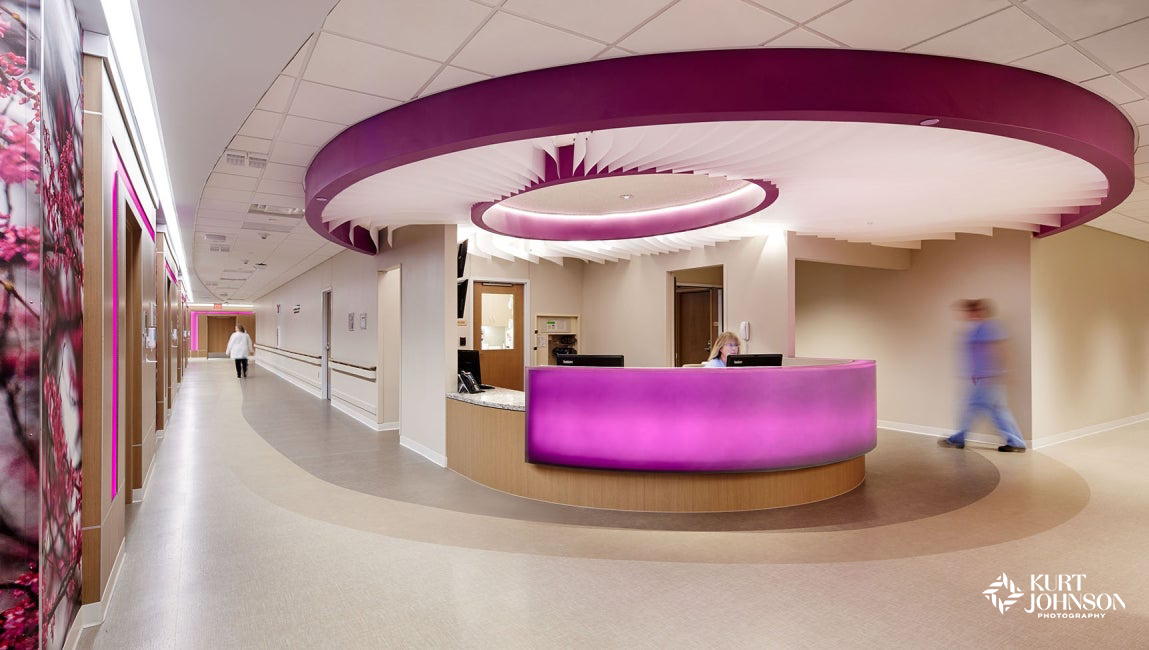
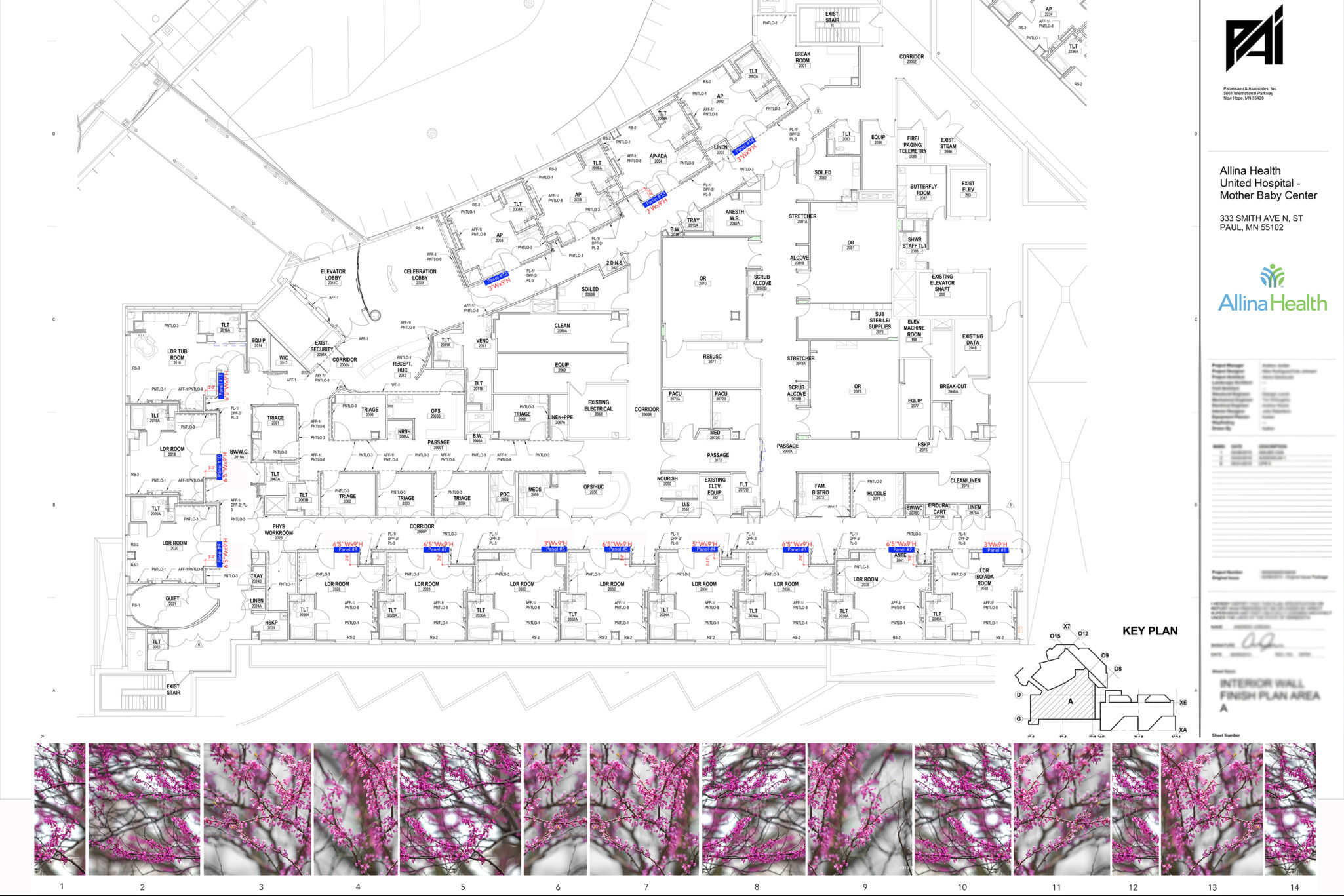
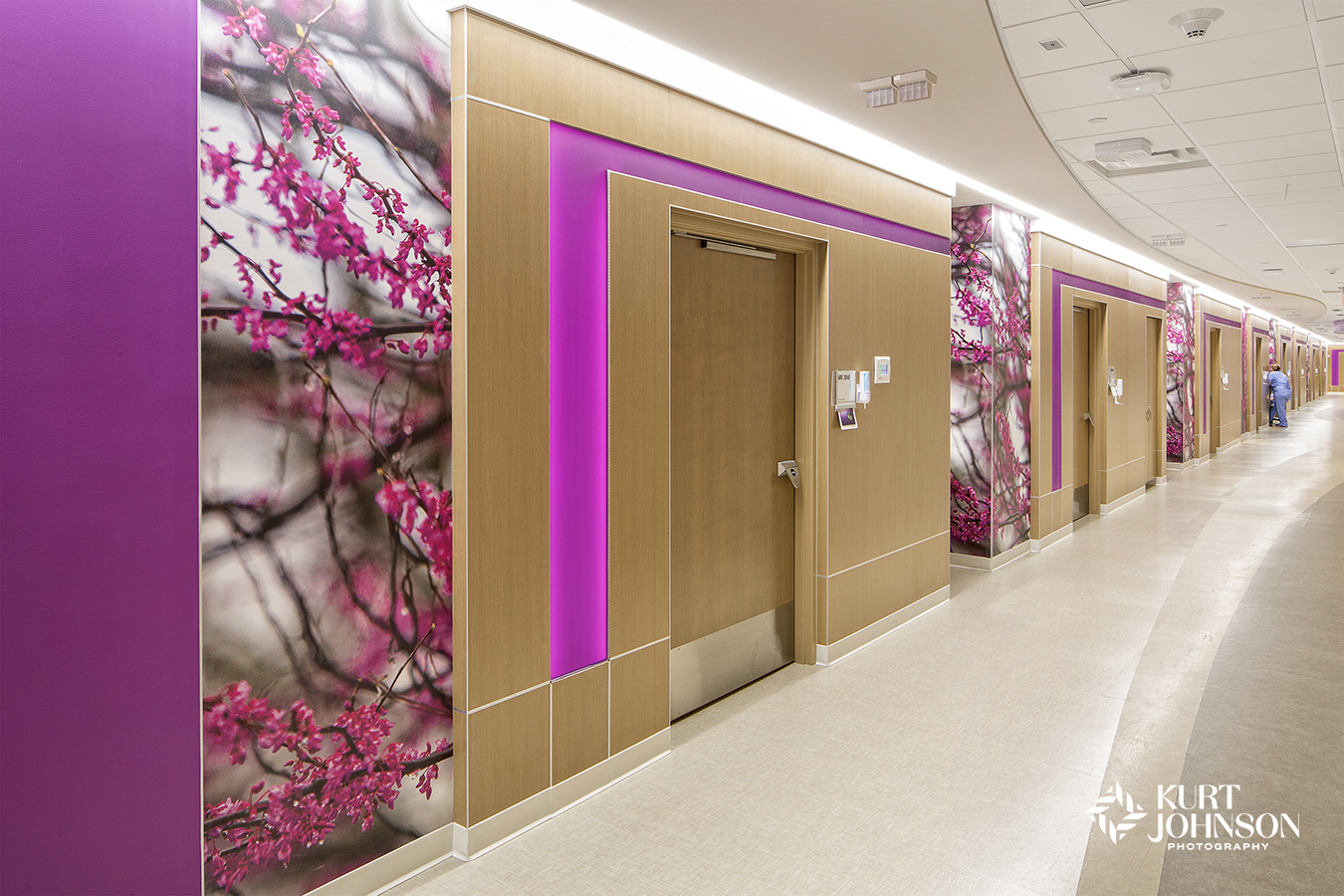
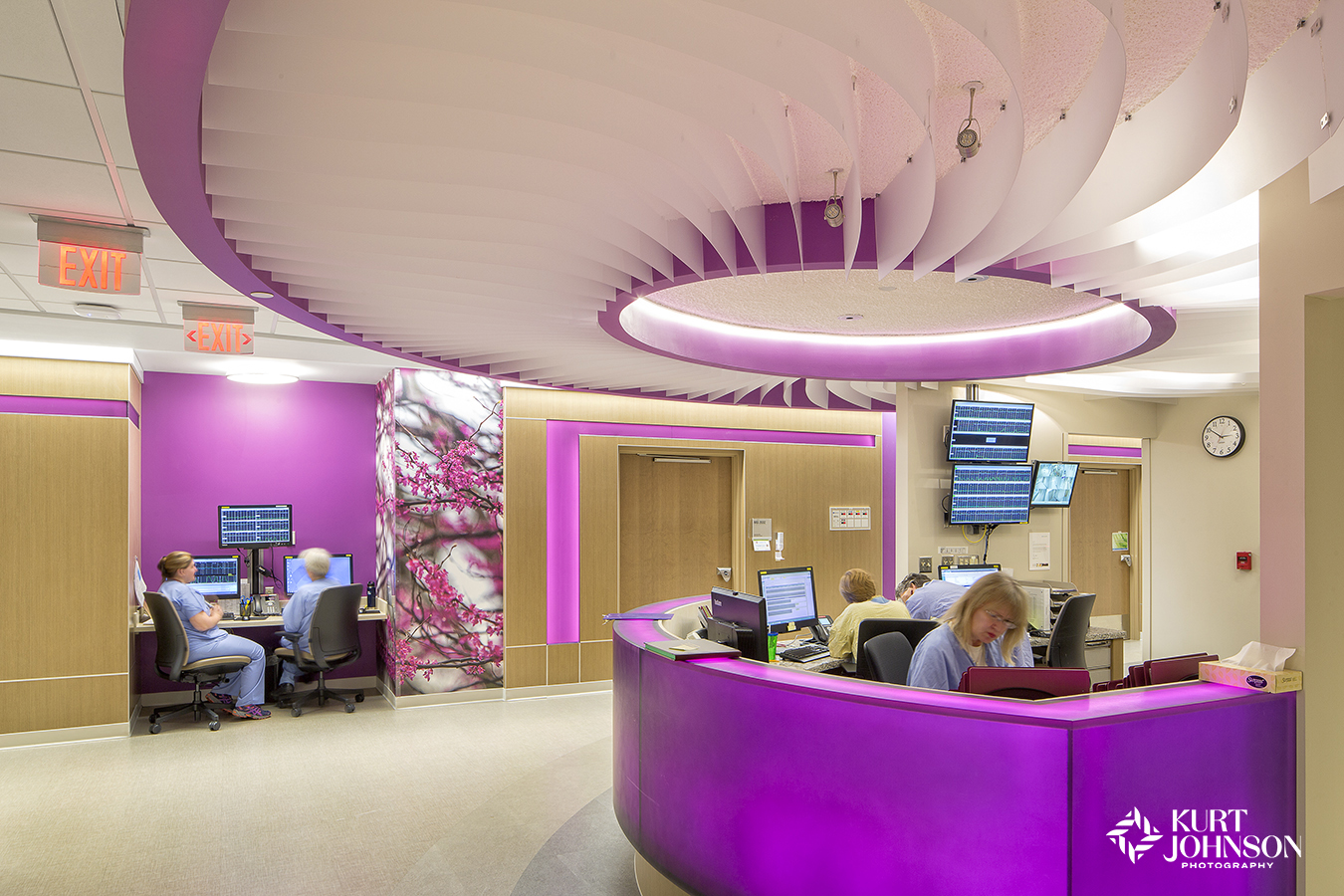
Julie Robertson, Interior Designer at HDR, explained how they used floor tile patterns, wood framing elements, architectural ribbons across ceilings, and illuminated panels to reinforce movement and orientation, making the environment itself the wayfinding.
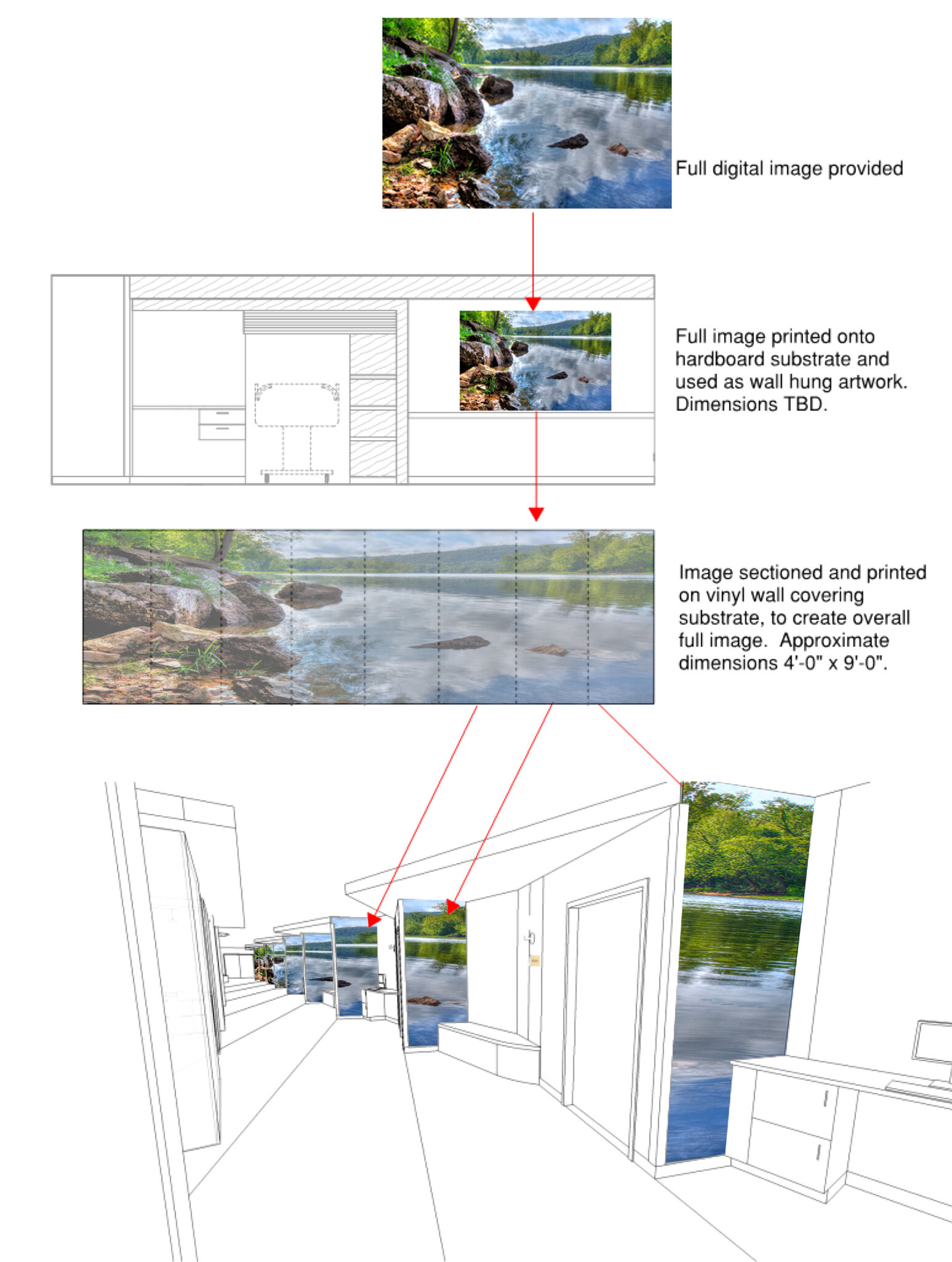
Kurt Johnson Photography adjusted the colors used in the artwork to match the facility’s paint palette exactly, a process that required careful collaboration between KJP and the design team.
Backlit acrylic panels light the path toward patient rooms while also creating a soft, welcoming atmosphere for families.
A Project That Continues to Set the Standard
This installation remains one of our most meaningful and celebrated projects because of its impact.
Susan Lowry, Representative at Designtex, shared, “It was a great collaboration between all parties because everyone cared.”

The Mother Baby Center received nine major design awards, including recognition from Healthcare Design magazine, the International Interior Design Association (IIDA), CoDA (Collaboration of Design + Art), and regional and national healthcare and architecture organizations.
More importantly, it’s often cited as a benchmark for how healthcare environments can integrate nature art, color, and intuitive wayfinding using supportive, research-backed elements of biophilic design.
Jennifer Olson, VP of Operations and Executive Director of the Mother Baby Center at the time, summed up the collaboration perfectly:
“It’s a true testament to our construction workers (Knutson Construction), our design team (HDR), our clinicians, and our administrative teams to come together around this singular vision to create this phenomenal facility. I think we’ve got an unparalleled facility that will lead the way for other baby centers across the country.”
This healing environment is a powerful reminder that when designers are given permission to dream big, and when collaboration, research, and empathy guide the process, the results can be truly transformative. Many of the approaches refined here continue to inform our work today.
Great design doesn’t stop when a project is finished, it keeps working quietly in the background, one patient at a time.
Categories: Color, Healing, Healthcare, Installations, Mother Baby Center


