7 Science-Backed Reasons Nature Photography Improves Healthcare Environments
Walk into most hospitals, and you know exactly where you are. Fluorescent lights. Beige walls. Maybe a medical poster or generic artwork that blends into the background. It’s not exactly the kind of environment that makes you feel calm and hopeful.
But here’s something interesting: most people already know something is missing.
A survey of 400 healthcare consumers found that while they believe art is important for their health and wellbeing, it’s also the aspect of the hospital environment with which they are the least satisfied.* It’s either not there or not done well.

Waiting area UAB Medical West Hospital in Birmingham, AL.
So, what if evidence-based healthcare art could change the way patients feel? Measurably? Physiologically?
What if nature photography could reduce pain, slow a racing heart, and make the whole experience of being in a healthcare setting a little less stressful?
Turns out, the research says it can.
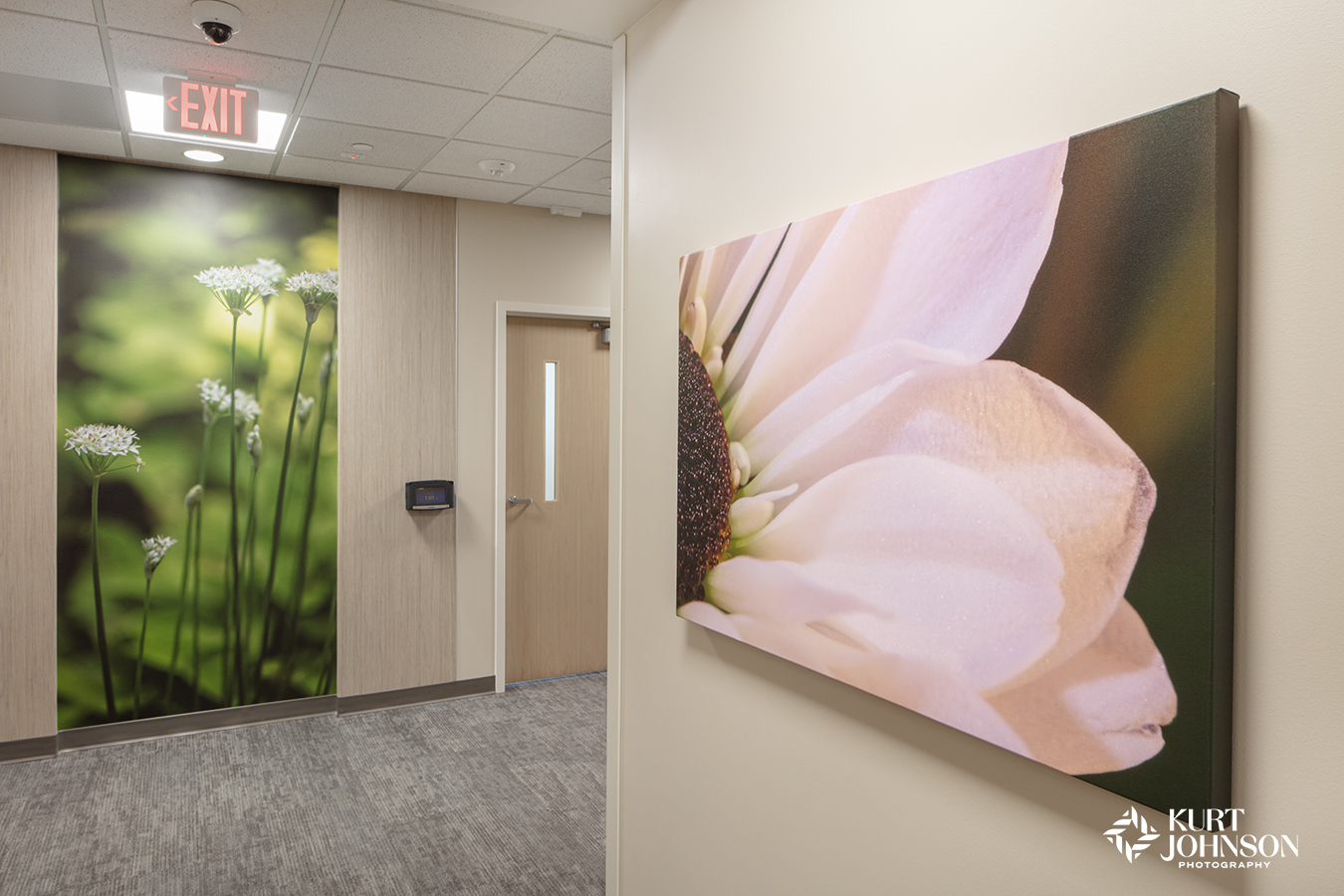
Corridor at Allina Health Lakeville Clinic in MN.
A review published in March 2025 by researchers at the Penn Center for Neuroaesthetics at the University of Pennsylvania compiled 25 studies from the last 30 years, sifting through the science to find research that holds up. Their conclusion?
“Humanizing the healthcare environment to include visual art is more than a design trend. It is good medicine.”
— Cardillo & Chatterjee, University of Pennsylvania, 2025
Here are seven reasons the science makes a compelling case for bringing nature photography into every healthcare space.
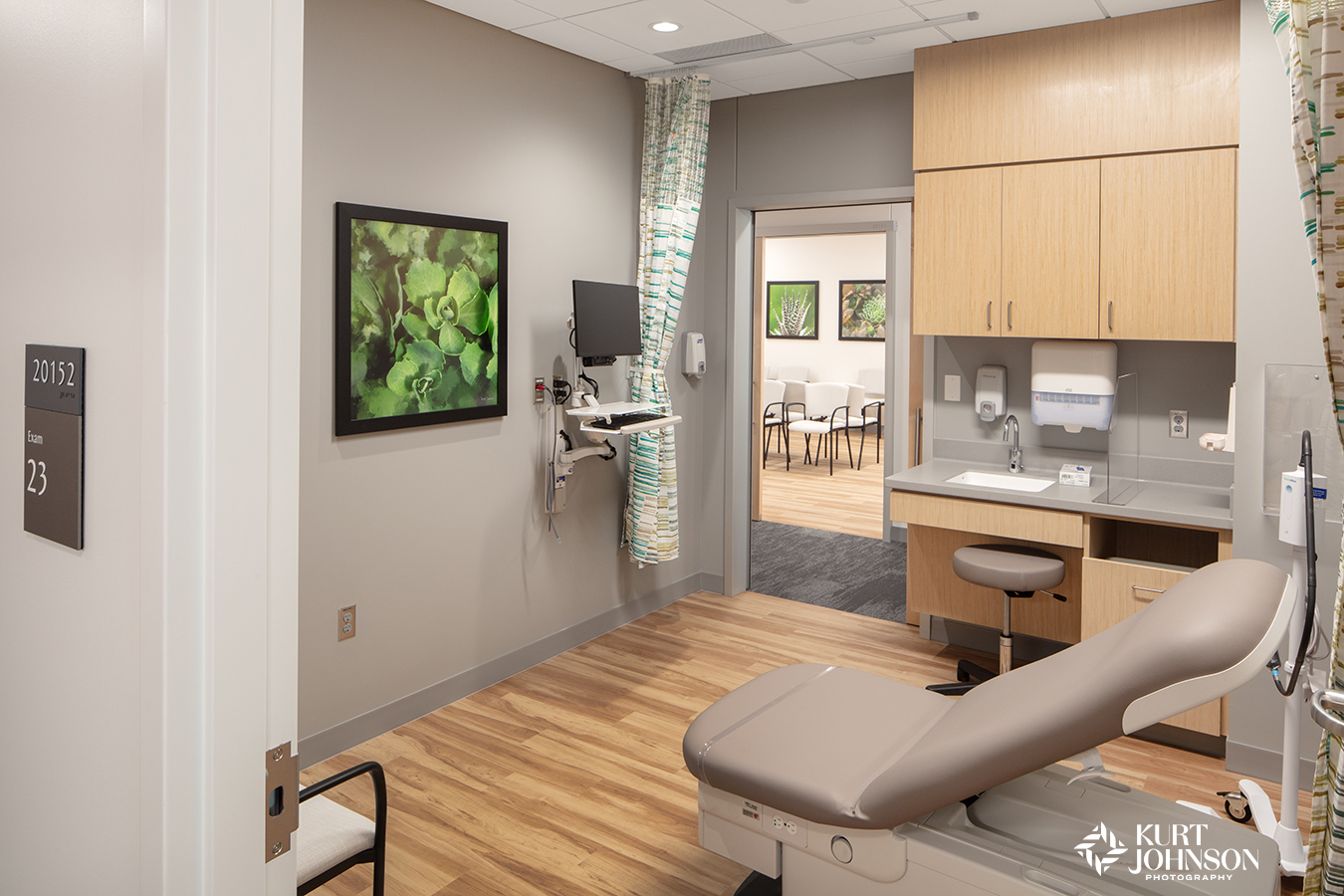
Exam room at UNMC’s Nebraska Medicine Village Pointe Clinic in Omaha, NE.
1. It Calms Patients Before They’re Even Seen
One study found that patients waiting in an exam room with landscape photography showed measurably lower blood pressure after just 10 minutes compared to those in a room with standard medical posters. And 63% of those patients described the room with nature photography as calming, relaxing, peaceful, and soothing.

Nature-themed waiting area at UNMC’s Nebraska Medicine Village Pointe Clinic in Omaha, NE.
Another study observed hospital emergency department waiting rooms before and after nature art installations were added. Researchers saw less restlessness, less pacing, lower noise levels, and more positive social interactions (like conversations between strangers). The room became significantly calmer.
The Penn researchers also flagged something worth noting: the common practice of running regular television in waiting rooms may actually increase stress compared to showing nature imagery. Patients already have a phone in their hand. What if you gave them something worth looking up for?
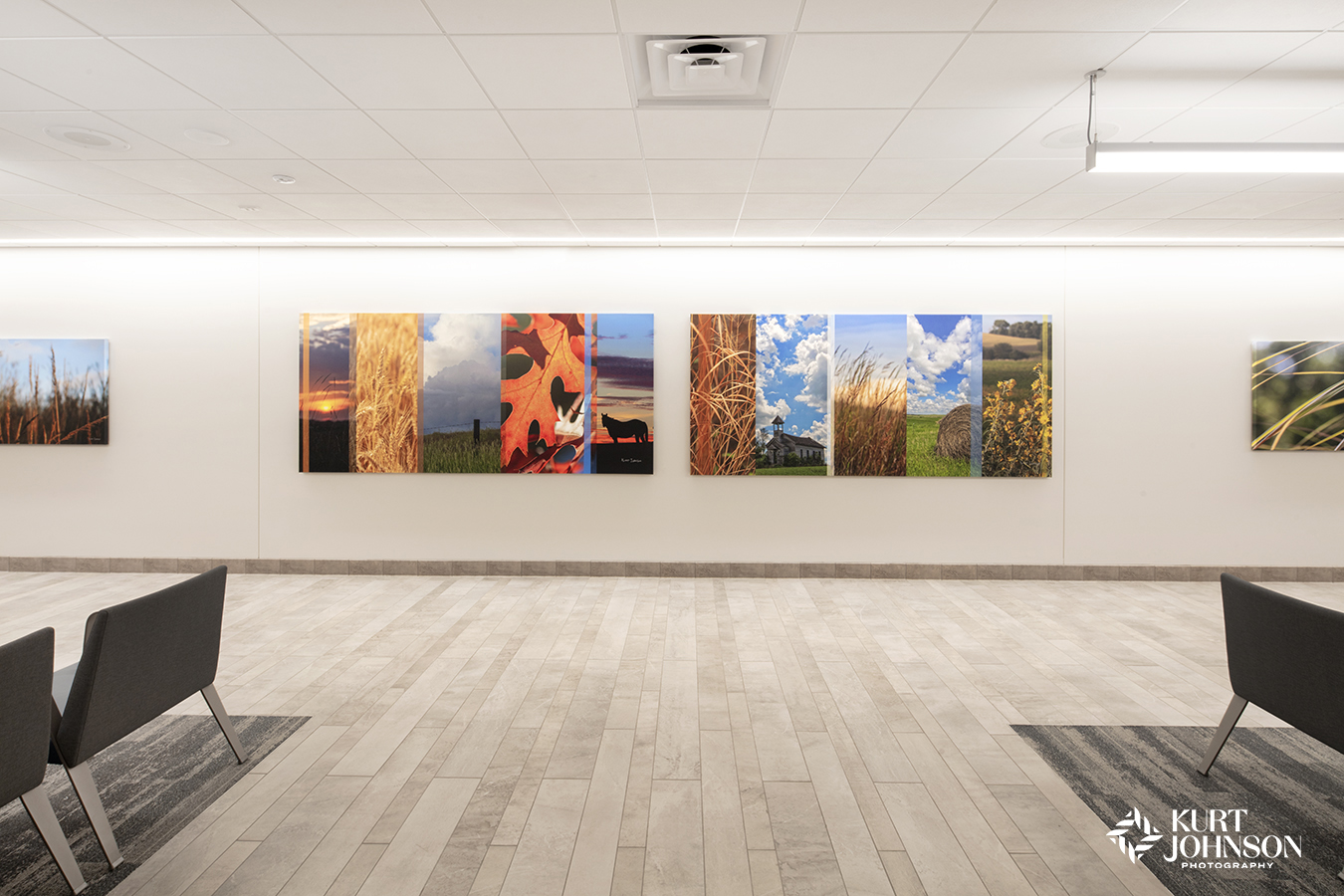
Waiting area at Boone County Health Center in Albion, NE.
2. It Reduces Pain During Procedures
Here’s where the research gets genuinely remarkable. Study after study found that patients undergoing uncomfortable or invasive procedures like colonoscopies, bronchoscopies, burn treatment dressing changes, and even labor and delivery, reported less pain and needed lower doses of sedatives when nature imagery was present.

Uplifting hallway at Children’s Nebraska in Omaha.
One randomized controlled trial of patients undergoing flexible bronchoscopy found those who could view a nature mural during the procedure reported significantly reduced pain compared to those without.
Another study involving nearly 300 patients getting upper endoscopies found that nature images combined with music reduced heart rate variability, blood pressure, and negative mood states across the board.
-
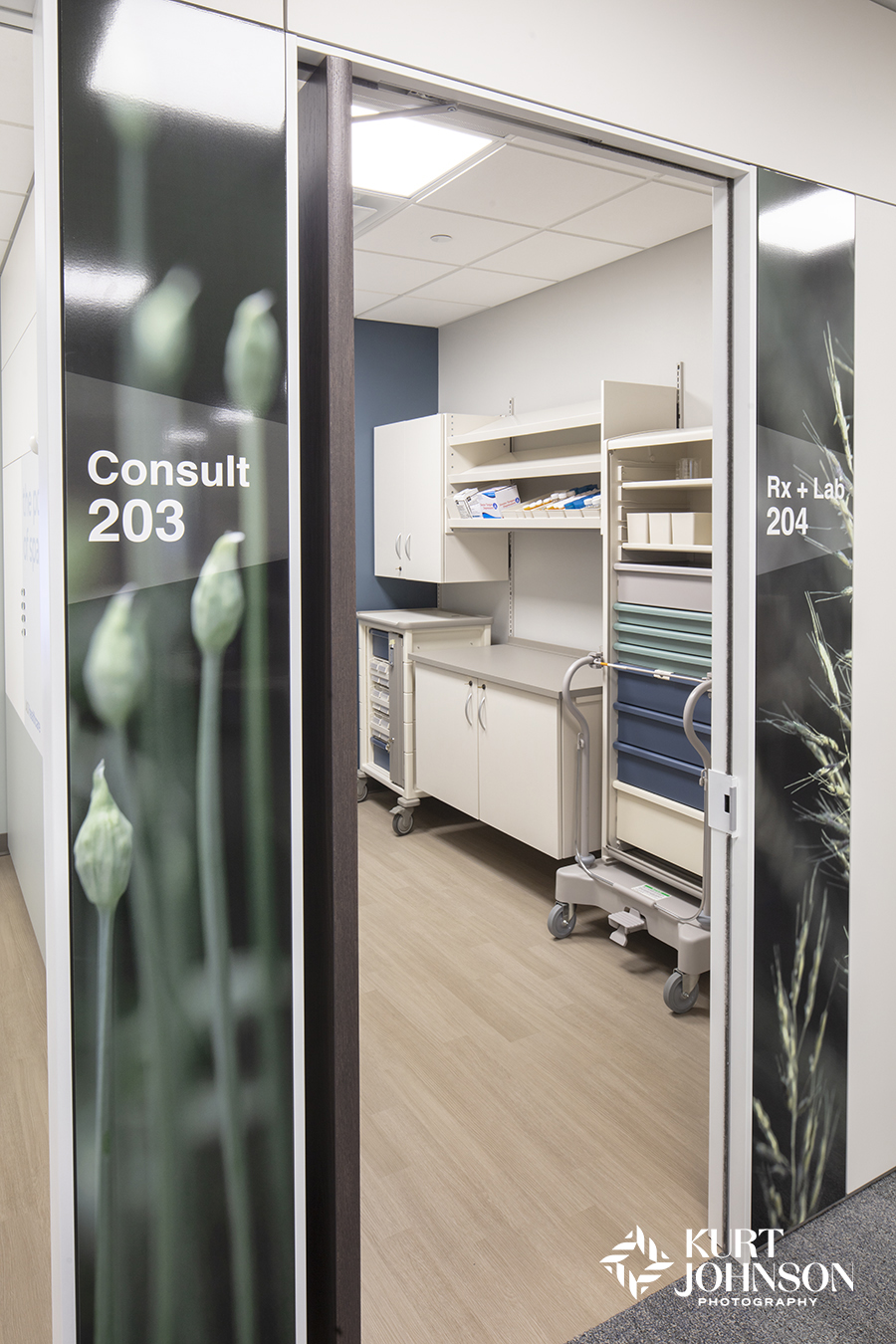
- Biophilic design spaces at DIRTT’s Omaha, NE showroom.
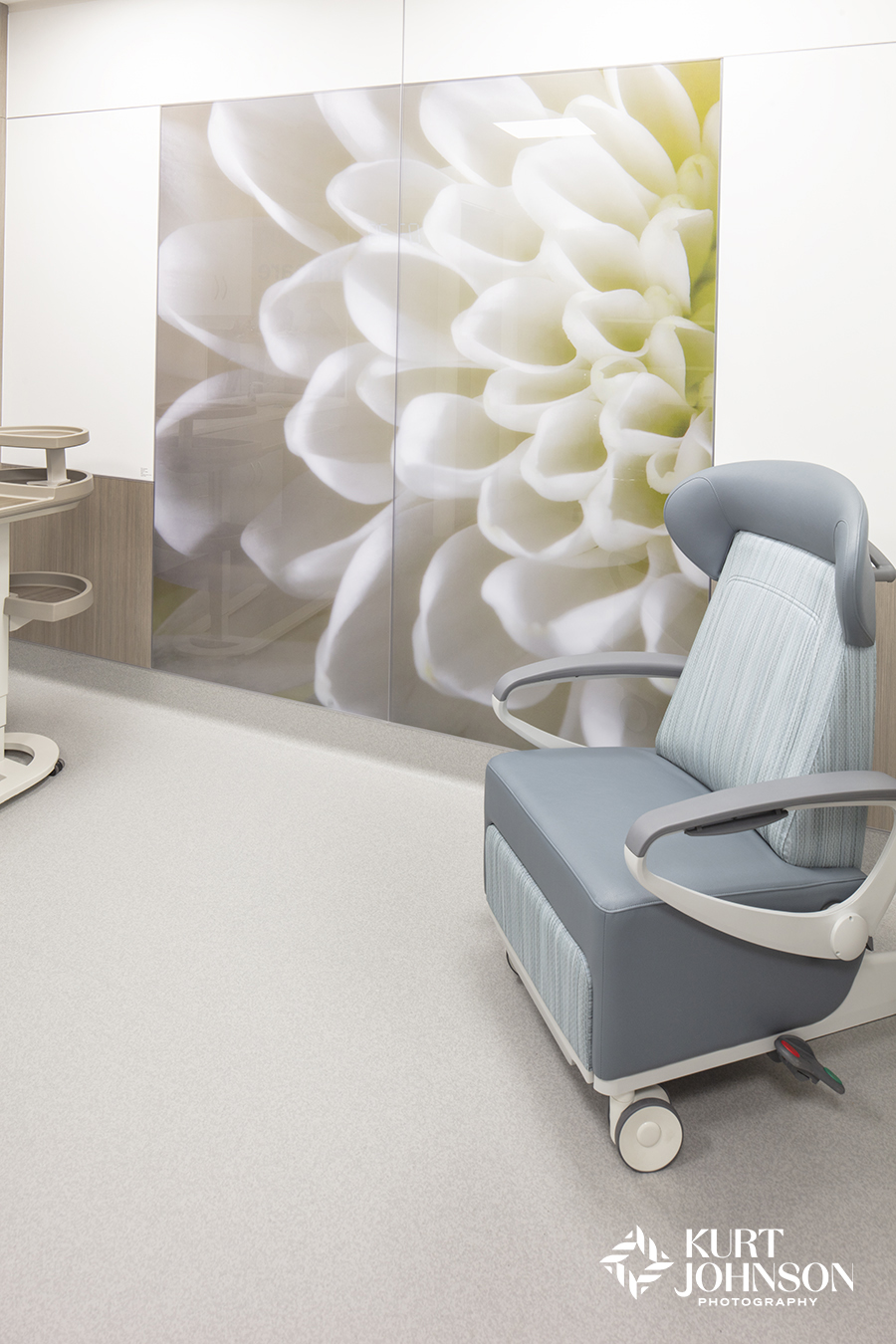
When attention shifts toward a peaceful landscape, there’s simply less bandwidth available for processing pain.
Nature gives the brain something beautiful and calming to focus on. It’s a measurable neurological shift in attention (a positive distraction) that works.
These findings are important, especially considering how easy (and affordable – we’ll get to that later) it is to incorporate nature photographs into healthcare environments.
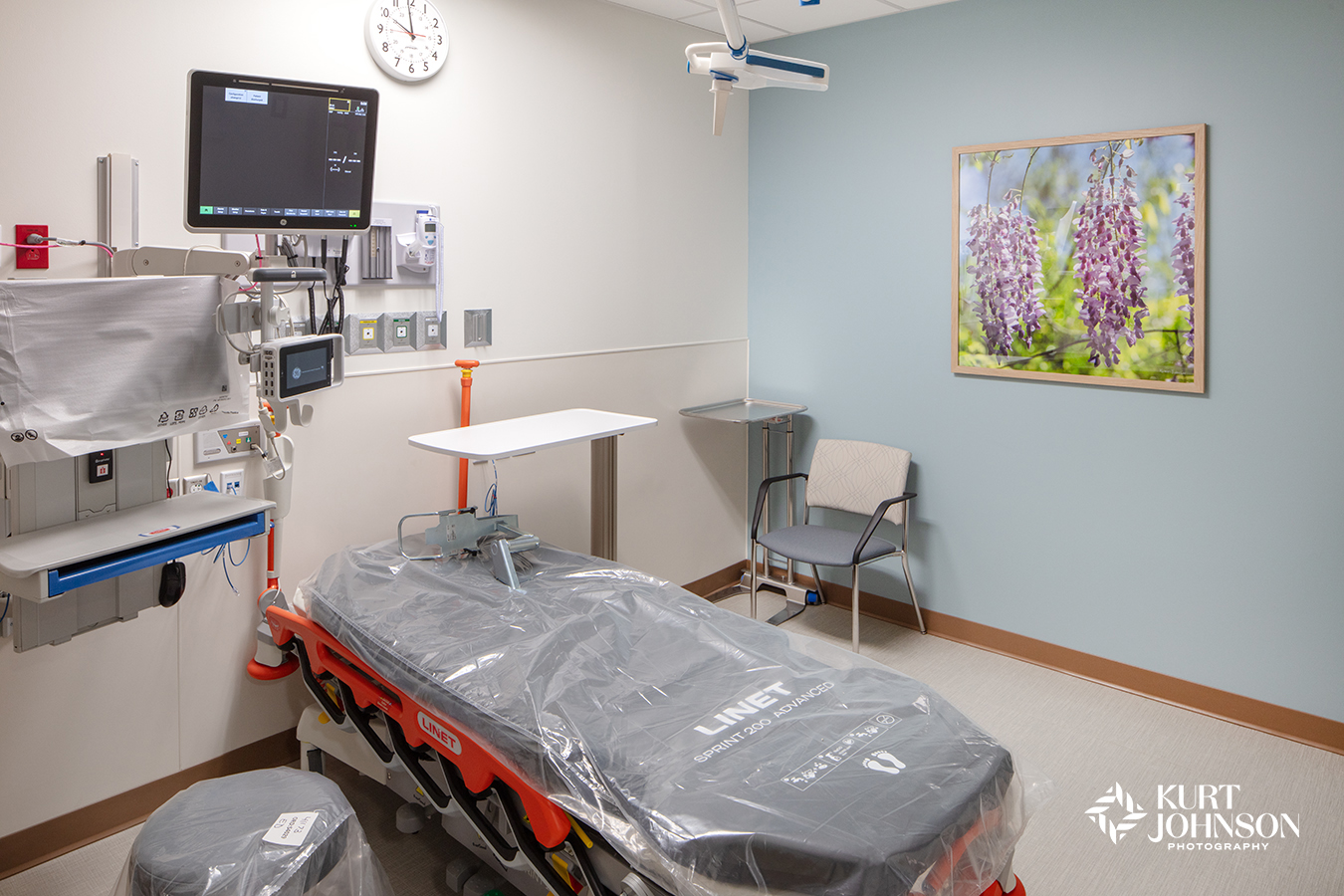
Treatment room at CommonSpirit Memoral Hospital in North Georgia.
3. It Improves Mood and Satisfaction During Longer Stays
In a large survey of over 1,000 patients at the Cleveland Clinic, which houses one of the most extensive art collections of any hospital in the US, the numbers are striking. 76% of patients noticed the art. 73% said it improved their mood, a number that climbed to 91% for patients who stayed more than one day. 61% credited it with reducing their stress.
One trial found that cardiac patients in rooms with ceiling-mounted nature displays showed meaningfully reduced stress and anxiety levels by the time they were discharged, with the strongest effects when nature imagery was paired with nature sounds.
The longer someone is in a healthcare environment, the more the environment itself matters.
Nature photography doesn’t just decorate a room. It changes how being in that room feels.

Environmental graphic at Allina Health in MN.
4. It’s the One Type of Art That Works Every Single Time
This is perhaps the most important finding in the entire body of research, and the one that sets nature photography apart from every other art form used in healing environments.
The Penn review looked at studies testing all kinds of visual art in healthcare settings: abstract art, contemporary paintings, mixed collections, and representational works. Some showed benefits. Some showed inconsistent results. A few showed no measurable effect at all.
Nature imagery was the only category of art that showed benefits consistently in every single study that tested it.

As the researchers put it, its efficacy is “surprisingly robust,” consistently reducing stress, pain, and anxiety and enhancing patient satisfaction across wildly different healthcare contexts, patient populations, and study designs.
This is why evidence-based art placement in healthcare starts with nature.
Other art can complement it beautifully. But nature photography is the one that shows up reliably, every time, for virtually every patient.

Winding nature mural at the entrance of The University of Nebraska Medical Center’s Psychiatric Emergency Services Facility in Omaha.
5. It Benefits Staff and Visitors, Not Just Patients
Patients are the obvious beneficiaries, but the impact of a thoughtful nature art installation extends further than most people realize.
Healthcare staff in environments with nature-based art report greater well-being, a stronger sense of belonging, and more capacity to focus on patient needs. Visitors, often navigating some of the most emotionally difficult moments of their lives, experience improved well-being too.
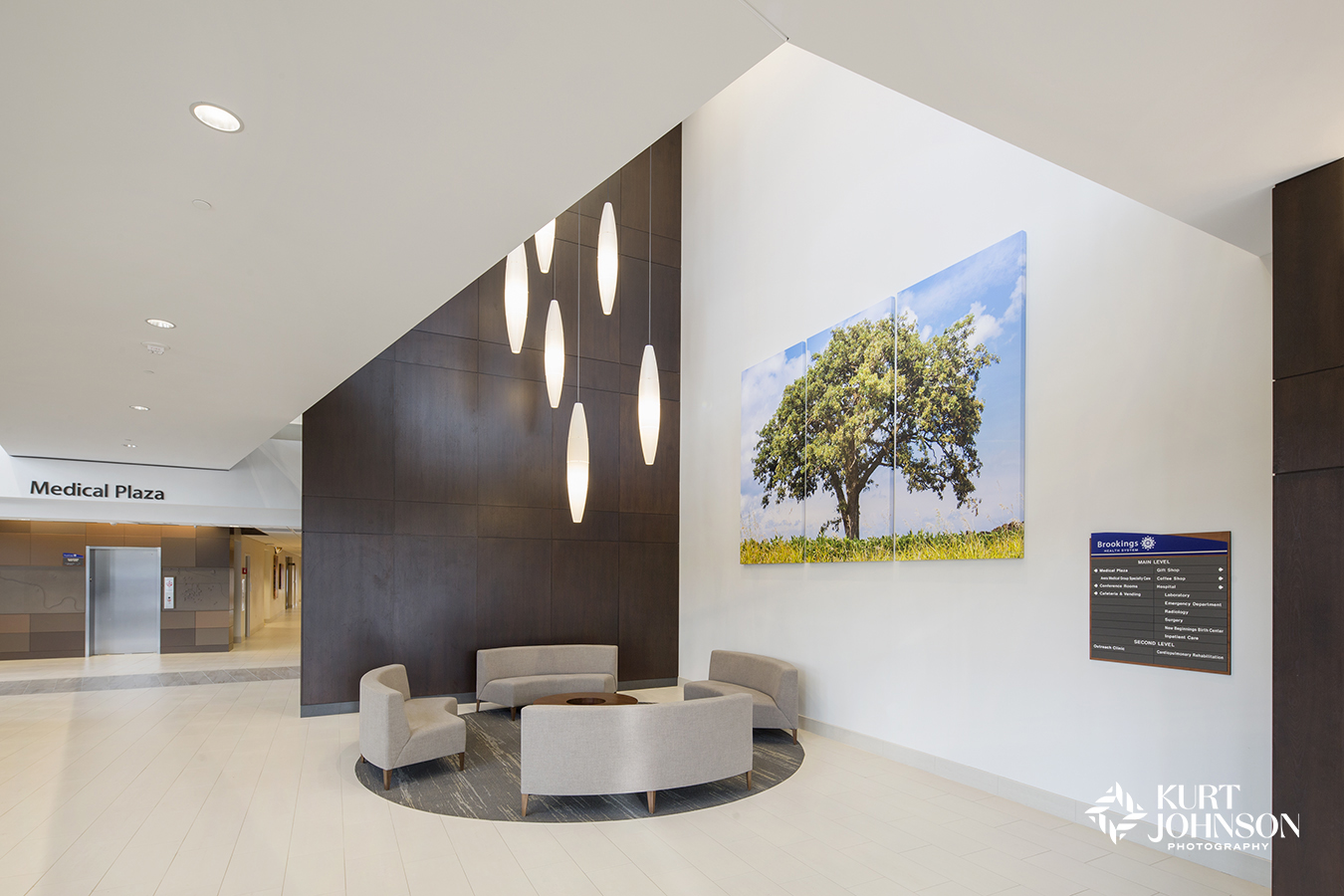
Waiting area at Brookings Health System in SD.
A healthcare environment that feels calmer and more supportive doesn’t just benefit the patient. It benefits everyone in the building. And when staff feel better, research suggests they provide more attentive care.
The ripple effects of a well-designed healing environment reach far beyond patient rooms.
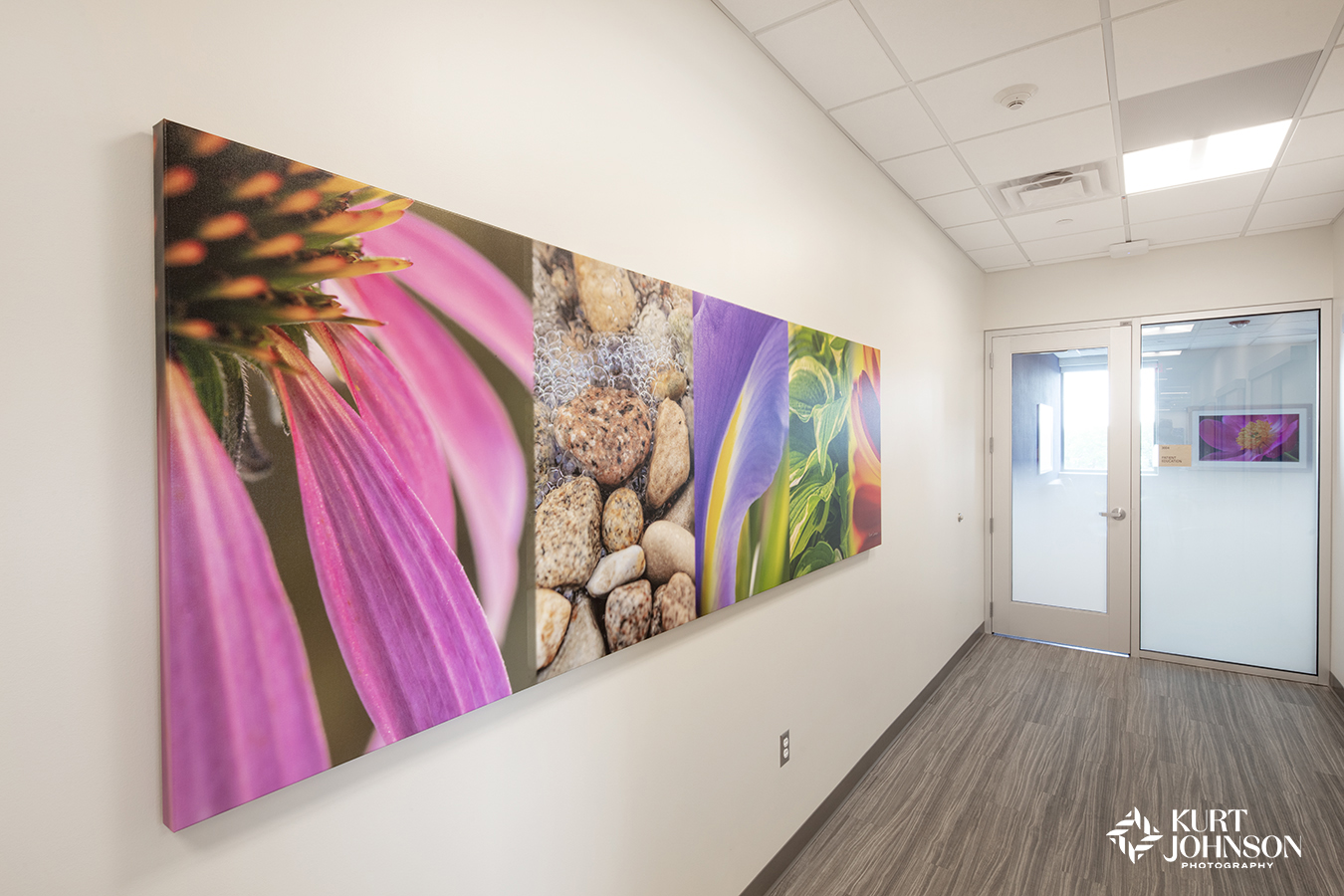
Wayfinding corridor at Allina Health United Hospital in St. Paul, MN.
6. It Can Save Hospitals Real Money
Here’s where the conversation becomes impossible to ignore: investing in nature photography for healthcare spaces may actually reduce costs.
One study tracked medication use in a psychiatric unit before and after realistic nature photography was installed on the walls. The result was a roughly 60% reduction in as-needed anxiety and agitation medications, which resulted in an estimated savings of more than $27,000 per year for that unit alone. Fewer procedures also free up nursing hours, increasing the efficiency of care delivery across the board.
A separate cost-benefit analysis modeled the potential financial impact of mood-uplifting art on hospital stay lengths at three major institutions: the Mayo Clinic, Johns Hopkins, and Mass General. The projected net benefit over 10 years? Between $4 million and $8 million per hospital.
These numbers are projections, not guarantees, but they make an important point: healthcare art shouldn’t automatically be viewed as an expense with no measurable return.
When art is selected intetnionally, it becomes an investment in patient well-being, staff support, and potentially the financial health of a healthcare system.

Custom vector graphic elevator lobby at the University of Nebraska Medical Center’s Munroe-Meyer Institute in Omaha.
7. It Shapes How Patients Judge the Quality of Their Care
This last one is subtle but powerful, and it has direct implications for a hospital’s reputation.
Patients don’t just experience art in healthcare settings. They use it to draw conclusions about the institution itself. Research shows that patients infer the quality of medical care from the presence or absence of art.

Waiting area at Boone County Health Center in Albion, NE.
When the environment feels thoughtful and considered, they feel more cared for.
Patient satisfaction with a hospital’s art is one of the strongest predictors of whether they’ll recommend that hospital to someone else.
Since 2012, Medicare and Medicaid reimbursement rates have been tied to patient satisfaction scores, which means the aesthetics of a healthcare space aren’t just a soft consideration. They directly influence both patient perception and financial outcomes.
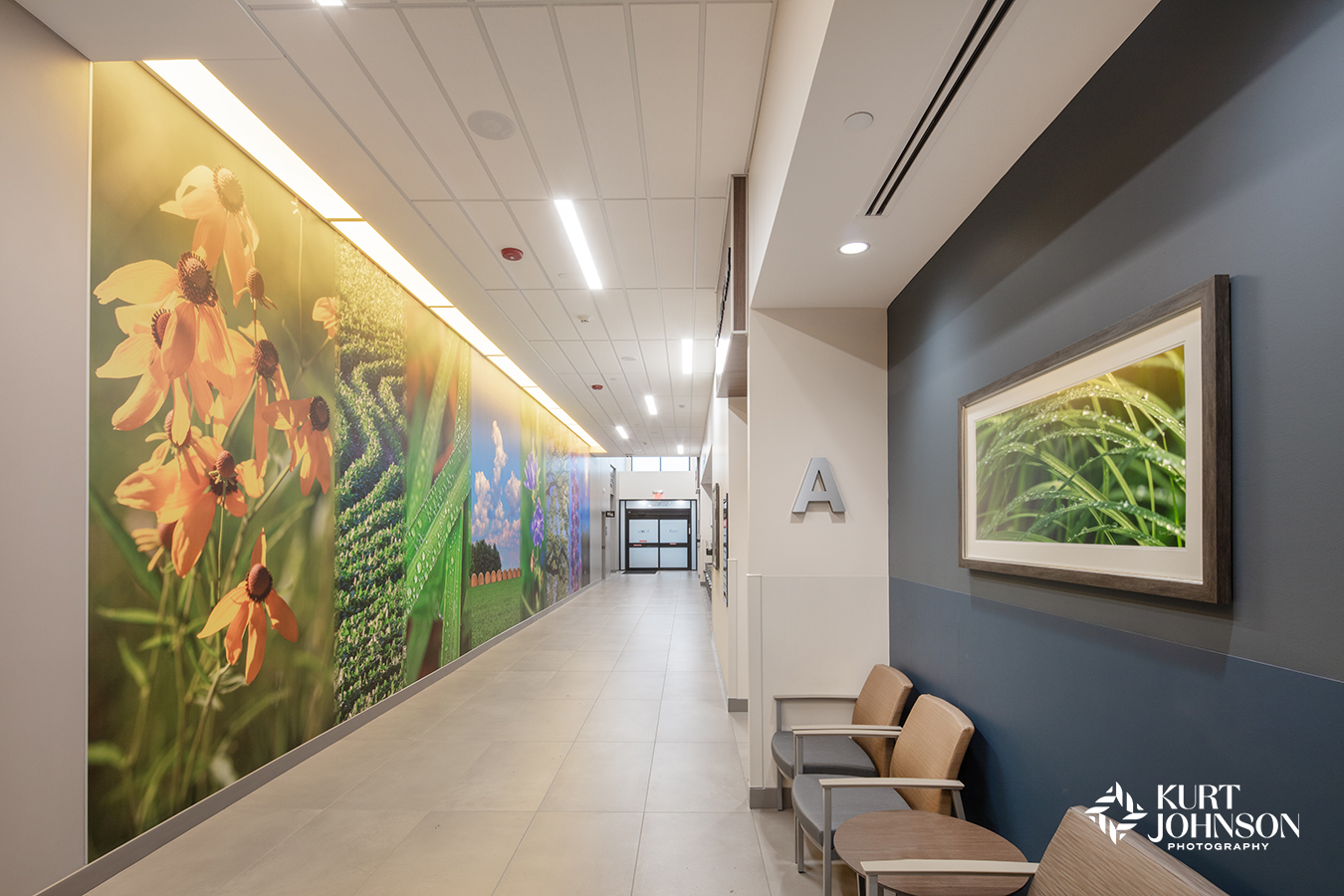
Large-scale custom color slice graphic and framed art at Bryan Health’s Merrick Medical Center in Central City, NE.
Bringing the Outside In
We’ve always felt that nature is good for us. Now the science is catching up to what our instincts have always known.
The good news is that you don’t need a window overlooking a forest to get the benefits. Thoughtfully placed nature photography can do the work. A large-scale nature photography installation in a corridor, a waterscape in a waiting room, a sky image on a procedure room ceiling. They aren’t only design decisions. They’re clinical ones too.

2-story waterfall image covering a 25-foot wall in the atrium of Allina Health’s Center for Mental Health and Addiction in MN.
Whether you’re designing a new healthcare facility, renovating an existing space, or simply looking to create a more healing environment for patients and staff, evidence-based nature art placement and custom nature photography solutions offer one of the most cost effective, meaningful, and measurable improvements you can make.
Nature belongs indoors. And the evidence for bringing it inside has never been stronger.
Have a healthcare space that could use the healing power of nature? We’d love to help you create a space that feels calmer, more intentional, and more restorative for everyone who walks through the doors.

*Source: Cardillo, E.R. & Chatterjee, A. “Benefits of Nature Imagery and Visual Art in Healthcare Contexts: A View from Empirical Aesthetics.” Buildings, 2025. https://doi.org/10.3390/buildings15071027
Categories: Healing, Healthcare, Research


