Make Them Forget They’re Waiting
Nobody likes waiting. And when you’re waiting for an appointment, test results, a procedure, or even waiting with someone you love in a healthcare environment, those minutes can feel especially long.
And while healthcare organizations are doing plenty to improve the patient experience, they can’t always control how long someone has to wait.
So, knowing this, how do we make the “waiting” better? That’s where the physical environment comes in, and evidence-based design is key to transforming the patient experience.
When you’re sitting in a waiting room, you might check your phone, look at the clock, or even watch TV. Maybe you read a magazine. But since “waiting” is reported as the number one complaint of patients, we think this time can be used as an opportunity for healthcare environments.
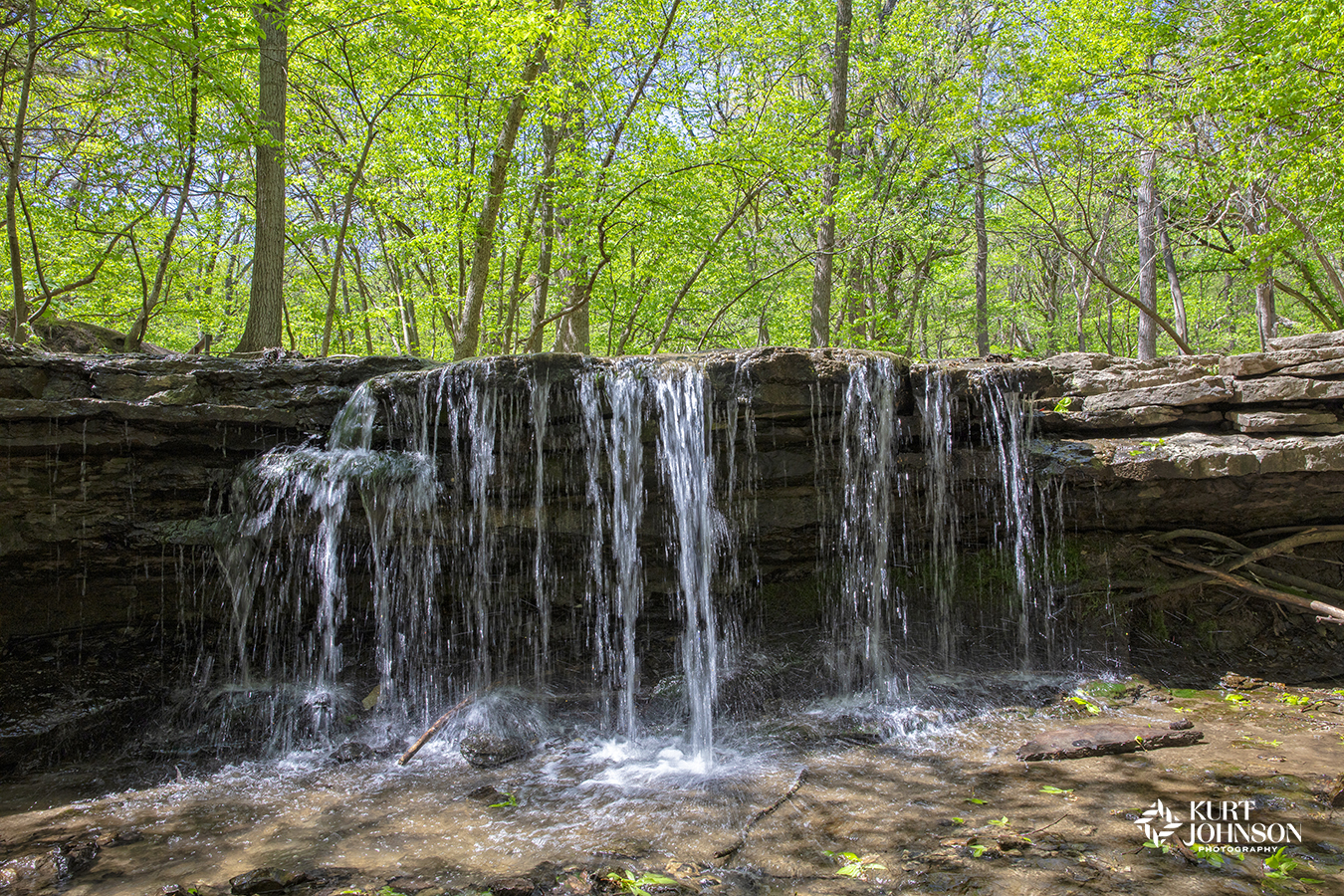
Study after study finds that nature imagery can help reduce stress, ease anxiety, improve mood, and provide a positive distraction.
A 2025 review from researchers at the University of Pennsylvania’s Penn Center for Neuroaesthetics looked at 25 studies examining visual art in healthcare settings. Nature imagery stood out for its consistency across all the research.
If you want to dig into the science, we’ve collected seven of the most interesting findings here:
7 Science-Backed Reasons Nature Photography Improves Healthcare Environments.
But one of the earliest and most influential studies in this area goes all the way back to 1984 about how something as simple as a view can change the patient experience.
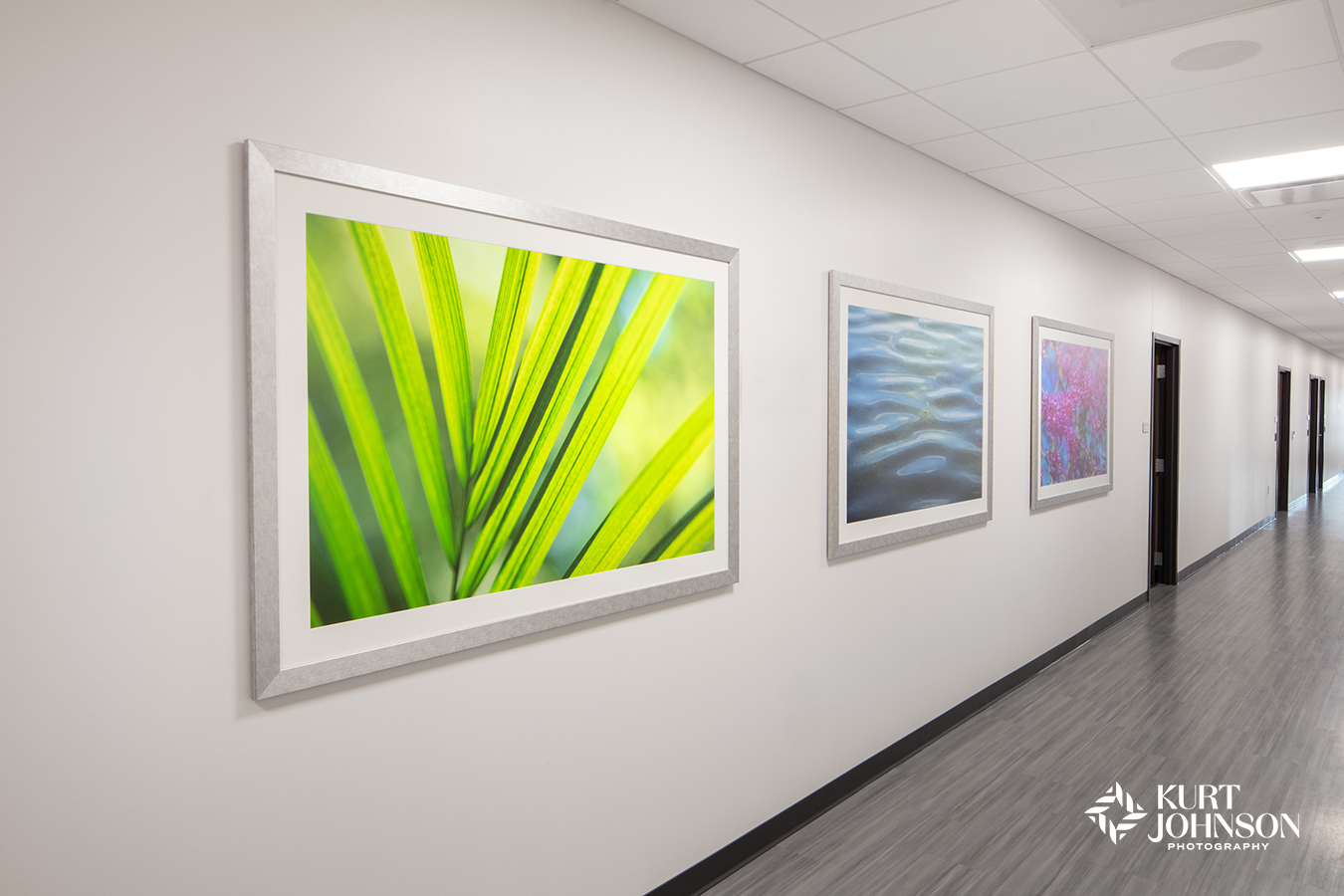
Corridor at OrthoNebraska in Omaha.
Roger Ulrich’s landmark study looked at 46 patients recovering from gallbladder surgery at a hospital. Some had hospital rooms with windows looking out at trees. Others had windows facing a brick wall.
The patients with the view of nature had shorter postoperative stays, fewer negative comments recorded by nurses, and took fewer doses of stronger pain medications than patients looking at the brick wall.
It’s a remarkably simple idea: what you see from your hospital bed may influence how you experience your recovery.
More than 40 years later, researchers went back to that question, and in a 2026 found that exposure to nature was linked with lower stress levels and better outcomes, reinforcing Ulrich’s original claim that our surroundings, specifically when they include some aspect of nature, can positively influence how we feel and respond to stressful experiences.
You can read the full study here.
-
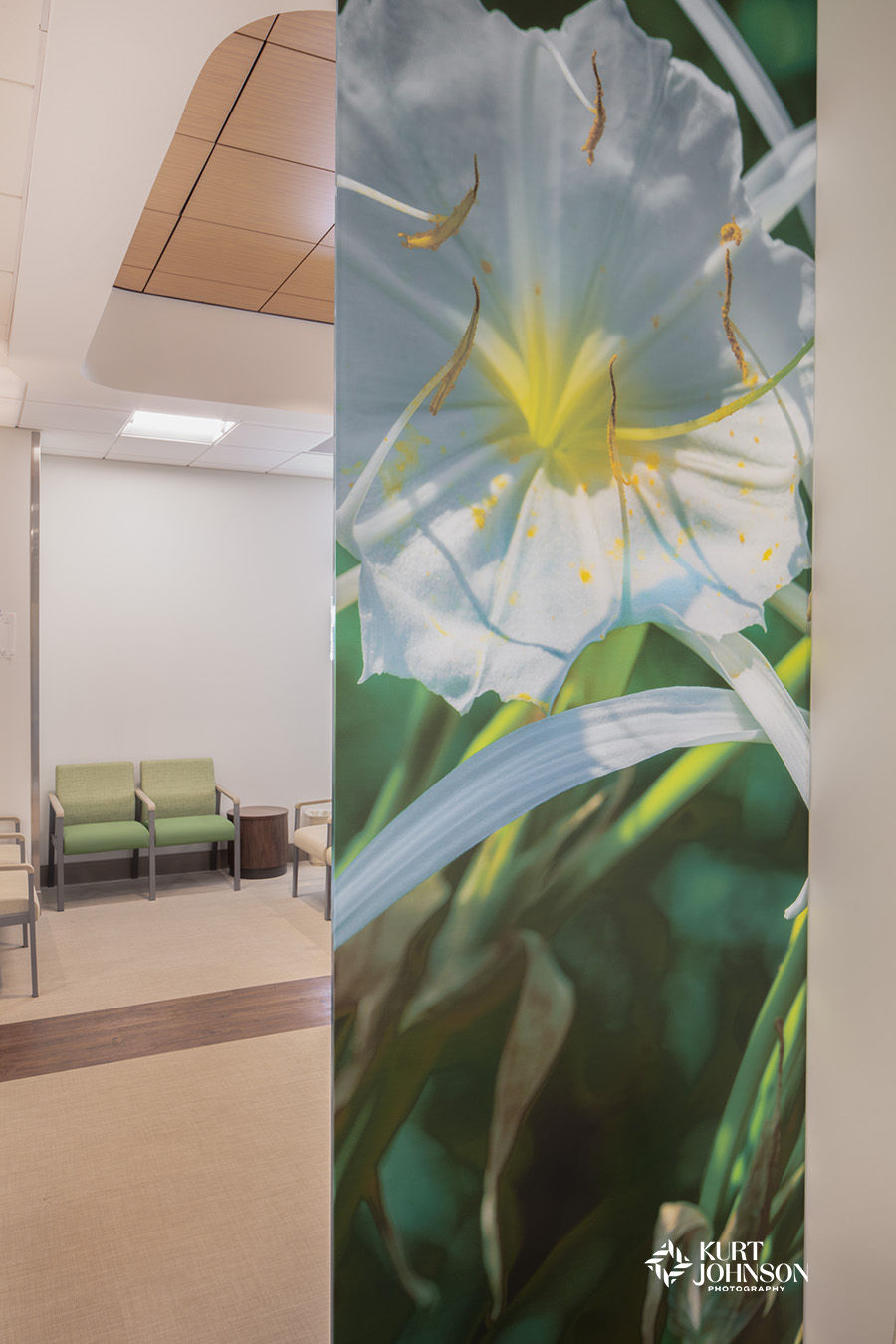
- Waiting area at award-winning UAB Medical West Hospital in Bessemer, AL.
-
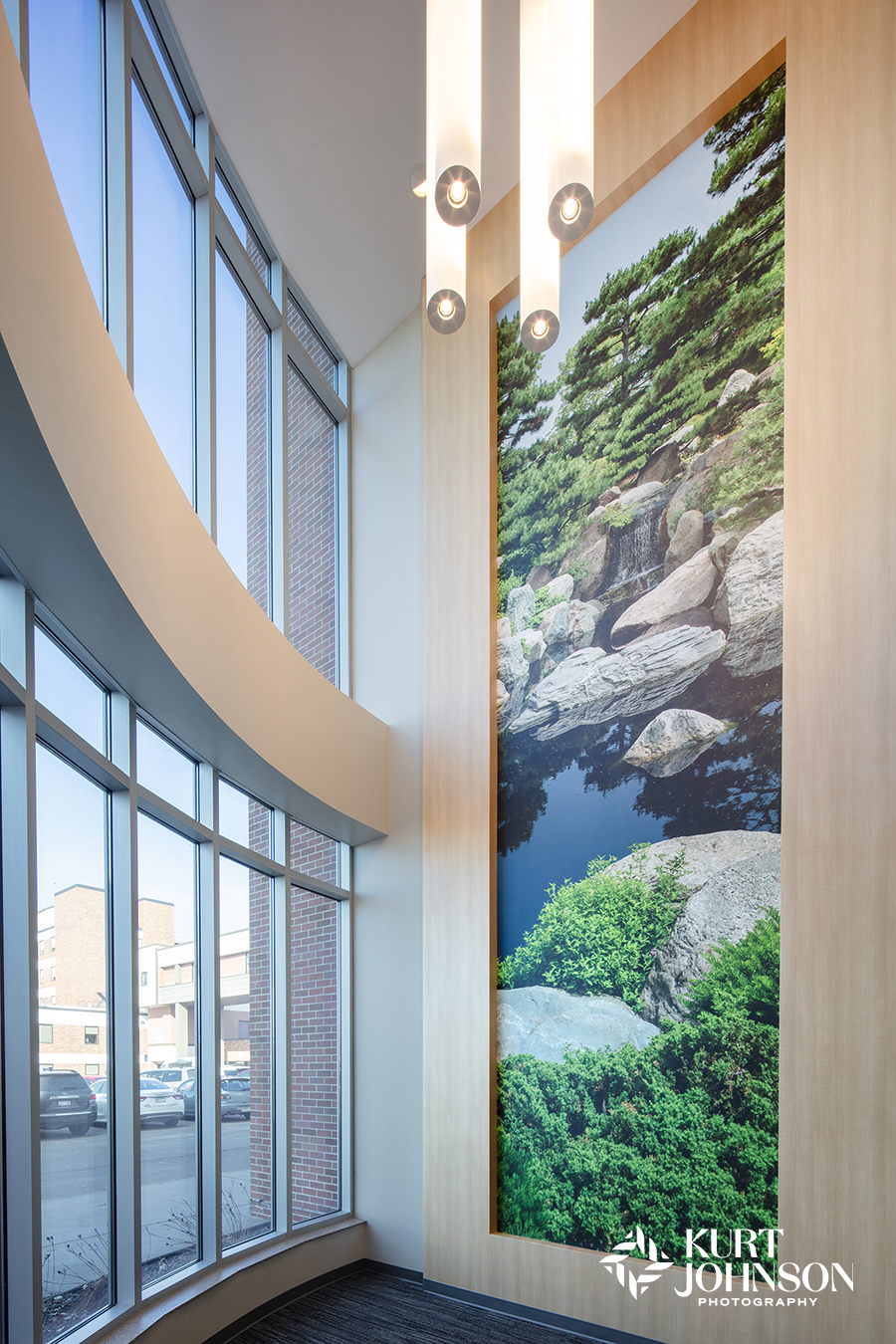
- 2-story waterfall photograph at Allina Health Mental Health and Addiction Specialty Center at Unity Hospital in MN.
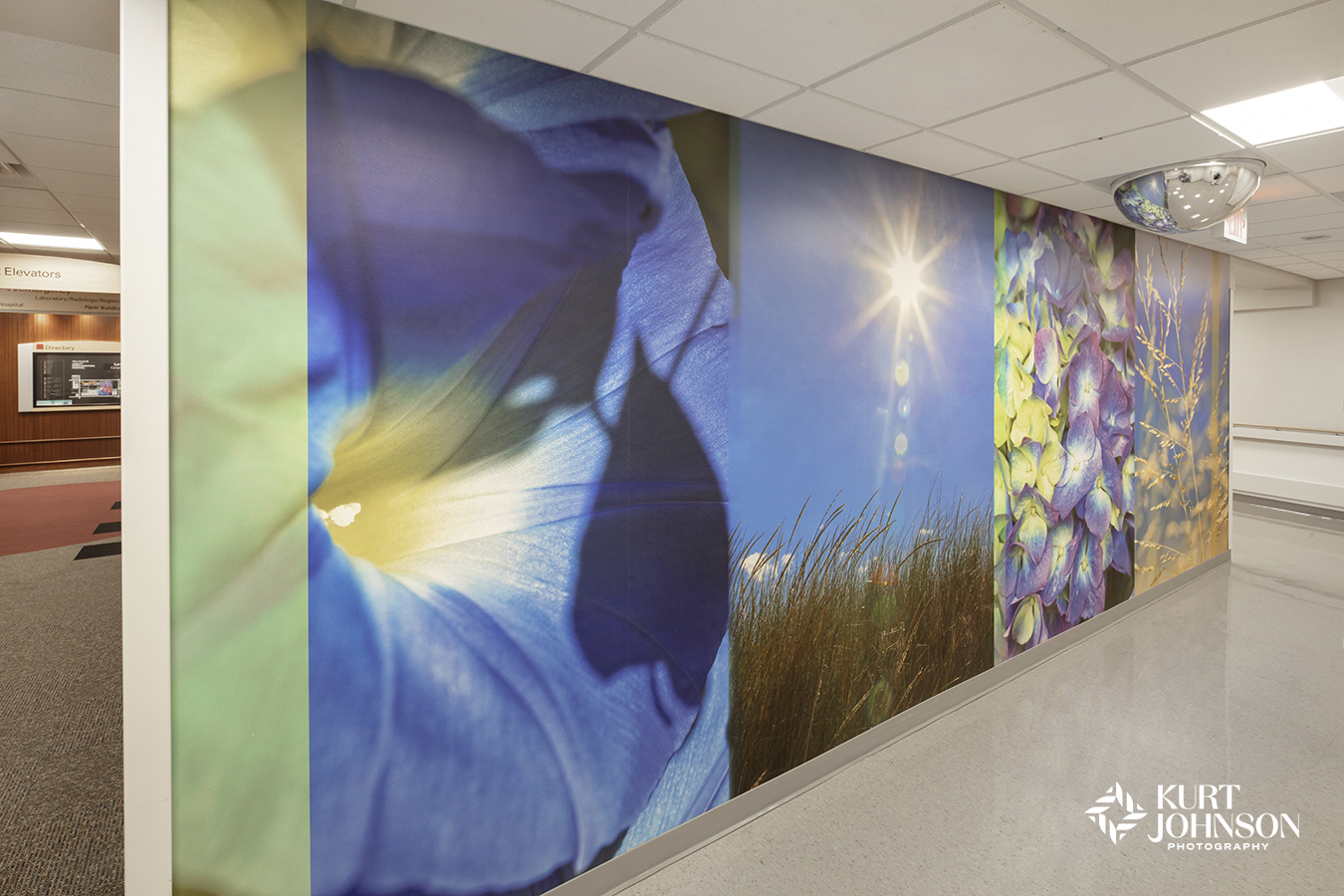
A photograph of a large landscape stretching down an otherwise sterile hallway can turn a blank wall into a relaxing stroll through the forest. A waterfall can bring peaceful movement into a space so quiet you can almost hear the water flowing. A photograph of grasses, trees, or wildflowers can draw your attention to mesmerizing, intricate patterns that can give your mind something calming to focus on.”
Nature photographs create a connection to nature when being outdoors isn’t possible. And when someone is nervous about what’s going to happen, having something soothing to focus can make a big difference in the overall patient experience.
These types of positive distractions, courtesy of Mother Nature, give people something calming to focus on rather than the stressful situation they feel they’re in.
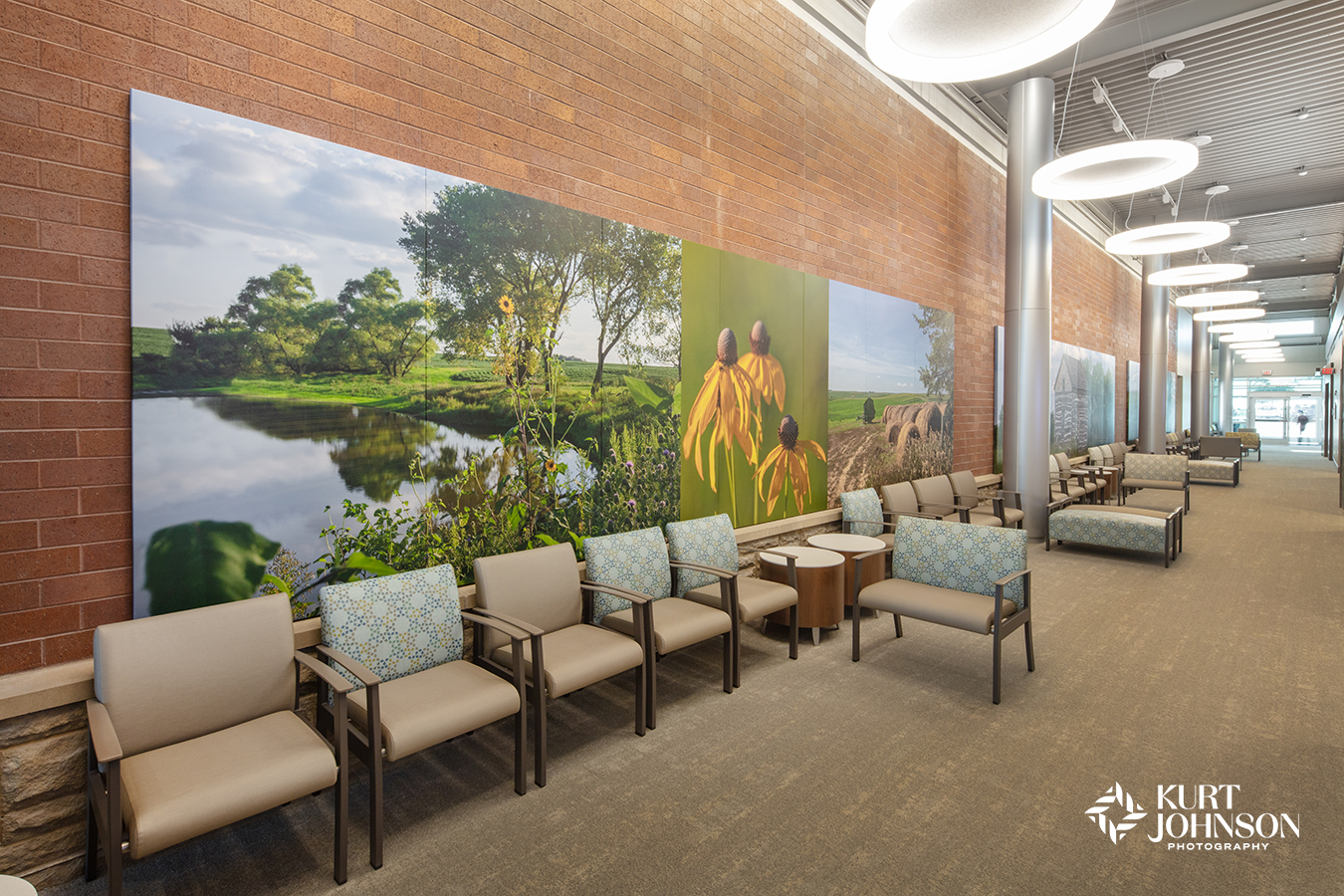
Beatrice Community Hospital & Health Center in NE.
When we talk about waiting, it’s easy to picture the traditional waiting room. But patients spend plenty of time waiting in other places, too.
They wait in hallways. Outside procedure rooms. In treatment areas. In exam rooms. At check-in desks. In imaging departments. Sometimes they’re not technically “waiting” at all, but they’re still sitting, standing, walking, or being moved through an environment while something stressful is happening.
Those spaces matter, too.
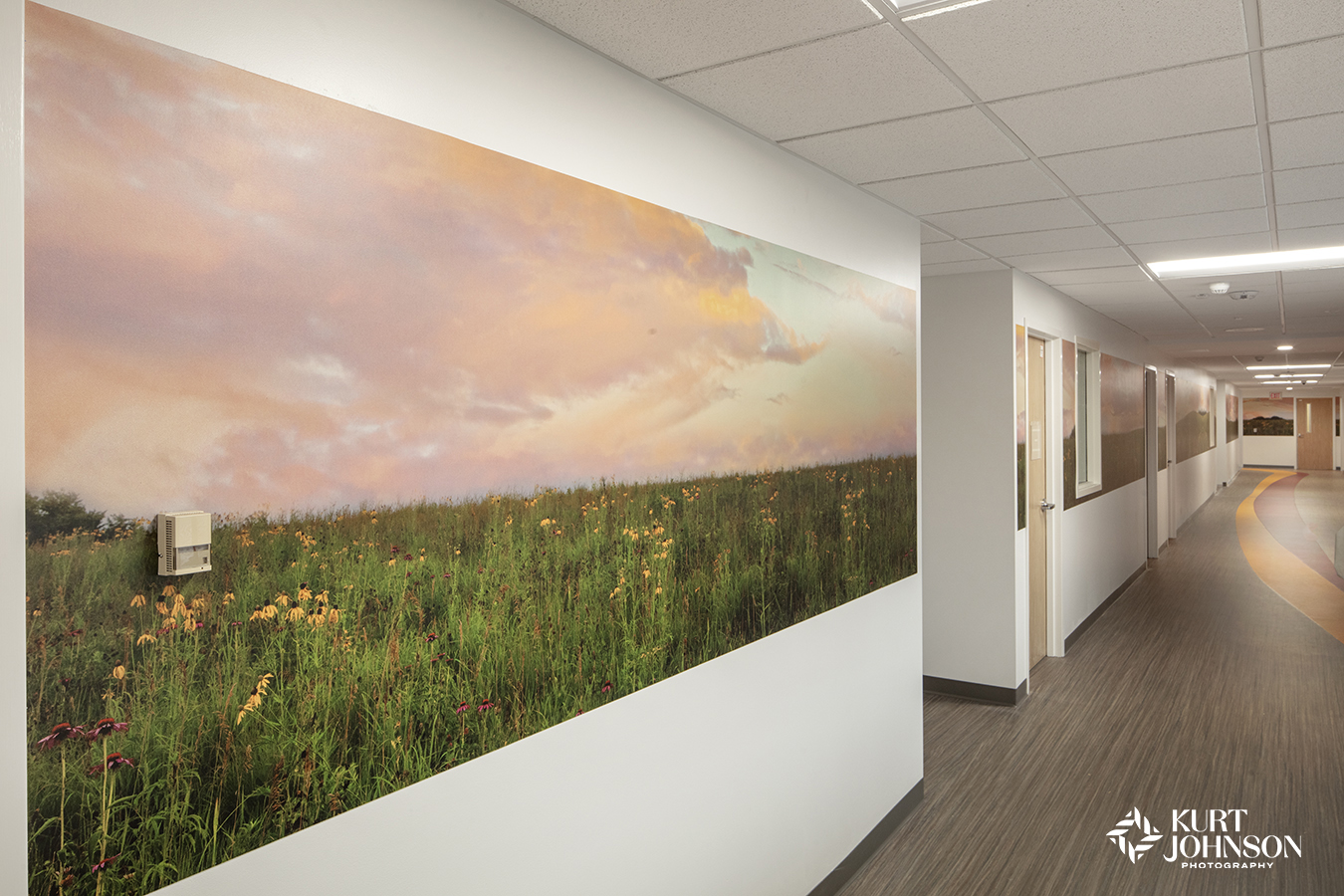
Dreamy wildflower corridor at Allina Health United Clinic in MN.
A hallway can give someone something beautiful to look at as they walk toward an appointment they’re nervous about.
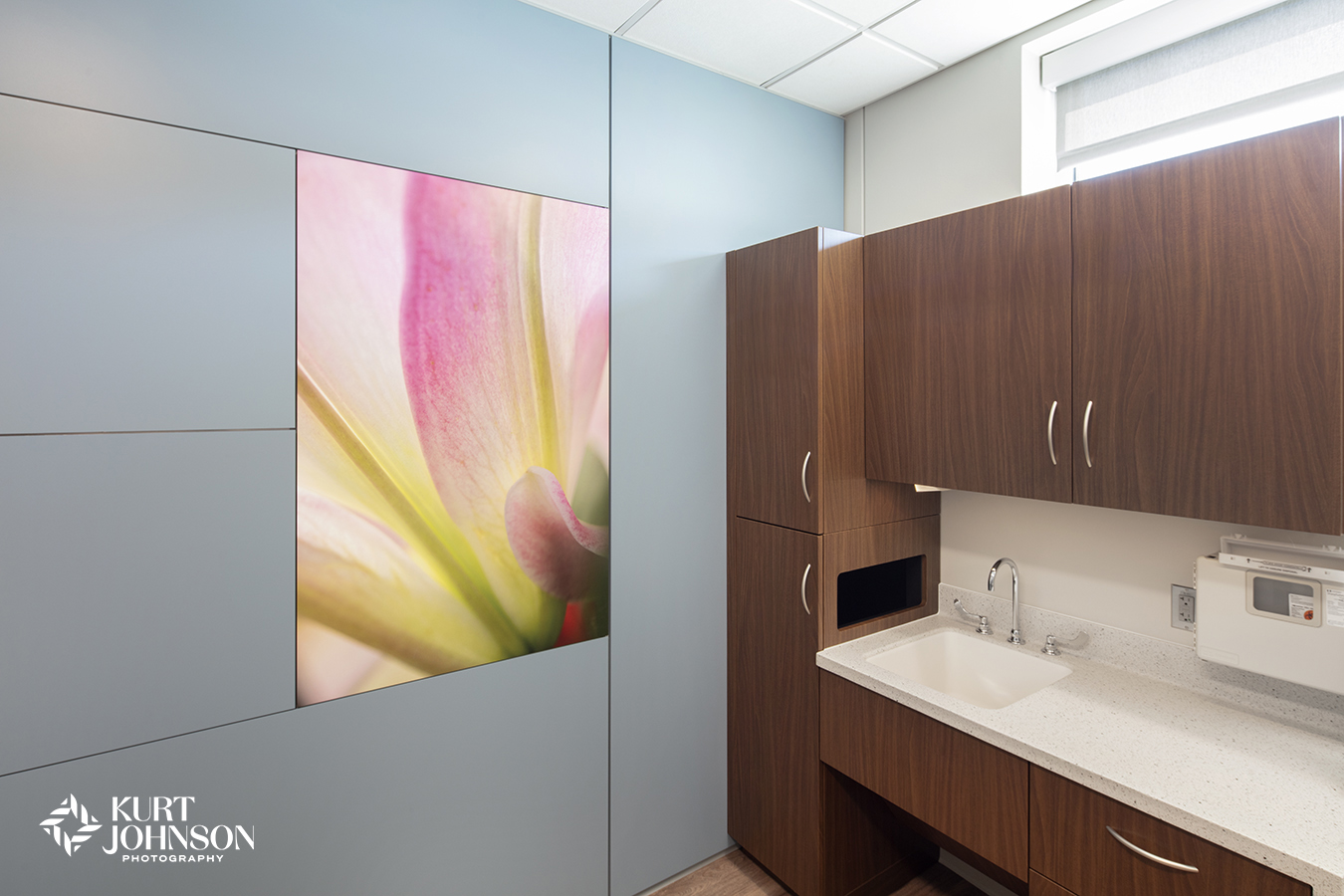
DIRTT panel at Methodist Physicians Clinic Elkhorn, NE.
A treatment room doesn’t have to feel completely clinical. Art can soften the space without getting in the way of what the care team needs to do.
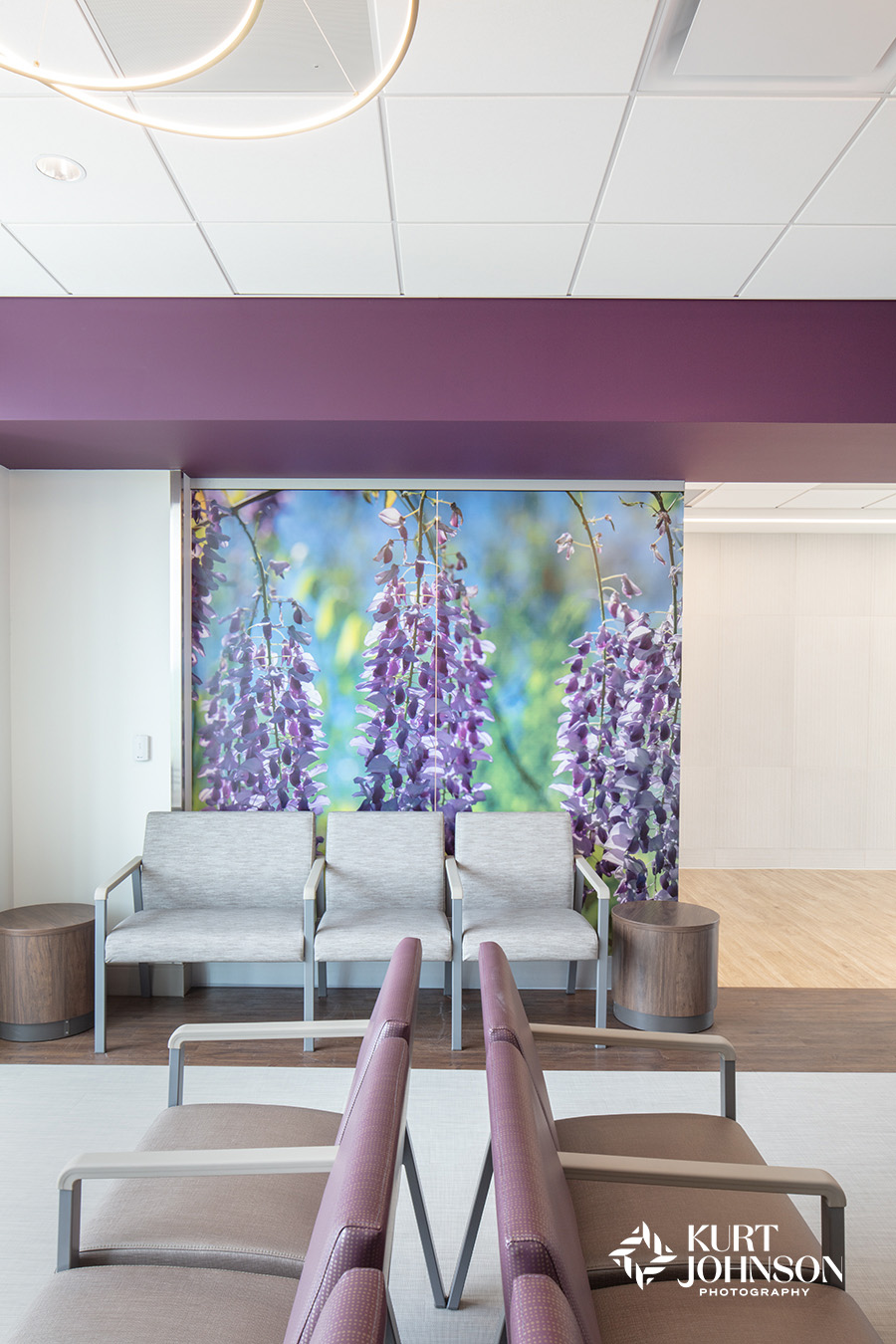
Waiting area featuring local flora at award-winning UAB Medical West Hospital in Bessemer, AL.
And a waiting area can feel like a place designed for people rather than simply a place where people happen to sit.
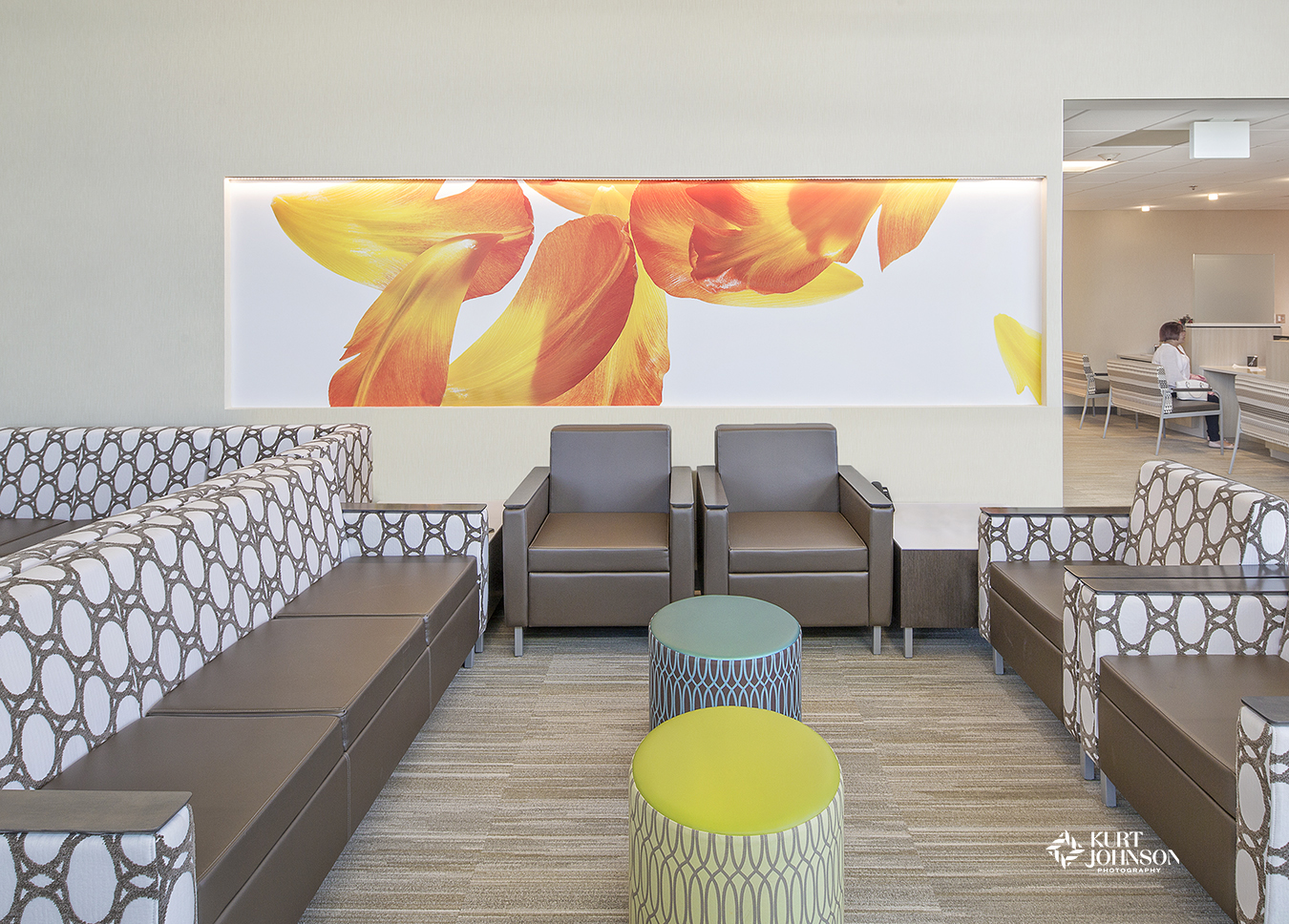
Bright, airy waiting area at Lexington Regional Health Center in NE.
And one of the best parts? The people doing the waiting aren’t the only ones who notice.
Patients are the people we think about first, but they’re not the only ones spending time in healthcare environments.
Family members wait. Visitors wait. And healthcare professionals spend entire shifts surrounded by those same walls.
That’s another reason we think the conversation about healthcare art is bigger than simply asking whether a piece of artwork looks good.
- What does the space feel like?
- What does it communicate?
- Does it feel cold and clinical, or thoughtful and welcoming?
- Does it give people somewhere to rest their eyes when they need a break?
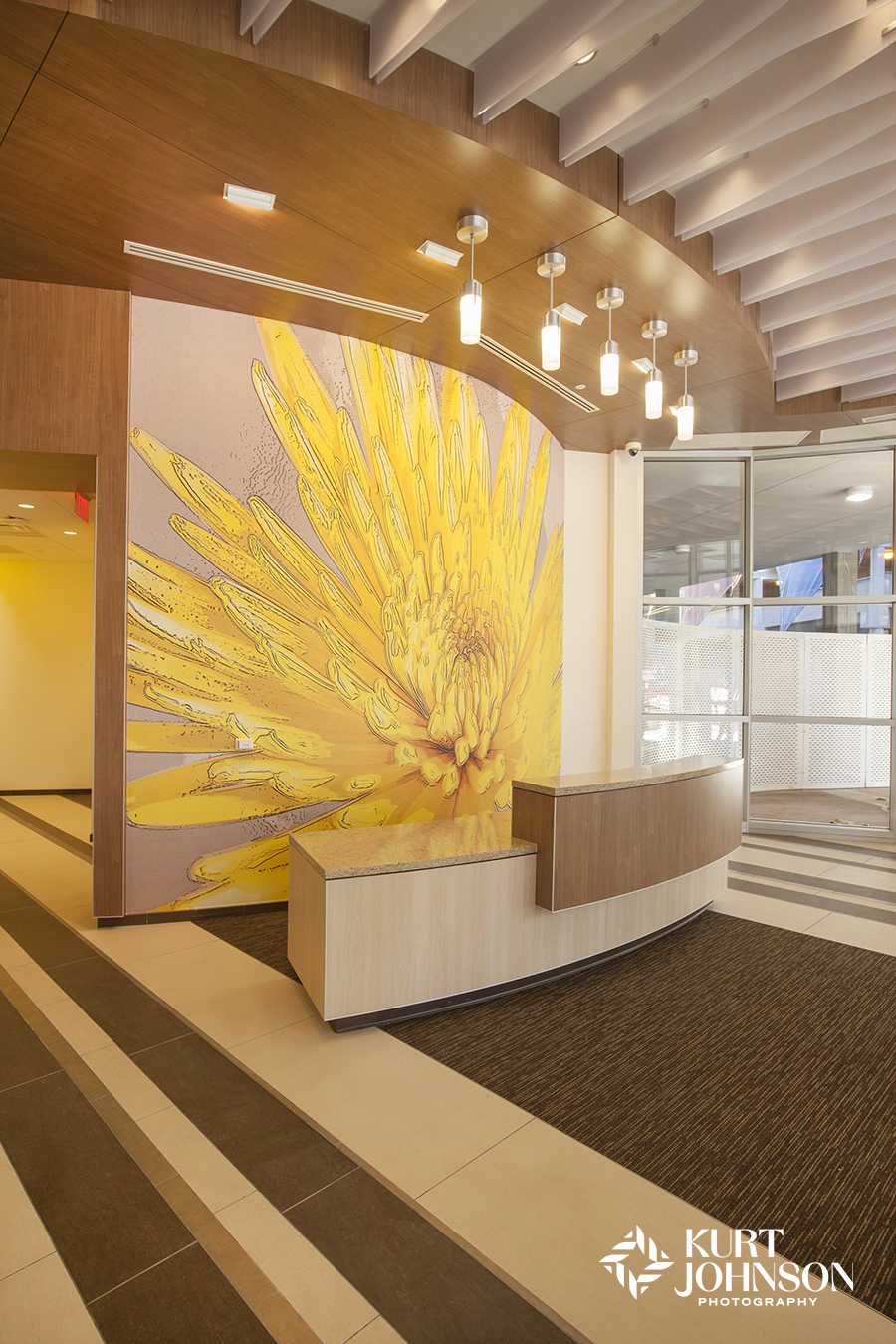
Award-winning Mother Baby Center at Abbott Northwestern and Children’s in MN.
We’ve seen firsthand how a thoughtfully designed healthcare environment can change how a space feels. Sometimes the transformation is dramatic. A giant nature image covering an entire wall or wrapping around a corner. Other times it’s much quieter.
The research tells us that our surroundings can influence stress, mood, and pain in healthcare environments. Ulrich’s original study helped put that idea on the map more than four decades ago, and researchers are still examining the connection between nature and our response to stressful environments today.
And what we’ve seen in healthcare spaces over the years makes sense alongside that research. The goal is bigger than putting pretty art on a wall. It’s to think about the person who will be standing in front of it.
We can’t always make the wait shorter, but we can help make that time easier on patients, visitors, and staff.
And if you’re thinking about a healthcare space that could use a little more nature, let’s talk.
Categories: Healing, Healthcare